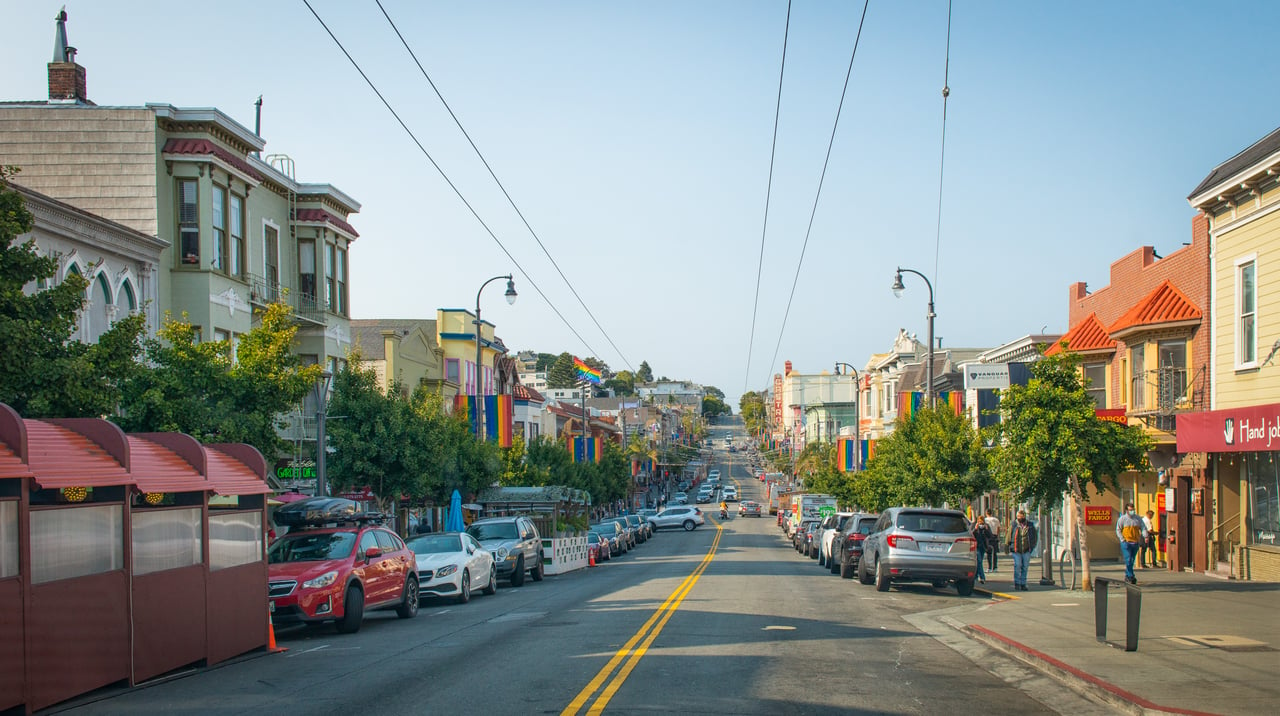
TL;DR summary: The 52nd annual Castro Street Fair takes place Sunday, October 4, 2026, from 11:00 a.m. to 6:00 p.m. around Castro and Market streets. Admission is open to all, with a suggested donation of $10 to $20 supporting fair production, local nonprofit beneficiaries, and the Rainbow Flag at Harvey Milk Plaza. Muni is the simplest way to arrive, but several surface routes will be rerouted and streets will close from 2:00 a.m. to 11:00 p.m. The event is smoke-free. As of September 29, the organizer has not published the 2026 stage lineup, so check the official event page before setting a performance schedule.
The Castro Street Fair returns on Sunday, October 4, 2026, with seven hours of music, dancing, local vendors, community organizations, food, and neighborhood energy. The fair runs from 11:00 a.m. to 6:00 p.m. around Castro and Market streets, and the organizer suggests a $10 to $20 donation rather than charging a fixed admission price.
This is the 52nd edition of an event founded by Harvey Milk in 1974. Its scale is lively, but its identity remains distinctly neighborhood led: the streets themselves become the venue, community groups work alongside merchants and performers, and a day out also raises money for local causes. That kind of neighborhood character is something many people weigh as carefully as square footage when exploring the San Francisco housing market.
Confirmed 2026 details
- Date: Sunday, October 4, 2026
- Time: 11:00 a.m. to 6:00 p.m.
- Location: Castro and Market streets, with activity extending along Castro, Market, 18th, and nearby blocks
- Admission: Open to all; suggested donation of $10 to $20
- 2026 theme: “Where We Belong”
- Event policy: Smoke-free
- Best arrival: Muni, with day-of service changes to review before leaving
“Where We Belong” carries the fair’s history forward
Harvey Milk founded the Castro Street Fair in 1974 to celebrate gay-owned businesses and the vitality of the neighborhood. This year’s 2026 theme, “Where We Belong,” draws a direct line from that history to the present: the Castro as a place for LGBTQIA+ visibility, chosen family, joy, safety, and public life.
That history is not presented as a museum piece. It lives in the mix of queer and ally performers, local merchants, artists, nonprofit organizations, and visitors gathering in the same streets. The famous marquee of the Castro Theatre gives the setting another unmistakable landmark, and the Rainbow Flag at Harvey Milk Plaza remains a central point of orientation.
The fair’s official 2026 visual identity carries the same idea. Artist Ece Kalabak created the key art, with campaign adaptations by graphic designer Özgür Baltutan. The layered illustration brings together neighborhood architecture, hills, plants, performers, rainbow forms, and the Castro Theatre sign in a crowded portrait of belonging.
What to expect along Castro, Market, and 18th streets
According to the fair’s 2026 exhibitor information, visitors can expect a mix of merchants, artists, craftspeople, restaurants, popups, candidates, and community organizations along Market, Castro, and 18th streets. Organizers also describe three large stages, smaller entertainment moments, live performance, and dancing throughout the footprint.
The best way to experience it is to wander rather than race from one headline attraction to another. Start near Castro and Market, walk the vendor blocks, pause at community booths, and follow the sound toward whatever stage is active. The fair is compact enough to circle back when a booth, performance, or conversation deserves more time.
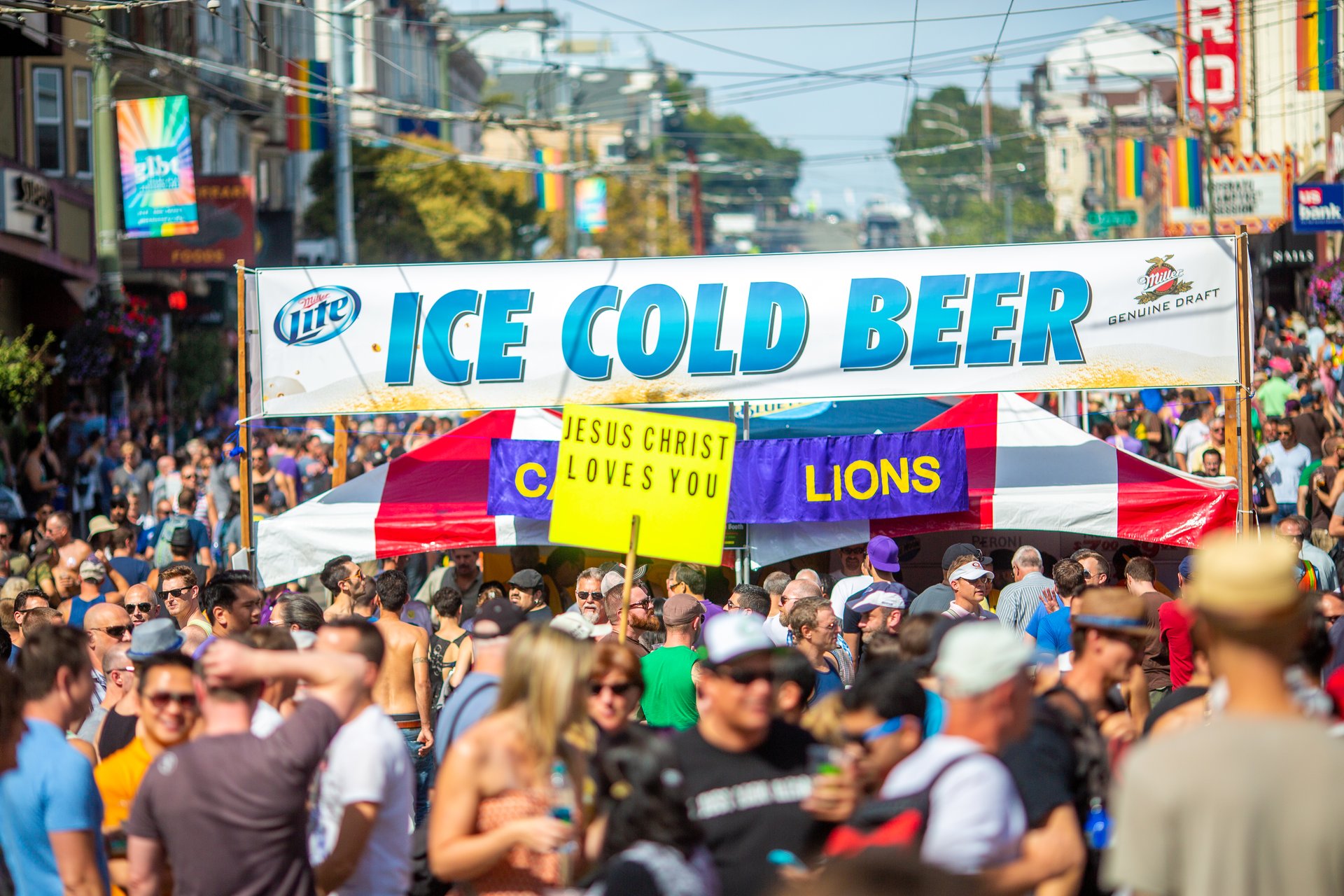
Castro Street fills with visitors, vendors, and colorful activity during the Castro Street Fair, turning the neighborhood streets into a lively gathering place. Photo by Thomas Hawk on Flickr, CC BY-NC 2.0
One detail still needs watching: as of September 29, 2026, the official entertainment page says the 2026 artist lineup will be announced closer to October. The schedule currently displayed below that notice is labeled 2025, so don’t use those older set times to plan this year’s visit. Check the page again before the fair.
A suggested donation with a local purpose
The $10 to $20 amount is a suggested donation, not a fixed ticket price. Gate donations help offset the cost of producing the fair and are shared with its beneficiary partners. The event also supports the Castro Merchants Association’s purchase and maintenance of the Rainbow Flag at Harvey Milk Plaza.
This year’s official 2026 beneficiary list includes Buen Dia Family School, Castro Community On Patrol, Everett Middle School PTSA, the Imperial Council of San Francisco, Instituto Familiar de la Raza, Maitri Compassionate Care, Queer LifeSpace, Quest House Community Healing, San Francisco Spikes, San Francisco Court Appointed Special Advocates, and Stonewall Sports San Francisco.
Since 1998, the organization reports distributing more than $1.6 million to community beneficiaries. That giving model is part of the event rather than an add-on: partner organizations supply volunteers, help run gates and logistics, and receive a share of the proceeds.
How to get to Castro Street Fair by Muni
Public transit is the cleanest plan. Castro Station sits inside the fair area, and the organizer recommends Muni Metro. If you’re combining BART, Muni Metro, buses, or a longer walk, our San Francisco public transportation guide can help you map out the trip.
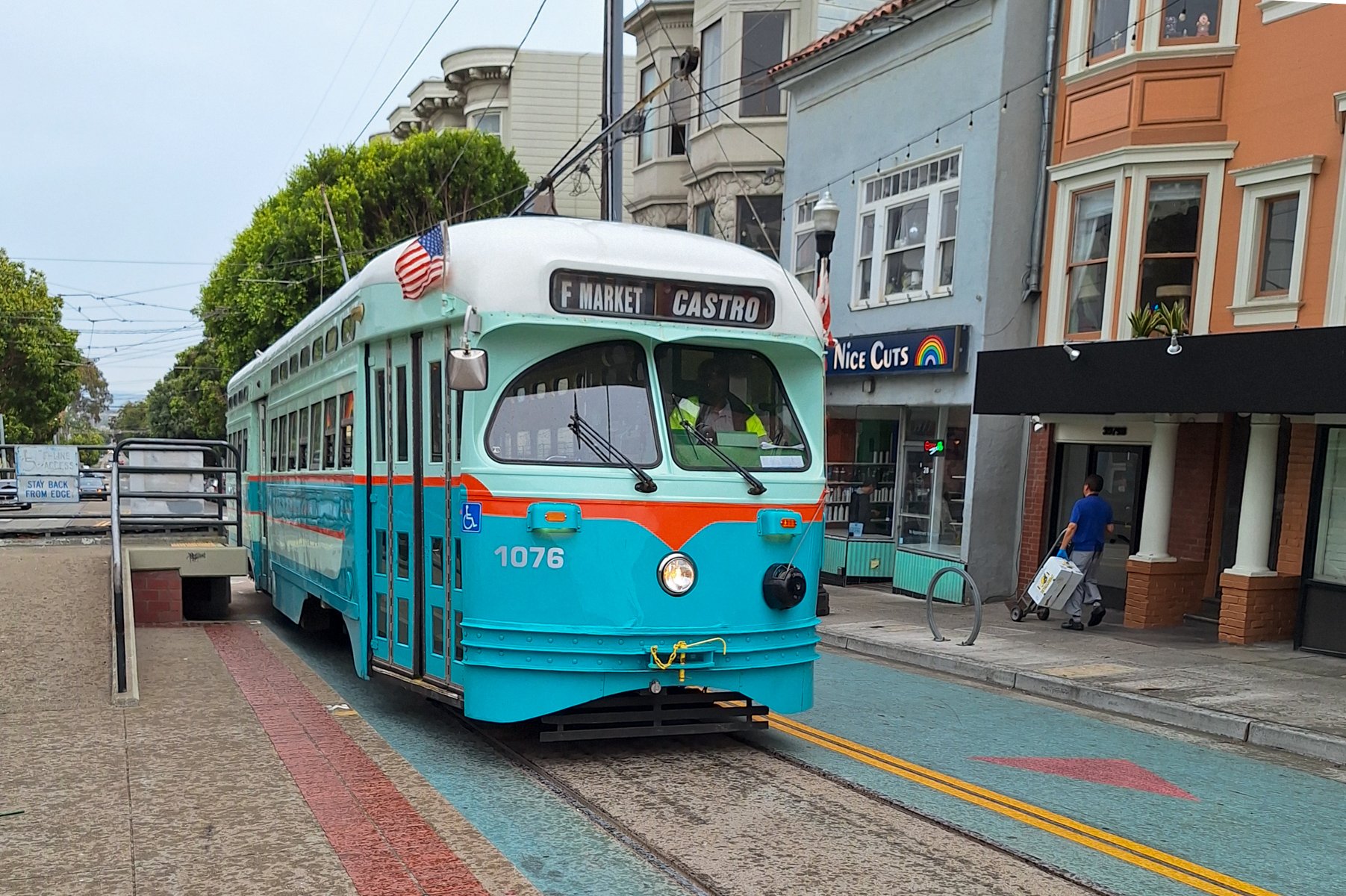
The F Market & Wharves streetcar arrives at Castro Station, providing a direct public transit connection to the neighborhood and the Castro Street Fair. Photo by Don Barrett on Flickr, CC BY-NC-ND 4.0
For October 4, SFMTA lists changes affecting the F Market & Wharves, K Ingleside Bus, 24 Divisadero, 33 Ashbury/18th Street, 35 Eureka, and 37 Corbett. Stops around Castro, Market, 17th, and 18th streets will move or be missed at different times. The F line will switch back before reaching its usual Castro terminal, while several bus routes will detour around the closed blocks.
On the morning of the event, check SFMTA’s Castro Street Fair service advisory for route-by-route detours, alternate stops, accessibility notes, and a service map. Build in extra time even if you know the neighborhood well; familiar stops may not operate normally.
Driving directly into the Castro will be cumbersome. If you must drive, park well outside the closure zone, read all temporary signs, and finish the trip on foot or by transit. Do not count on street parking near the fairgrounds.
Street closures begin before the fair opens
SFMTA says the following streets will close from 2:00 a.m. to 11:00 p.m. on Sunday, October 4:
- Castro Street between 16th and 19th streets
- Market Street between Noe and Diamond streets
- 17th Street between Hartford and Castro streets
- 18th Street between Noe and Eureka streets
- Hartford Street between 17th and 19th streets
- Collingwood Street between 19th and Market streets
- Diamond Street between Market and 18th streets
Those closures extend beyond the public fair hours to allow for setup and breakdown. Residents, delivery drivers, rideshare passengers, and anyone with a reservation nearby should plan around the full 2:00 a.m. to 11:00 p.m. window, not only the 11:00 a.m. to 6:00 p.m. celebration.
A low-stress route through the fair
Arriving close to 11:00 a.m. gives you room to browse before the densest part of the afternoon. Begin at Castro and Market, orient yourself using posted maps and stage boards, then move south along Castro Street and across the 18th Street portions of the fair. Check the schedule onsite before committing to a route, especially while the online lineup remains pending.
Around midday, choose one stage or performance area and give it time. Then step back into the vendor blocks for food, art, and nonprofit booths. If crowds feel intense, take a break beyond the event footprint and return later rather than trying to push through every block at once.
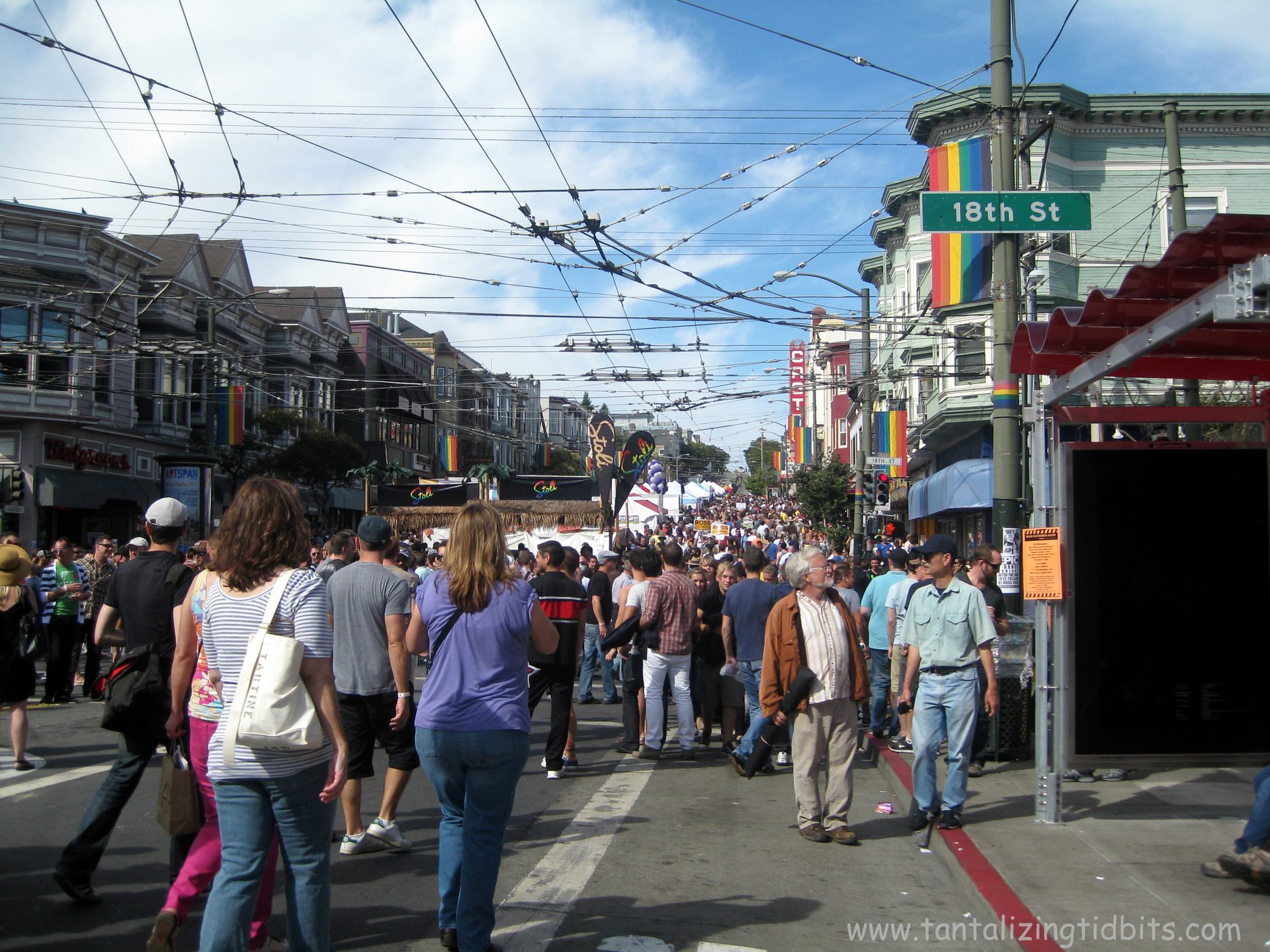
Visitors walk along 18th Street during the Castro Street Fair, moving between vendors, neighborhood businesses, performances, and community activities throughout the closed-off streets. Photo by merri on Flickr, CC BY-SA 2.0
For a quieter pause, Mission Dolores Park is within walking distance, though it may also be busy on a fair Sunday. The walk between the Castro and the park offers an easy reset without turning the day into a cross-city excursion.
Make a full afternoon of the Castro
The fair is the main event, but the neighborhood rewards a little extra time. Walk past the Castro Theatre marquee, look closely at storefronts rather than treating them as scenery, and leave room for a meal or drink outside the busiest hour. Supporting neighborhood businesses is consistent with the fair’s founding purpose.
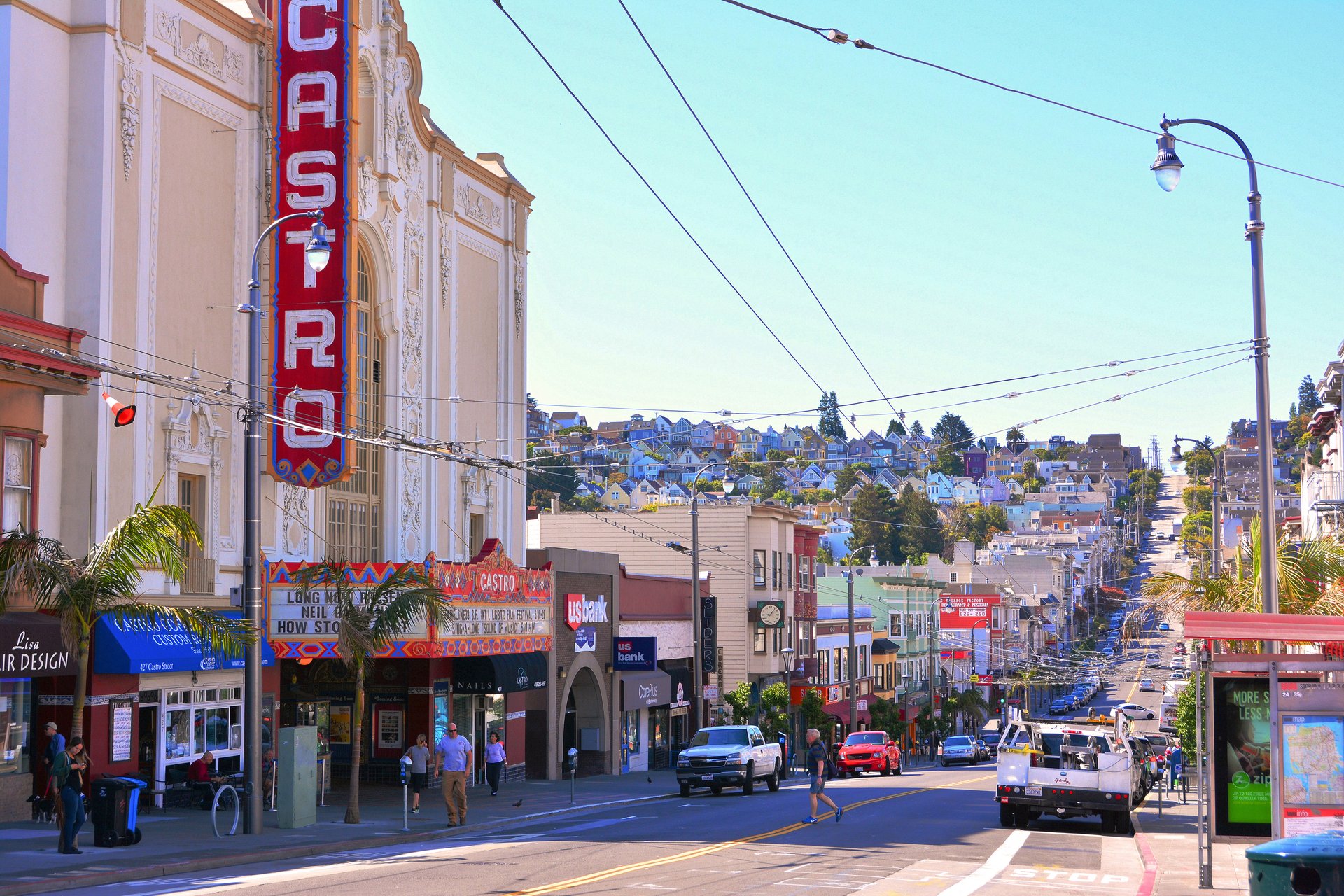
The Castro Theatre anchors a lively stretch of Castro Street, surrounded by neighborhood shops, restaurants, distinctive architecture, and the hills of San Francisco. Photo by Mike McBey on Flickr, CC BY 2.0
There is also a separately ticketed event at the Castro Theatre on October 4: the venue calendar lists “Polyglamorous Presents x Castro Street Fair After Party,” with doors at 5:30 p.m. and the show at 6:00 p.m. Availability and entry requirements can change, so confirm the details on the Castro Theatre calendar before making it your evening plan.
If you want to extend the day toward the Mission, continue on to Valencia Street, a corridor with its own culture of public programming, including Valencia Live. Keep the plan loose. The Castro Street Fair works best when there is enough time for discovery, not a minute-by-minute checklist.
Where the fair sits in San Francisco’s festival calendar
The Castro Street Fair has a specific queer history and neighborhood purpose, but it also belongs to San Francisco’s wider tradition of turning commercial streets into civic gathering places. The Haight-Ashbury Street Fair leans into counterculture and neighborhood heritage, while Carnaval San Francisco fills the Mission with music, dance, and cultural expression.
Other street events show different sides of the same city rhythm. The Fillmore Jazz Festival centers live music along Fillmore Street; the Union Street Festival mixes makers, food, and neighborhood commerce; and the North Beach Festival carries the tradition into the city’s Italian American and bohemian crossroads.
Seasonal celebrations add even more texture, from the Chinatown Autumn Moon Festival to the recurring programs in Golden Gate Park. Newer street activations like Downtown First Thursdays share the same basic premise as the Castro fair: public space changes character when music, local organizations, and small businesses occupy it together.
What distinguishes the Castro Street Fair is not simply its location. It is the continuity between Harvey Milk’s original neighborhood celebration, the Castro’s LGBTQIA+ identity, and a fundraising model that directs the day’s energy back into local organizations.
What to bring and what to leave behind
San Francisco weather can shift over a few blocks and a few hours, so dress in layers and check the forecast on Sunday morning. Comfortable shoes matter more than an elaborate itinerary. A compact water bottle, sun protection, a charged phone, and a payment method for food, purchases, and donations cover the practical basics.
The fair is smoke-free. Official planning materials also call for entry signage stating that glass bottles and outside alcohol are not allowed, so do not bring them. Because event rules and bag policies can change, review the official site before departure rather than relying on advice from a previous year.
Day-of checklist for October 4
- Confirm the 2026 entertainment lineup on the official event site.
- Recheck SFMTA alerts and alternate stops before boarding.
- Plan around street closures lasting from 2:00 a.m. to 11:00 p.m.
- Bring a layer, comfortable shoes, water, sun protection, and a charged phone.
- Budget for the suggested $10 to $20 donation as well as food and vendor purchases.
- Do not bring glass bottles or outside alcohol, and remember that the fair is smoke-free.
- Give the schedule room to breathe; the best parts of a street fair are often the ones that were not on the itinerary.
The practical plan is simple: arrive by transit, come early enough to wander, donate if you can, and check the official schedule before choosing a stage. That leaves the rest of the day open for what the Castro Street Fair has sustained for more than five decades: visibility, connection, and a neighborhood celebrating in public.
Frequently asked questions
When is the Castro Street Fair 2026?
The 52nd annual Castro Street Fair is Sunday, October 4, 2026, from 11:00 a.m. to 6:00 p.m.
Where is the Castro Street Fair held?
The fair is centered around Castro and Market streets in San Francisco, with activity extending along Castro, Market, 18th, and nearby streets within the closure area.
Is Castro Street Fair free?
There is no fixed admission ticket. The organizer suggests a donation of $10 to $20. Donations help pay for the fair and are shared with local nonprofit beneficiary partners; the event also supports the Rainbow Flag at Harvey Milk Plaza.
What is the 2026 Castro Street Fair theme?
The 2026 theme is “Where We Belong.” It celebrates the Castro as a place of LGBTQIA+ community, visibility, joy, freedom, and belonging.
What is the best way to get to Castro Street Fair?
Muni is the recommended option. Castro Station is within the event area, but surface routes including the F, K Bus, 24, 33, 35, and 37 will have reroutes or stop changes. Review the SFMTA event advisory before traveling.
Which streets will be closed for Castro Street Fair 2026?
SFMTA lists closures on parts of Castro, Market, 17th, 18th, Hartford, Collingwood, and Diamond streets from 2:00 a.m. to 11:00 p.m. on October 4. Consult the agency’s advisory for the exact block limits.
Has the 2026 entertainment lineup been announced?
As of September 29, 2026, the official entertainment page says the 2026 lineup will be announced closer to October. The schedule currently shown below that notice is labeled 2025, so visitors should check again before the event.
Is Castro Street Fair smoke-free?
Yes. The organizer identifies Castro Street Fair as a smoke-free event.