TL;DR summary: Golden Gate Park stretches for roughly three miles across more than 1,000 acres, so the best visit begins with a focused plan. Choose one main area, use public transit or the free park shuttle when possible, and leave time for the park’s gardens, museums, lakes, meadows, and car-free paths. The Music Concourse and eastern gardens suit a first visit, while Blue Heron Lake, the bison paddock, windmills, and Ocean Beach reward a longer day.
Golden Gate Park is not a single attraction. It is a long green corridor of gardens, museums, lakes, recreation spaces, wooded paths, and open lawns stretching from the Haight-Ashbury edge of the city toward Ocean Beach.
The park covers 1,017 acres and extends for roughly three miles. That scale is part of its appeal, but it also makes a little planning essential. A first-time visitor who tries to see everything will spend much of the day moving between destinations. A better approach is to select one or two anchor attractions and allow the park itself to fill the spaces between them.
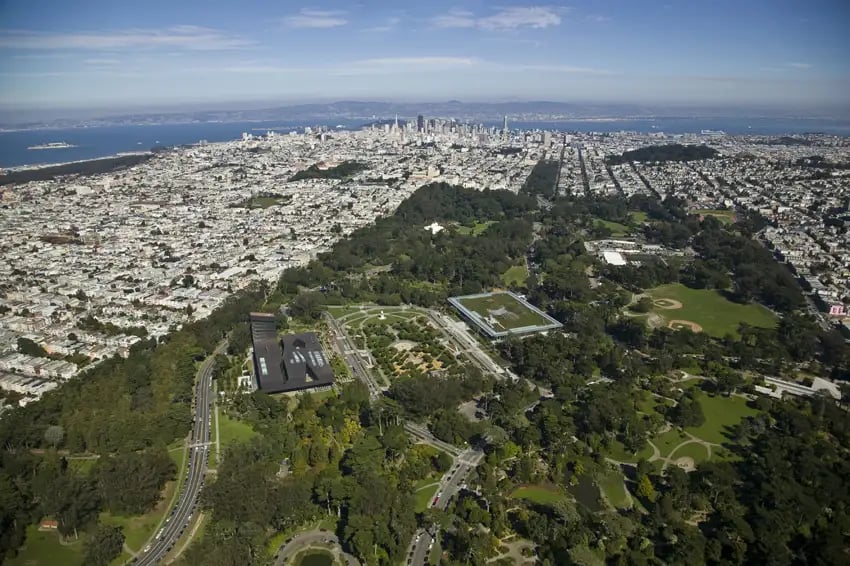
From above, Golden Gate Park reveals its expansive gardens, winding paths, palm-lined streets, and cultural landmarks, offering a glimpse of how much there is to explore in the heart of San Francisco. Photo by Renee Grayson on Flickr, CC BY-NC-ND 2.0
Golden Gate Park at a glance
- Size: 1,017 acres and approximately three miles long
- Location: Between Fulton Street and Lincoln Way, extending west toward Ocean Beach
- Best for: Museums, gardens, walking, cycling, picnics, family activities, boating, and seasonal events
- Getting around: Walking, bicycling, Muni, and the free Golden Gate Park shuttle
- Planning rule: Pick one section of the park rather than treating the entire park as a single stop
The San Francisco Recreation and Park Department publishes an official visitor map with attractions, paths, transportation information, and accessibility resources. Downloading it before arrival is useful because mobile directions sometimes lead to a general park entrance rather than the destination you actually want.
Start at the eastern gardens
The eastern end of the park contains several of its most concentrated garden experiences. Near the Conservatory Valley, the Conservatory of Flowers pairs a landmark glass-and-wood building with collections of tropical and aquatic plants. The surrounding lawns also make this one of the easiest places to alternate between an indoor attraction and an unstructured picnic.
A little farther west, the San Francisco Botanical Garden spreads across 55 acres. Its plant collections represent climates and regions from around the world, making it a destination that can easily occupy several hours rather than a quick walk-through.
The Japanese Tea Garden offers a more compact experience of paths, water, stone, planting, and traditional architecture. All three gardens operate under Gardens of Golden Gate Park, but their admission policies and hours may differ. Check the official garden calendar before building a tightly timed itinerary.
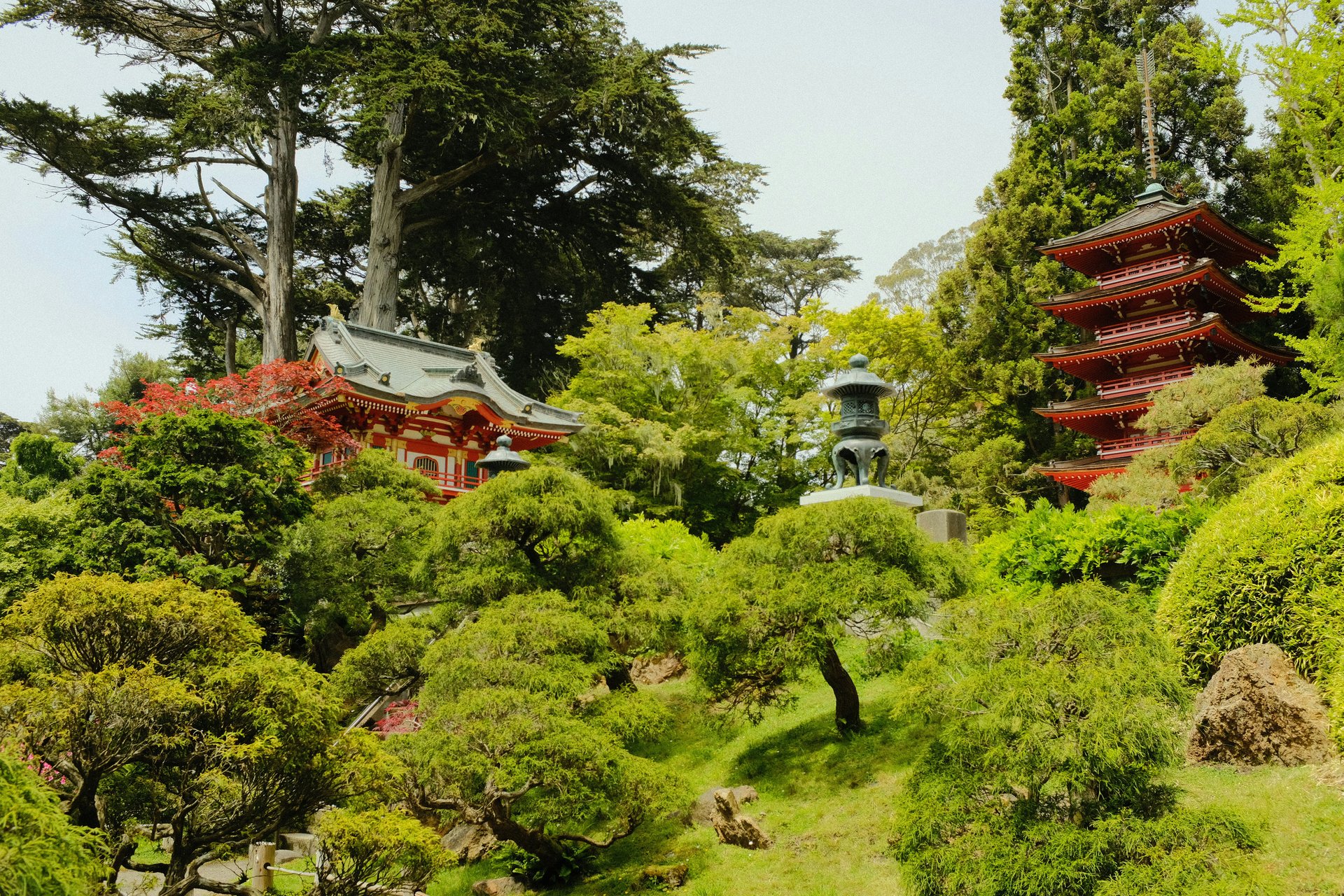
The Japanese Tea Garden in Golden Gate Park features lush greenery, traditional architecture, and a five-story pagoda. Photo by Mason Merry on Unsplash
Choose a museum at the Music Concourse
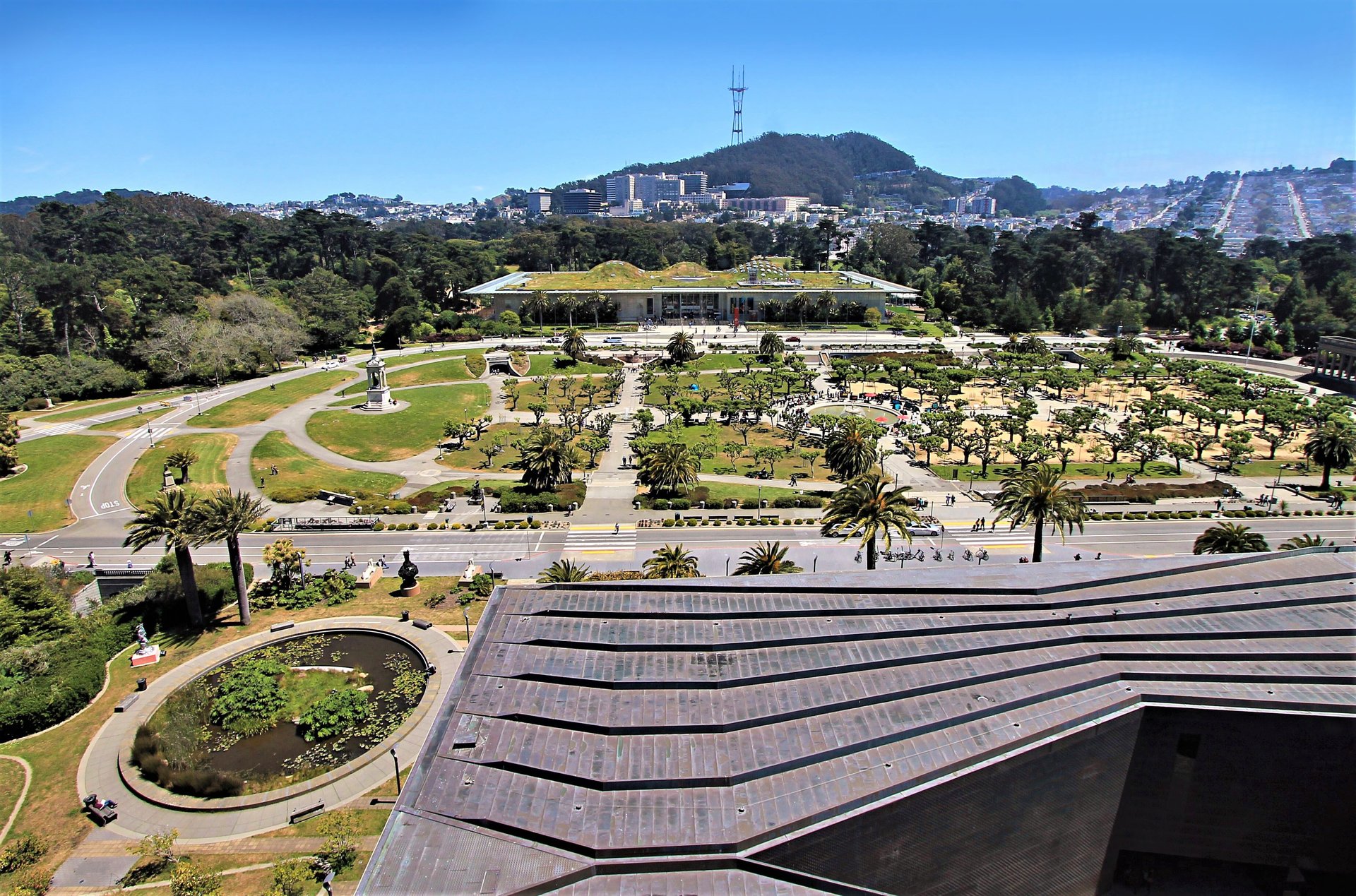
The Music Concourse is the park’s most concentrated cultural zone. The de Young and the California Academy of Sciences face one another across the landscaped concourse, with the Japanese Tea Garden nearby.
The de Young centers on art from the Americas, Africa, and Oceania, along with textiles, photography, and rotating exhibitions. The California Academy of Sciences combines an aquarium, planetarium, rainforest, and natural history museum beneath one living roof.
Trying to complete both major museums in one day can make the park feel secondary. For a more balanced visit, choose one museum, add one nearby garden, and reserve time to walk the concourse and surrounding paths. Travelers watching their budget can also review current free museum days before selecting a date.
Walk or ride the JFK Promenade
The JFK Promenade creates a 1.5-mile car-free route through the eastern half of the park. It links gardens, museums, lawns, public art, recreational areas, and shuttle stops without requiring visitors to share the roadway with ordinary vehicle traffic.
Walking the promenade is one of the simplest ways to experience Golden Gate Park without committing to a ticketed attraction. Bicycles, wheelchairs, skates, and other permitted forms of mobility also make the route useful for visitors who want to cover more distance.
The route includes art installations, public seating, lawn games, and places where live music may appear. It also provides access to the park’s free shuttle, which operates daily in the eastern section and connects major destinations from Haight Street to Blue Heron Lake.
Continue west to lakes, bison, and windmills
Golden Gate Park becomes quieter and more spacious west of the museum district. Blue Heron Lake, formerly known as Stow Lake, has walking paths, a boathouse, and rentals for rowboats and pedal boats. The loop around the water offers a slower alternative to the busy eastern attractions.
Farther west, the bison paddock has been part of the park landscape since the late nineteenth century. Nearby paths lead toward the casting pools, polo fields, and the park’s windmills and tulip gardens.
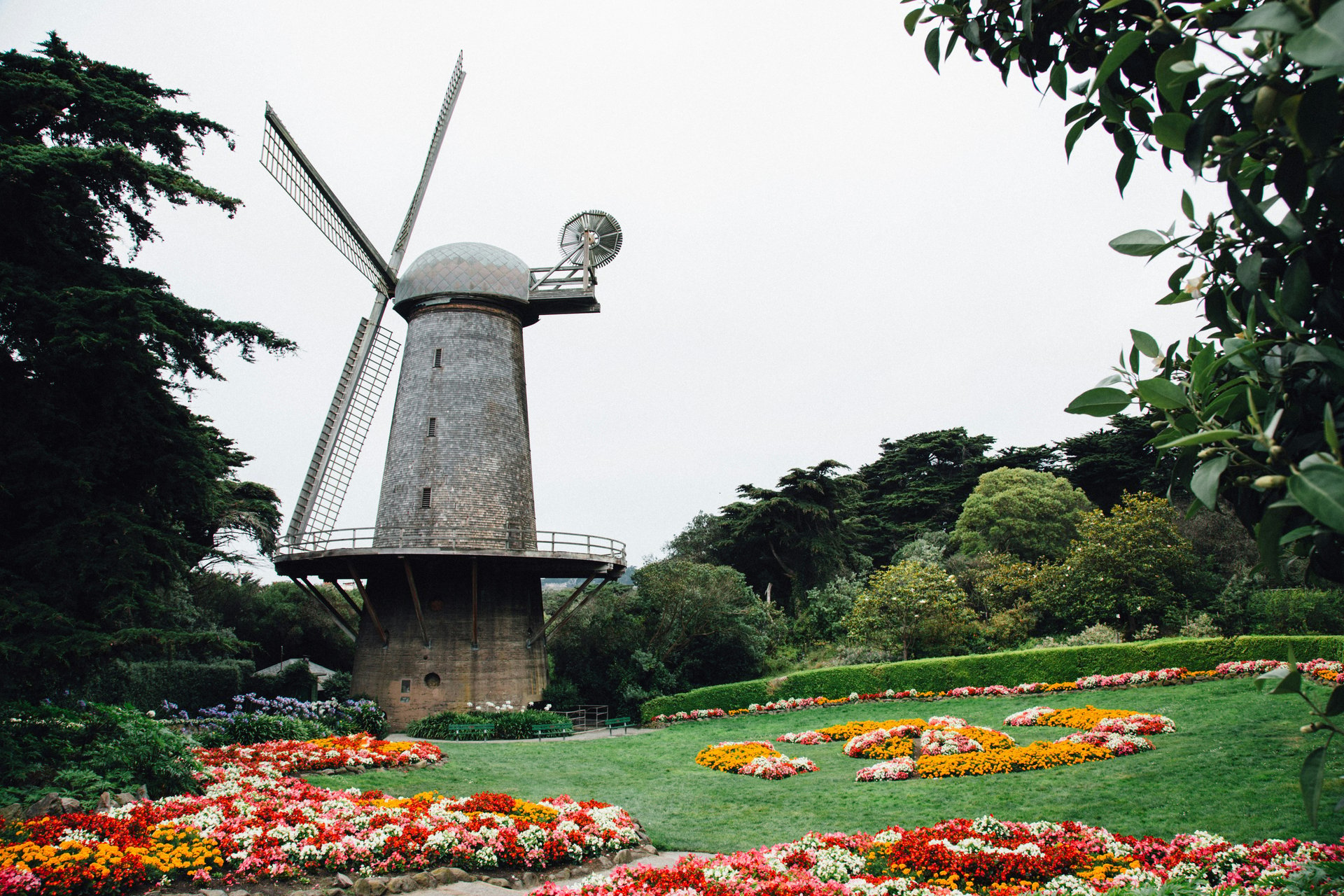
The historic Dutch Windmill rises above vibrant flower beds at the western end of Golden Gate Park, where formal gardens give way to the park's broader coastal landscape. Photo by Kyle Glenn on Unsplash
At the western edge, the park meets the Pacific near Ocean Beach. This makes an east-to-west bicycle ride especially satisfying: formal gardens and museums gradually give way to open fields, coastal vegetation, and ocean air.
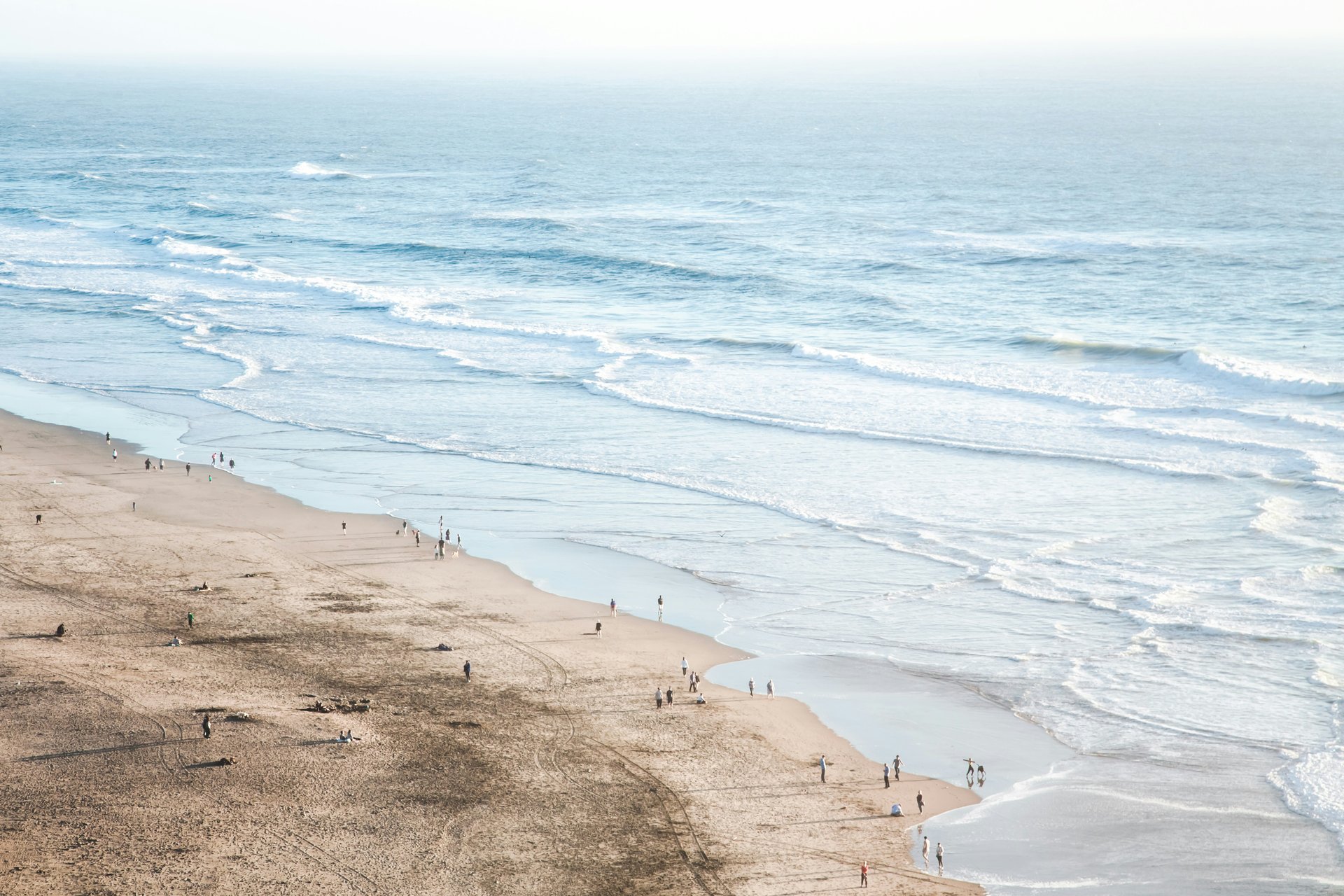
Ocean Beach opens onto San Francisco's western edge, where a broad stretch of sand and rolling Pacific waves create a natural place to slow down after exploring the city. Photo by Trent Haaland on Unsplash
Find room for children, picnics, and unplanned time
Families do not need a museum ticket to make a day of the park. The Koret Children’s Quarter includes a playground and historic carousel, while open lawns and designated recreation areas provide room to pause between destinations.
Picnic planning depends on the area. Food is available at several museums, gardens, and concessions, but hours vary and the western half has fewer convenient options. Carrying water and a simple snack makes it easier to stay flexible.
The park works best when every minute is not assigned. A path through a grove, an open lawn, or a view across a lake may become the most memorable part of the day precisely because it was not on the itinerary.
Check the park’s seasonal calendar
Golden Gate Park hosts concerts, festivals, garden programs, races, and community gatherings throughout the year. The free Golden Gate Park Band performs seasonally at the Music Concourse, while Flower Piano brings live performances and playable pianos to the Botanical Garden. Major weekends such as Outside Lands can also change traffic, transit, and access patterns.
One notable 2026 date is Opera in the Park, a free San Francisco Opera concert scheduled for Sunday, September 13 at 1:30 p.m. in Robin Williams Meadow. Anyone visiting during a large event should review the organizer’s official page and the park’s transportation notices before leaving.
How to reach and navigate Golden Gate Park
Muni serves the park from several directions. Useful routes include the N Judah, 5 Fulton, 7 Haight/Noriega, 18 46th Avenue, 28 19th Avenue, 29 Sunset, 33 Ashbury/18th, 43 Masonic, and 44 O’Shaughnessy. The best route depends on whether the destination is near the eastern gardens, Music Concourse, central park, or western edge.
A broader public transportation overview can help with transfers. Enter the specific attraction into a trip planner rather than using “Golden Gate Park” as the destination.
The free Golden Gate Park shuttle operates seven days a week and serves the eastern portion of the park, including the Conservatory of Flowers, Music Concourse, museums, gardens, Rose Garden, and Blue Heron Lake. Service frequency differs between weekdays and weekends, so check the current schedule before relying on a particular connection.
Drivers can still reach many destinations, but the car-free route changes how vehicles move through the park. The Music Concourse Garage provides direct access to the museums and gardens, while other roads and parking areas remain open. Weekend spaces can fill quickly, and temporary closures are common during major events.
Dress for the park’s microclimates
Conditions can change noticeably between the park’s eastern and western ends. The coast may be foggy or windy while the Music Concourse is brighter, and a calm midday lawn can feel cool by late afternoon.
Understanding San Francisco’s microclimates is more useful than relying on a regional forecast alone. Bring a light outer layer, sun protection, and water even when the morning looks settled.
Three practical Golden Gate Park itineraries
A first visit: gardens and culture
Begin at the Conservatory of Flowers, walk the JFK Promenade, choose either the de Young or California Academy of Sciences, and finish at the Japanese Tea Garden or Botanical Garden. This route keeps most of the day within the eastern park.
A low-key outdoor day
Walk or cycle the JFK Promenade, stop at Blue Heron Lake, and leave time for a picnic. This plan minimizes ticketed attractions and makes the landscape the main event.
An east-to-west park crossing
Rent a bicycle near the eastern entrance, continue past the museums and lake, pause at the bison paddock and windmills, and finish near Ocean Beach. Check wind conditions and arrange the return trip before setting out.
Afterward, the Sunset District and Richmond District offer food and neighborhood stops along the park’s southern and northern edges.
Before you go
Check the official pages for any museum, garden, rental, or event you plan to visit. Hours, prices, reservations, road access, and shuttle service can change. A realistic plan leaves room for those details without making the day feel rushed.
Most importantly, identify the exact entrance or attraction before starting the trip. Golden Gate Park rewards wandering after arrival, but precision helps when deciding where to arrive.
Frequently asked questions
Is Golden Gate Park free?
Entering and exploring Golden Gate Park is free. Some museums, gardens, rentals, and special events charge admission or require reservations.
How much time should I spend in Golden Gate Park?
Allow at least half a day for one museum or garden plus nearby outdoor areas. A full day works better for combining several attractions or traveling from the eastern park toward Ocean Beach.
What is the best part of Golden Gate Park for a first visit?
The eastern park and Music Concourse provide the easiest introduction because the Conservatory of Flowers, de Young, California Academy of Sciences, Japanese Tea Garden, Botanical Garden, and JFK Promenade are relatively close together.
Can you drive through Golden Gate Park?
Yes, many park roads remain open to vehicles, but the JFK Promenade and connected segments form a permanent car-free route. Consult the current Recreation and Parks driving map before choosing an entrance.
Does Golden Gate Park have a free shuttle?
Yes. The free, accessible park shuttle operates daily in the eastern portion of Golden Gate Park. Hours and frequency vary by day.