TL;DR summary: The Conservatory of Flowers is one of Golden Gate Park’s most recognizable landmarks: a white Victorian glasshouse filled with tropical plants, aquatic gardens, orchids, carnivorous plants, cloud-forest species, and seasonal botanical displays. Opened in 1879, it remains a compact but memorable stop for architecture lovers, plant enthusiasts, photographers, families, and anyone building a thoughtful day around the park’s gardens and museums.
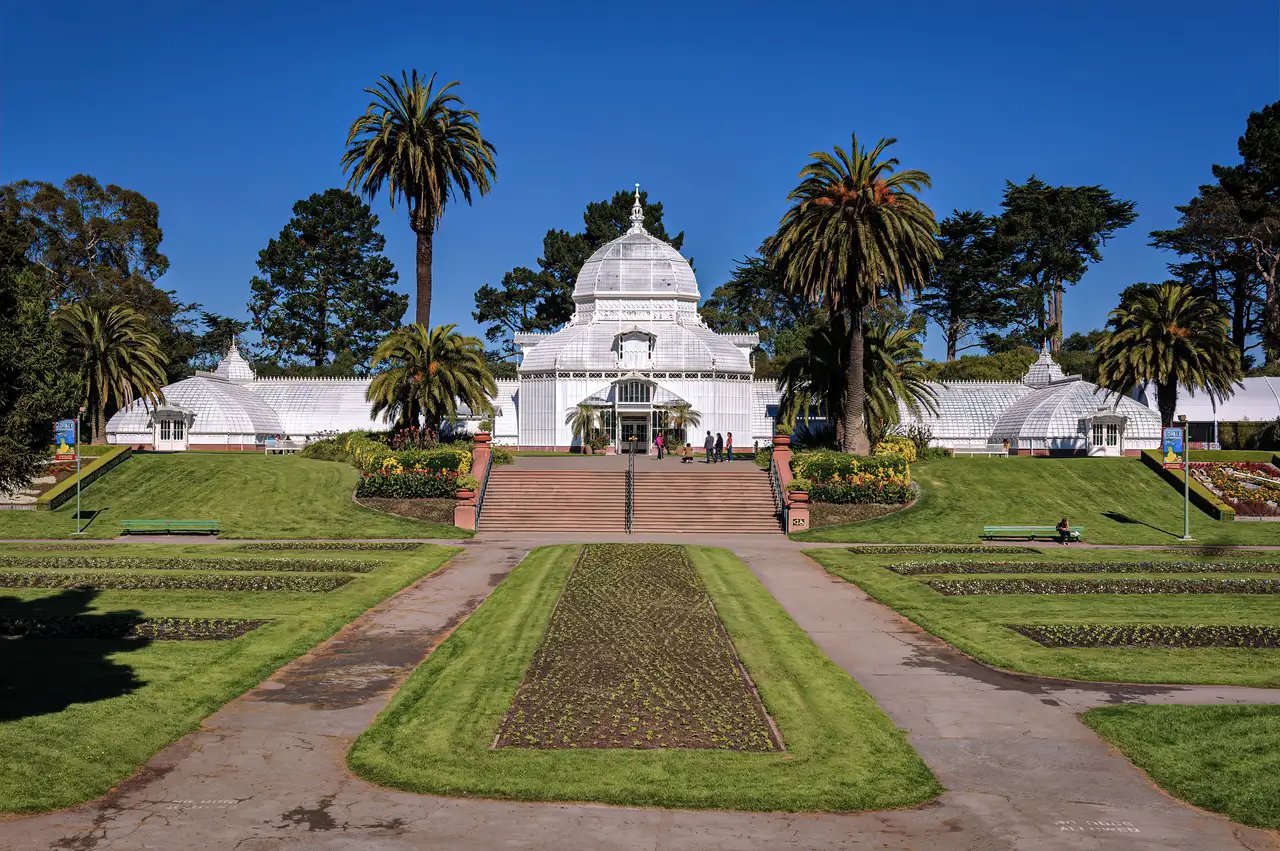
The Conservatory of Flowers' distinctive Victorian architecture has been a Golden Gate Park landmark since 1879. Photo by Diana Robinson on Flickr, CC BY-NC 2.0
The Conservatory of Flowers feels almost theatrical before you even step inside. Its white wood-and-glass facade rises from the eastern edge of Golden Gate Park, framed by lawns, formal flowerbeds, palms, and the soft San Francisco light that makes the building look different by the hour.
Opened in 1879, the Conservatory is the oldest building in Golden Gate Park and one of the city’s most beloved botanical landmarks. It is small enough to visit without planning an entire day around it, but layered enough to reward slow attention: the curve of the central dome, the humidity of the plant galleries, the texture of giant leaves, the surprise of orchids tucked into mossy corners, and the contrast between Victorian architecture and tropical abundance.
For visitors moving through the park, the Conservatory also sits in one of San Francisco’s richest cultural corridors. A morning here can easily unfold into nearby garden walks, museum time, or a longer route through the city’s western neighborhoods.
A Victorian landmark with a tropical interior
The Conservatory’s exterior is part of its power. In a city known for steep streets, fog, painted Victorians, and Pacific edges, this glasshouse offers a different kind of San Francisco icon: ornate, delicate, and almost luminous against the greenery around it.
Its origins are closely tied to the early development of Golden Gate Park. The building was assembled from a prefabricated conservatory kit associated with James Lick, then donated for public use after his death. By the late 1870s, San Francisco was still shaping its great urban park out of sand dunes, and the Conservatory became one of its first major formal statements: a place where civic ambition, horticultural curiosity, and Victorian design could meet under glass.
Inside, the atmosphere changes quickly. The air becomes warmer and wetter. Leaves broaden. Color appears in sudden bursts. The Conservatory is organized around plant environments rather than a single linear exhibit, which gives the visit a satisfying sense of movement from one climate to another.
Rare tropical species from threatened rainforest environments flourish in the conservatory's carefully controlled climate. Photo by Sharon Mollerus on Flickr, CC BY-NC 2.0
Tropical galleries worth slowing down for
The Conservatory’s plant collections are the reason to linger. The Aquatic Plants Gallery centers on pools, water lilies, carnivorous plants, orchids, and tropical foliage arranged to suggest the rhythm of a river environment. It is especially compelling when the giant water lilies are visible, though specific blooms and seasonal highlights can change.
The carnivorous plants are one of the most memorable parts of the collection, especially the Nepenthes, whose hanging pitcher forms bring a sculptural quality to the tropical rooms. They are the kind of detail that rewards a slower visit: easy to miss if you rush, but captivating once you notice their range of shapes, sizes, and textures.
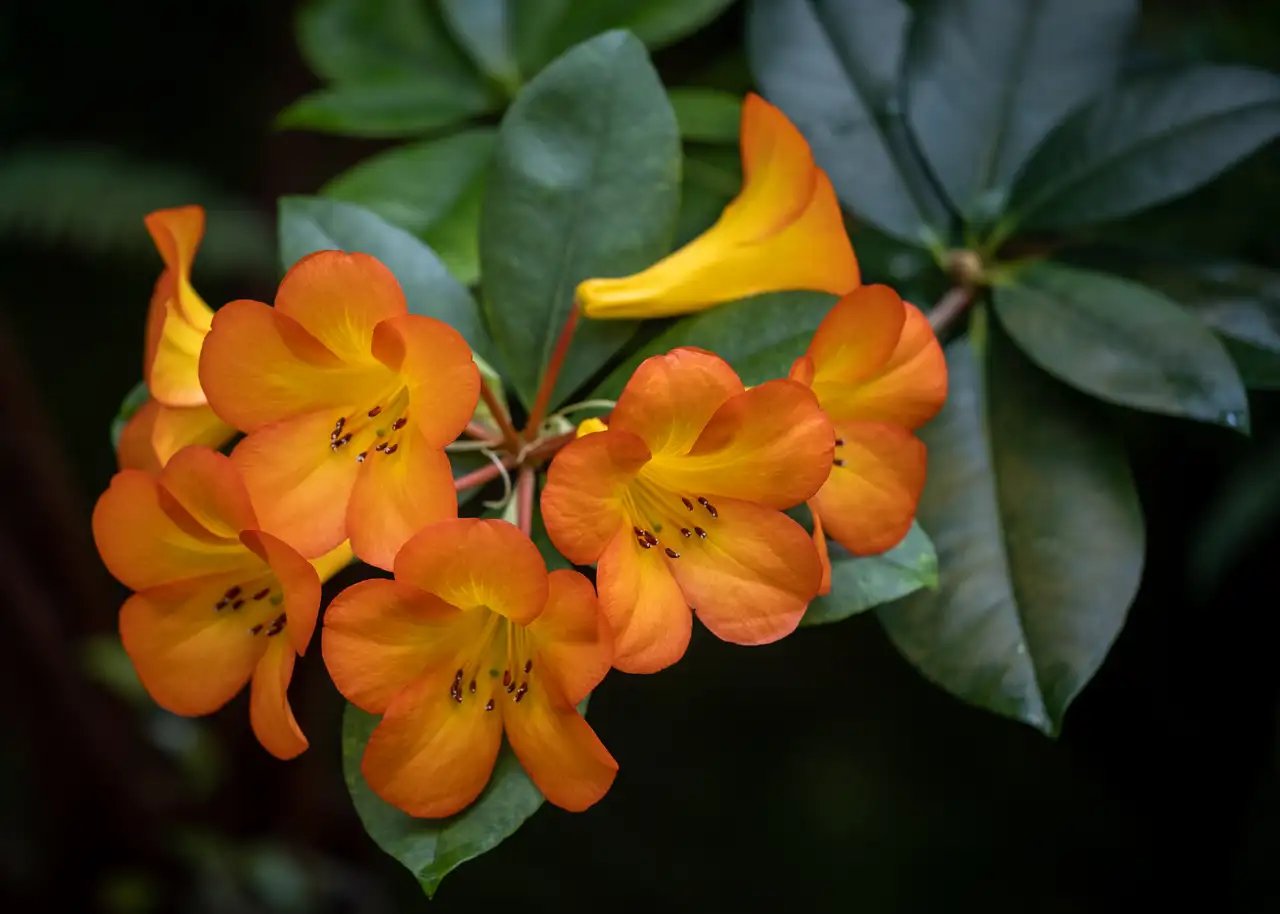
The Highland Tropics Gallery offers a cooler, mistier kind of drama. It evokes cloud forests from tropical mountain regions, with mosses, rhododendrons, tree ferns, and high-altitude orchids thriving in conditions that are difficult to recreate. This is one of the Conservatory’s most distinctive rooms because the climate itself is part of the experience.
The Lowland Tropics Gallery is more lush and immersive, with palms, tropical fruiting plants, orchids, and humid layers of green. The Potted Plants Gallery nods to the Conservatory’s Victorian roots, when rare tropical plants were collected, displayed, and protected inside ornate glass structures. Together, these rooms make the Conservatory feel less like a static museum and more like a living archive of plant life, design history, and botanical care.
For readers who enjoy San Francisco’s broader garden culture, the Conservatory pairs naturally with the San Francisco Botanical Garden, where the experience is more expansive and landscape-driven. A flower-focused day can also connect beautifully with spring flower experiences elsewhere in the city.
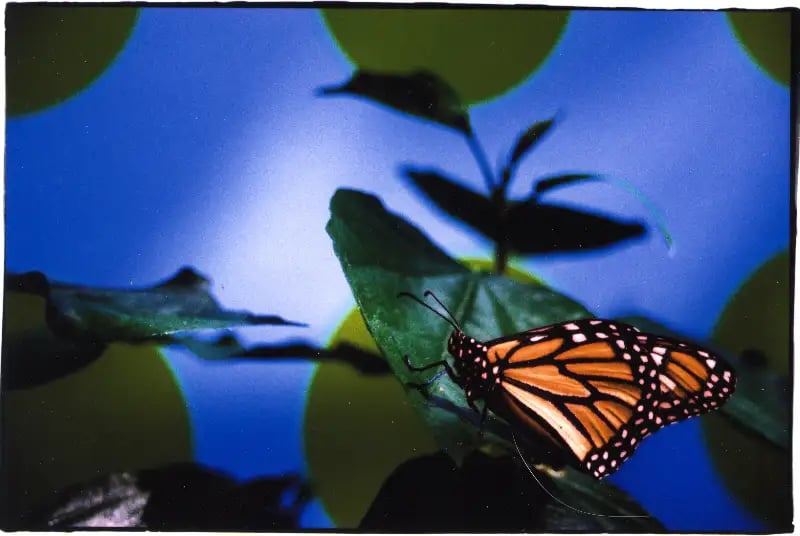
The Butterfly Zone provides an enchanting encounter with nature's most delicate pollinators. Photo by Vanessa Elise on Flickr, CC BY-NC 2.0
Butterflies, blooms, and seasonal surprises
Part of the Conservatory’s charm is that it is never exactly the same visit twice. Seasonal displays, rotating plant moments, special exhibits, and occasional programs can shift what feels most memorable. One visit may center on orchids and mist. Another may linger on water lilies, carnivorous plants, or a butterfly encounter.
That changing quality is important to the Conservatory’s appeal. It gives locals a reason to return and makes the space feel alive rather than preserved in amber. The building is historic, but the collections inside are active, carefully maintained, and responsive to the needs of living plants.
It also makes the Conservatory especially photogenic. The best images often come from looking closely: the underside of a leaf, condensation on glass, a flower against deep green, a suspended pitcher plant, or the way the dome appears through tropical foliage. Like Alcatraz or the Painted Ladies, the Conservatory is recognizable at a distance, but its details are what make it linger.
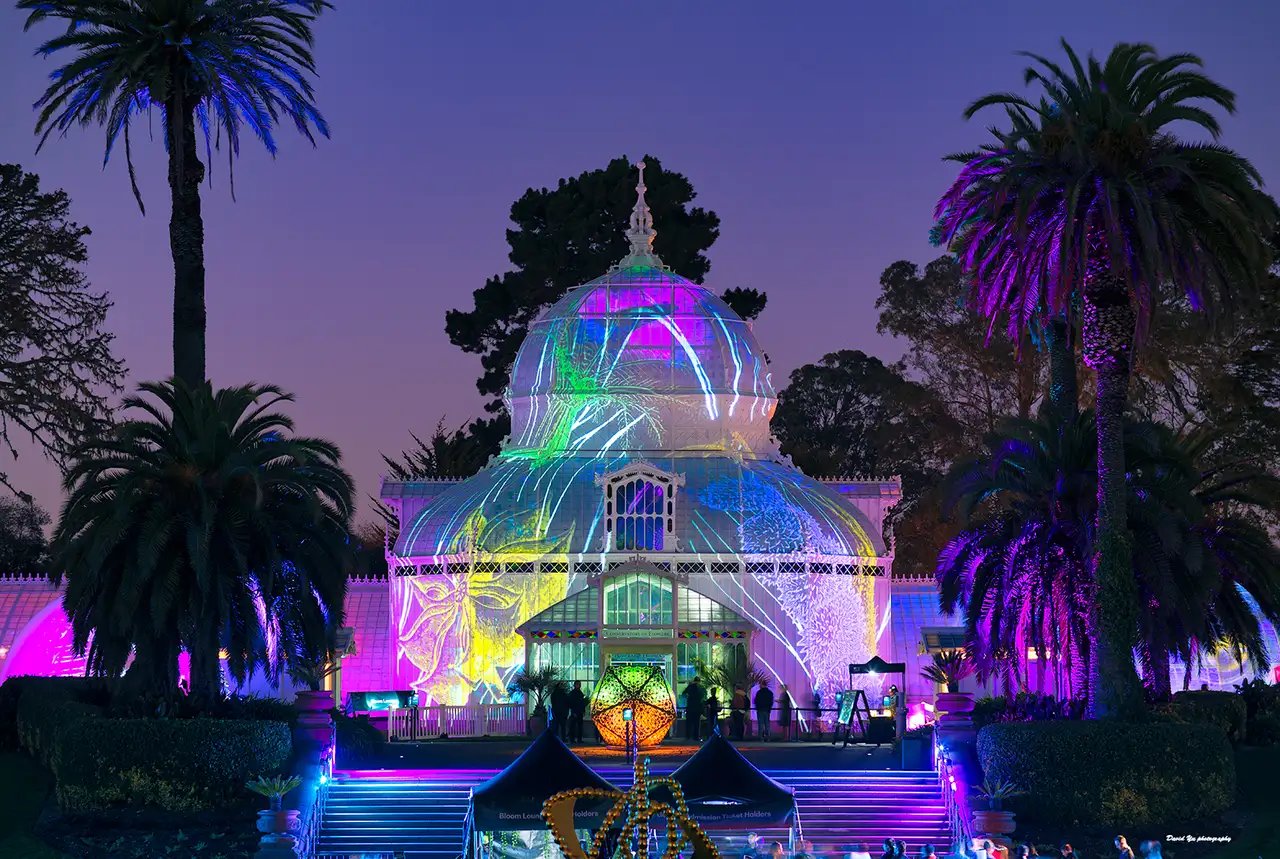
The Conservatory of Flowers anchors Golden Gate Park's remarkable collection of cultural institutions. Photo by David Yu on Flickr, CC BY-NC 2.0
A natural anchor for a Golden Gate Park day
The Conservatory sits near the eastern side of Golden Gate Park, which makes it an easy anchor for a broader park itinerary. Visitors can pair it with a walk through nearby lawns and gardens, then continue west toward the park’s museum and music core.
The de Young Museum and surrounding cultural institutions offer a more formal museum experience, while the Golden Gate Park Band brings a more civic, open-air rhythm to the park during its performance season. For those drawn to nighttime garden experiences, Lightscape shows how the park’s botanical spaces can take on a completely different mood after dark.
The eastern end of the park also makes the Conservatory a useful starting point for exploring nearby neighborhoods. The Haight-Ashbury edge brings music history, vintage storefronts, and countercultural memory into the mix. The Inner Sunset offers cafes, small restaurants, and a neighborhood pace that works well after a garden visit. Further north, the Richmond District connects the park to Clement Street, residential blocks, and the city’s west-side food culture.
Practical tips before you go
The Conservatory is open Thursday through Tuesday, 10am to 4:30pm, with last entry at 4pm, and is closed Wednesdays for maintenance. San Francisco residents, veterans, Museums for All participants, and Gardens members receive free admission, and the Conservatory offers free admission to everyone on the first Tuesday of each month. If you plan to visit the Conservatory, Japanese Tea Garden, and San Francisco Botanical Garden in the same outing or over a long weekend, check the official ticket page for the 3-day multi-garden pass before buying separate tickets.
Casual visitors can enjoy the galleries in about 30 to 45 minutes, but plant lovers, photographers, and sketchbook people can easily spend much longer. The rooms are climate-controlled, so expect subtle temperature and humidity shifts as you move through different plant environments. At busier times, the walkways can feel narrow, especially when visitors pause for photos, so early arrival or quieter weekday timing can make the experience feel more immersive.
Getting there can be part of the experience. Golden Gate Park is reachable by transit, bike, rideshare, and longer walking routes, depending on where you start. For visitors mapping the day without a car, San Francisco’s public transportation options can make it easier to connect the park with other neighborhoods. The city’s microclimates are also worth keeping in mind: the park can feel cooler and windier than downtown, even when the Conservatory’s interior is warm.
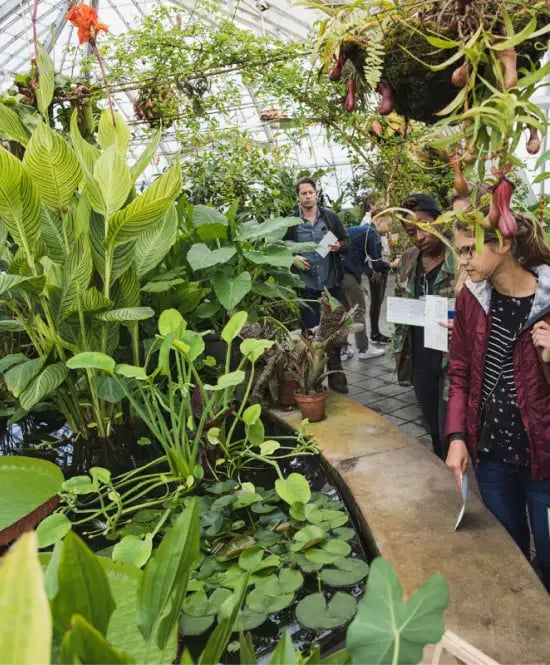
Educational programs and special events make the Conservatory of Flowers a dynamic community gathering place. Photo source: gggp.org
Workshops, classes, and community programs
Beyond casual visits, the Conservatory is part of a wider garden ecosystem that includes workshops, classes, lectures, youth programs, and community events. These offerings help the space function as more than a pretty landmark. It is also a place for botanical education, conservation awareness, family learning, and hands-on curiosity.
That educational role matters because the Conservatory gives visitors a close view of plant environments many people would never encounter in daily life. It can introduce children to carnivorous plants and water lilies, give gardeners a closer look at tropical species, and offer adults a quiet reminder that San Francisco’s cultural life is not limited to theaters, restaurants, and museums.
For a broader culture day, the Conservatory can sit comfortably beside other local institutions, from the Asian Art Museum to the Exploratorium. Different settings, same citywide habit: turning curiosity into a public experience.
Nearby walks and low-key extensions
A Conservatory visit works especially well when it is not rushed. After the galleries, spend a few minutes outside looking back at the building from the lawn. The facade is part of the experience, and the surrounding beds add a softer, seasonal frame.
For a gentler park route, pair the Conservatory with nearby garden paths, the Lily Pond, or a longer walk toward the San Francisco Botanical Garden and Japanese Tea Garden. The Conservatory works especially well as the intimate, indoor counterpoint to Golden Gate Park’s open lawns and outdoor landscapes.
From there, the day can stretch in several directions. A longer park walk might connect with the audiobook walk through Golden Gate Park, while a more active itinerary could continue toward trails and open spaces featured among San Francisco’s best hiking trails. For a neighborhood-focused afternoon, Cole Valley is close enough to pair with a meal or a quieter stroll.
Seasonal neighborhood events can also shape the day. The Sunset District side of the park often feels more residential and ocean-adjacent, while events like the Sunset Holiday Mercantile show how park-adjacent neighborhoods create their own local rhythms around makers, food, and community gathering.
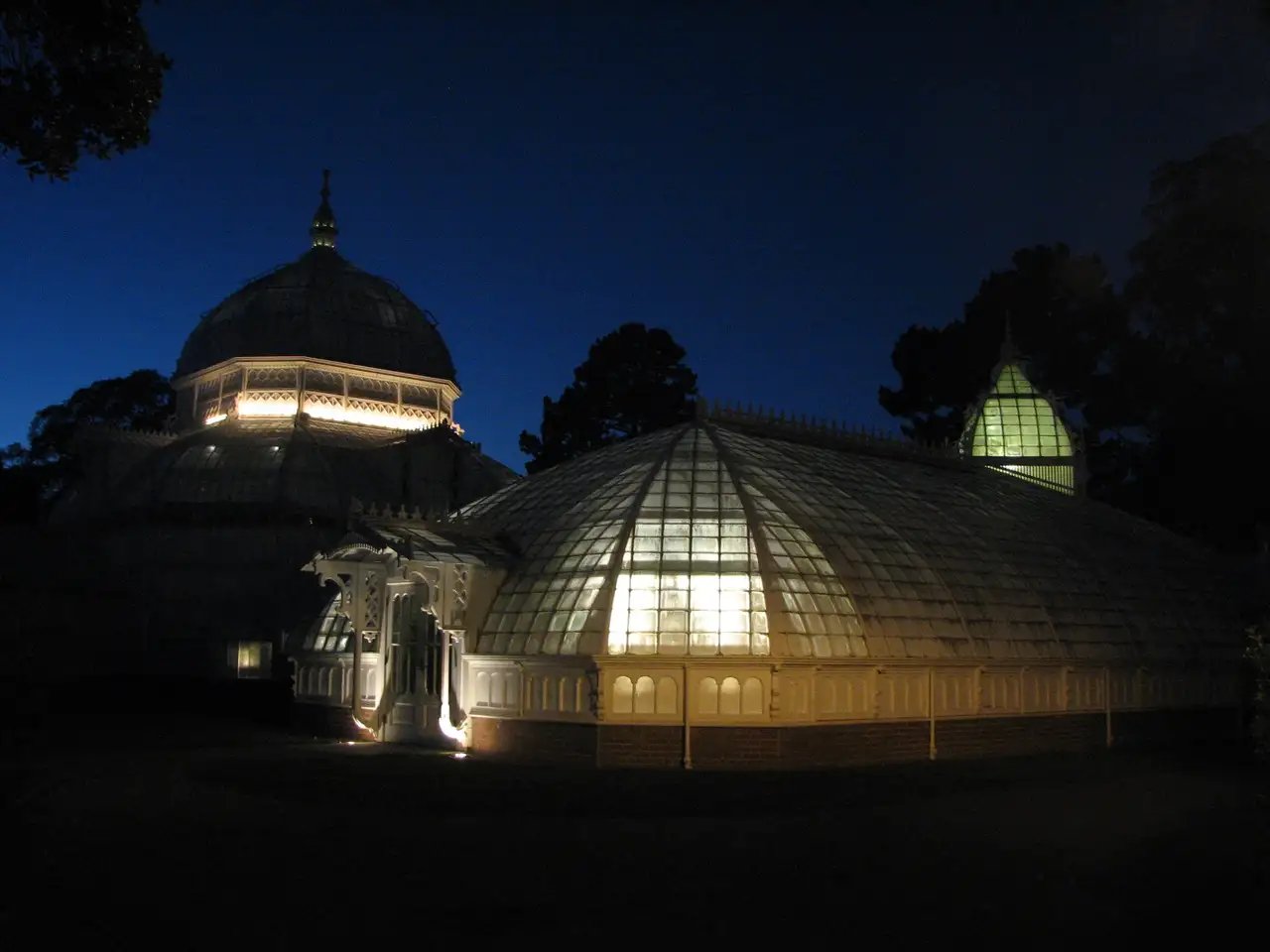
The Conservatory of Flowers continues to inspire and educate visitors as a cornerstone of San Francisco's cultural landscape. Photo by Seán A. O'Hara on Flickr, CC BY-NC 2.0
Why the Conservatory still feels essential
The Conservatory of Flowers endures because it brings together several versions of San Francisco at once. It is historic but alive. It is highly designed but organic. It is a landmark for visitors, but it still belongs to everyday park life. It can be a quiet stop, a family outing, a photography subject, a botany lesson, or the opening chapter of a longer Golden Gate Park day.
Its scale is part of the pleasure. The Conservatory does not overwhelm. Instead, it invites attention: to glass, wood, mist, leaves, flowers, water, and the patient work of keeping tropical plant life thriving in a city shaped by fog and Pacific air.
For anyone exploring San Francisco with curiosity, the Conservatory is worth treating as more than a quick photo stop. Step inside, slow down, and let the park’s oldest building show you one of the city’s most delicate interiors.
FAQ
Where is the Conservatory of Flowers located?
The Conservatory of Flowers is located at 100 John F. Kennedy Drive in the eastern portion of Golden Gate Park in San Francisco.
When did the Conservatory of Flowers open?
The Conservatory of Flowers opened in 1879, making it the oldest building in Golden Gate Park.
What can you see inside the Conservatory of Flowers?
Visitors can see tropical plant galleries, aquatic plants, orchids, water lilies, carnivorous plants, cloud-forest species, potted plant displays, and seasonal botanical features.
Does the Conservatory of Flowers have carnivorous plants?
Yes. Carnivorous plants are part of the Conservatory’s collection, and the Nepenthes pitcher plants are especially memorable for their suspended forms and sculptural shapes.
Is the Conservatory of Flowers free?
Admission is free for San Francisco residents, veterans, Museums for All participants, and Gardens members. It is also free for everyone on the first Tuesday of each month. Visitors should confirm current admission details on the official Gardens of Golden Gate Park website before going.
Is the Conservatory of Flowers closed on Wednesdays?
Yes. The Conservatory is closed on Wednesdays for weekly maintenance, according to the official Gardens of Golden Gate Park hours page.
How long does a visit usually take?
Many casual visitors can enjoy the Conservatory in about 30 to 45 minutes. Plant lovers, photographers, sketchers, and visitors who like to sit and linger may want one to two hours.
Can you visit the Conservatory, Japanese Tea Garden, and Botanical Garden together?
Yes. The three gardens are all part of Gardens of Golden Gate Park. Visitors who want to see all three should check the official ticket page for the 3-day multi-garden pass.