
TL;DR summary: San Francisco calculates secured property tax from a property's net taxable assessed value, the annual tax rate, and any direct charges or special assessments. Annual bills are generally mailed in October. The first installment is due November 1 and delinquent after 5:00 p.m. on December 10; the second is due February 1 and delinquent after 5:00 p.m. on April 10. Because rates and individual charges change, always confirm the fiscal-year rate and deadlines printed on the official bill.
Property taxes are part of the full cost of buying in San Francisco, but the bill is not simply a fixed percentage of a home's current market value. California assessment law, San Francisco's annual rate, exemptions, direct charges, supplemental assessments, and payment timing can all affect what an owner owes.
This guide explains the secured property tax system for real property such as a house, condominium, apartment building, or parcel of land. It is designed for owners and prospective buyers who want to understand the bill, plan for closing costs, pay on time, or challenge an assessed value. Those weighing the broader reasons for owning a home should treat property tax as one part of the long-term cost. For a specific parcel, the tax bill and guidance from the appropriate city office control.
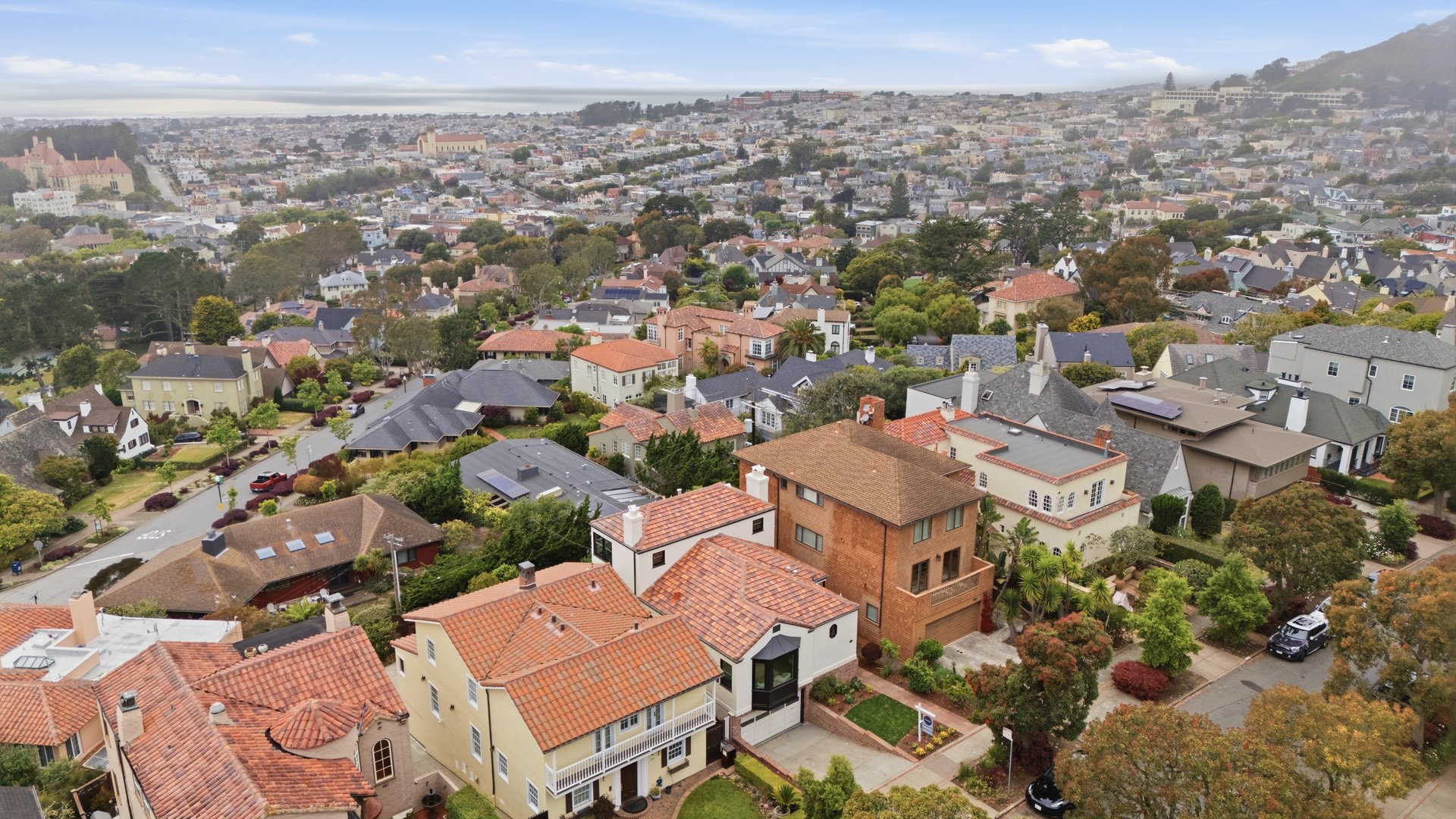
San Francisco stretches across a patchwork of hillside neighborhoods, with rows of homes, mature trees, winding residential streets, and distinctive rooftops filling the landscape.
How San Francisco Property Tax Works
Two city offices have different responsibilities. The San Francisco Office of the Assessor-Recorder determines assessed value and administers local assessment matters. The Office of the Treasurer and Tax Collector prepares and mails secured tax bills, accepts payments, and administers delinquent accounts.
California Proposition 13 generally establishes a base-year value when property changes ownership. That factored base-year value may increase annually by no more than 2% or the California Consumer Price Index, whichever is lower. Completed new construction can create an additional assessment, and a qualifying decline in market value can produce a temporary reduction under Proposition 8. The Assessor-Recorder's property valuation fact sheet explains these rules and the distinction between assessed value and market value.
That distinction matters when comparing neighborhoods. A property's purchase price, ownership history, improvements, exemptions, and direct assessments can produce a tax bill that differs substantially from a nearby property's bill. Use neighborhood context to evaluate location, but use the parcel's assessment record and bill for tax planning.
What Is the San Francisco Property Tax Rate?
The secured property tax rate changes from one fiscal year to the next. As of this article's August 31, 2026 update, the latest rate displayed on the Treasurer and Tax Collector's secured property tax page is 1.18268325% for fiscal year 2025-26. San Francisco had not yet published a fiscal year 2026-27 rate on that page, so owners should not apply the 2025-26 figure to a later bill without verification.
Property tax formula
(Net taxable assessed value × annual tax rate) + direct charges and special assessments = total property tax bill
For illustration only, applying the fiscal year 2025-26 rate to a net taxable assessed value of $1,000,000 produces $11,826.83 before direct charges and special assessments. That is an estimate, not a parcel-specific bill. Prospective owners should incorporate taxes, insurance, financing, and other recurring expenses into an affordability calculation.

Calculating the ongoing cost of homeownership requires reviewing figures, comparing expenses, and planning around the numbers associated with a property. Photo by Jakub Żerdzicki on Unsplash
How to Read a San Francisco Property Tax Bill
San Francisco's secured tax bill identifies the property by Block and Lot Number, sometimes called the assessor's parcel number or APN. It also shows the owner of record, property location, assessment information, exemptions, net taxable value, annual rate, direct charges, total due, and two installment amounts. The city's bill-reading guide labels each field on a sample bill.
- Gross assessed value: The enrolled value of land and improvements before exemptions.
- Exemptions: Eligible deductions from assessed value, such as the Homeowners' Exemption.
- Net taxable value: Gross assessed value minus applicable exemptions.
- Direct charges and special assessments: Parcel-specific charges from other public agencies or city programs. These are added after the ad valorem calculation.
- Total due: The tax on net taxable value plus direct charges and special assessments, generally divided into two equal installments.
Do not assume that an exemption reduces every line on the bill. California's State Board of Equalization explains that exemptions generally apply to ad valorem tax, not necessarily to direct levies, special taxes, or special assessments.
Supplemental Property Tax After a Purchase or New Construction
A change in ownership or completed new construction generally requires the Assessor-Recorder to determine a new value. When that value is higher than the prior assessed value, the city may issue a supplemental assessment for the difference. The related bill is commonly prorated for the portion of the fiscal year remaining after the event.
A supplemental bill is separate from the regular annual secured tax bill, and its delinquency dates depend on when it is mailed. Buyers should reserve for that possibility when estimating the cost of buying. The Treasurer and Tax Collector publishes the applicable supplemental schedules on its secured property tax page.
Tax planning should also happen before making an offer. A lender's monthly escrow estimate may not immediately reflect a later supplemental assessment, so buyers should ask how the estimate was calculated and keep purchase documents and assessment notices organized.
San Francisco Property Tax Due Dates
Annual secured property tax bills are generally mailed in October. The entire bill may be paid with the first installment, or it may be paid in two installments. A due date and a delinquency date are not the same: the installment is legally due first, and the penalty attaches if it remains unpaid after the delinquency deadline.
Installment | Due | Delinquent after | Initial penalty |
|---|---|---|---|
First | November 1 | 5:00 p.m. on December 10 | 10% |
Second | February 1 | 5:00 p.m. on April 10 | 10% plus applicable fees |
If a statutory date falls on a weekend or legal holiday, the effective deadline may move under California law. Do not assume the adjustment; use the date printed on the current bill and confirm it through the official payment portal. Supplemental and escape bills can follow different schedules.
How to Pay San Francisco Property Tax
The Treasurer and Tax Collector's official property tax payment page provides the current portal, service fees, mailing instructions, City Hall hours, and ACH or wire details.
- Online: Pay by electronic check, credit card, or debit card. The city currently lists no service fee for eCheck and a service fee for card payments.
- By mail: Make the check or money order payable to “SF Tax Collector,” include the Block and Lot number on the memo line, and do not send cash.
- At City Hall: Payments are accepted through the Treasurer and Tax Collector in Room 140 during published hours.
- By ACH or wire: Follow the city's instructions and include the identifiers required for the applicable tax type.
- Through a lender: If taxes are impounded or escrowed with the mortgage, confirm that the lender has the correct bill and will pay each installment on time.
For mailed payments, the city warns that some postage is not postmarked and that the USPS processing date may differ from the mailbox pickup date. Mail early. If sending payment near the deadline, review the city's current postmark instructions and consider obtaining evidence of timely mailing at a USPS counter.
Late Payments, Tax Default, and Penalties
A late installment generally receives a 10% penalty, and the delinquent second installment can also receive an applicable administrative fee. If the annual secured bill remains unpaid through June 30, the property becomes tax-defaulted. According to the city's delinquent property tax guidance, the defaulted amount generally accrues 1.5% per month, or 18% per year, plus a one-time redemption fee.
A property that remains tax-defaulted for five or more years may become subject to the Tax Collector's power to sell. Eligible owners who are not yet in power-to-sell status may be able to establish a five-year redemption installment plan, but they must satisfy the plan terms and keep current taxes paid. Contact the Treasurer and Tax Collector promptly rather than relying on a general description of the rules.
Penalty waivers are limited by law and require qualifying circumstances and supporting documentation. A pending question, correction request, or assessment appeal does not automatically stop penalties from accruing.
Property Tax Exemptions and Relief Programs
Property tax relief is not one universal program. Each exemption, exclusion, postponement, or parcel-tax waiver has separate eligibility and filing rules. Owners should apply through the agency that administers the specific program.
Homeowners' Exemption
An eligible owner who occupies the property as a principal residence may claim the Homeowners' Exemption. It deducts up to $7,000 from assessed value, not $7,000 from the tax bill. Once approved, it generally continues until ownership or occupancy eligibility changes.
Disabled Veterans' Exemption
Qualified veterans with a 100% service-connected disability rating, veterans compensated at the 100% rate because of unemployability, and certain unmarried surviving spouses may qualify for California's Disabled Veterans' Exemption on a principal residence. Basic and low-income versions have different rules, and the adjusted exemption and income amounts change. Confirm current eligibility and forms with the Assessor-Recorder and the California State Board of Equalization.
Senior Parcel-Tax Exemptions
Some San Francisco school-related parcel taxes provide exemptions for qualifying seniors who live on the property. These are exemptions from specified parcel-tax line items, not a general exemption from the entire property tax bill. The Treasurer and Tax Collector maintains a current list of parcel-tax exemptions and special assessments.
Property Tax Postponement
California's Property Tax Postponement Program may allow qualifying seniors, people who are blind, and people with disabilities to defer current-year property taxes on a principal residence. This is a postponement secured by a lien, not a forgiveness program. Income, equity, occupancy, filing-window, and other requirements apply.
Mills Act Contracts
Owners of qualified historic properties may explore a Mills Act historical property contract, which can reduce property taxes in exchange for maintaining and preserving a qualified historic property. Eligibility is limited, approval is not automatic, and the contract creates ongoing responsibilities. The broader relationship between preservation and historic buildings is particularly relevant in San Francisco; owners should verify the current application requirements with the San Francisco Planning Department.
How to Challenge a San Francisco Property Assessment
A property owner may disagree with the assessed value without disputing the annual tax rate. The Assessor-Recorder determines value; the independent Assessment Appeals Board decides formal valuation disputes.

Property owners may need to review appraisals, comparable sales, construction records, and other documentation when challenging an assessed property value. Photo by Gabrielle Henderson on Unsplash
- Confirm the value and assessment type. A regular annual assessment, supplemental assessment, escape assessment, and calamity reassessment can have different appeal periods.
- Gather evidence tied to the valuation date. Useful evidence can include recent comparable sales, a qualified appraisal, photographs, construction records, or documents showing a factual error.
- File with the correct office by the correct deadline. A conversation with the Assessor-Recorder does not replace a timely formal appeal when one is required.
- Pay the tax bill on time. The Assessment Appeals Board states that filing an appeal does not suspend the obligation to pay. If the assessment is reduced, the city issues the corresponding refund under its process.
A current home valuation can help an owner understand the market context, but it is not a substitute for the evidence, valuation date, filing requirements, or professional appraisal that an appeal may require.
Assessment type | General filing window |
|---|---|
Regular assessment | July 2 through September 15 when the required notice was issued by August 1; the city's rules provide a later November 30 deadline in certain no-notice circumstances. |
Supplemental assessment | Generally within 60 days of the notice or its postmark date, whichever is later. |
Escape assessment | Generally within 60 days of the escape tax bill or its postmark date, whichever is later. |
Misfortune or calamity | Generally within six months of the notice date or postmark date, whichever is later. |
Deadlines can depend on the notice received and the assessment being challenged. Review the Assessment Appeals Board's current instructions before filing.
Property Taxes When Selling a San Francisco Home
At closing, property taxes are commonly prorated between buyer and seller according to the purchase agreement and escrow statement. That allocation does not change which party the city recognizes as responsible for an outstanding bill outside the transaction. Owners preparing to sell should review payment status, supplemental or escape bills, liens, and any pending appeal with escrow and their tax adviser.
House keys, model homes, and financial figures illustrate the costs and financial details homeowners may review when completing a real estate transaction. Photo by Jakub Żerdzicki on Unsplash
For San Francisco sellers, tax prorations are one part of the broader net-proceeds picture. Consider them alongside transfer tax, loan payoff, commissions, preparation costs, and other closing adjustments. A home-sale calculator can provide an initial framework, while the escrow settlement statement provides the transaction-specific accounting.
The tax calendar can also intersect with timing a sale, but it should not drive the decision by itself. Market conditions, preparation, personal timing, and the expected net result usually matter more than whether a particular installment has already been paid.
San Francisco Property Tax Checklist
- Confirm the Block and Lot number and owner mailing address.
- Use the tax rate printed for the applicable fiscal year.
- Review exemptions, direct charges, and special assessments separately.
- Budget for a possible supplemental bill after a purchase or completed new construction.
- Schedule payment before the delinquency deadline and verify that it cleared.
- Keep bills, payment confirmations, notices, appraisals, and construction records.
- If disputing value, identify the assessment type and appeal deadline immediately.
Frequently Asked Questions
What is the San Francisco property tax rate?
The rate changes by fiscal year. The latest rate published on the Treasurer and Tax Collector's secured property tax page at the time of this update is 1.18268325% for fiscal year 2025-26. Use the rate printed on the applicable bill because the city had not yet posted the fiscal year 2026-27 rate on that page as of August 31, 2026.
When are San Francisco property taxes due?
The first secured installment is due November 1 and becomes delinquent after 5:00 p.m. on December 10. The second is due February 1 and becomes delinquent after 5:00 p.m. on April 10. Confirm the dates on the current bill, including any calendar adjustment.
How is a San Francisco property tax bill calculated?
The city multiplies net taxable assessed value by the annual tax rate, then adds direct charges and special assessments. Net taxable value is assessed value after eligible exemptions.
Does market value determine the annual property tax?
Not necessarily. A purchase or other assessable transfer generally establishes a new base-year value, while Proposition 13 generally limits later annual increases in that value. New construction, ownership changes, temporary decline-in-value reductions, exclusions, and exemptions can also affect the assessment.
Can I pay San Francisco property tax online?
Yes. The city accepts eCheck, debit card, and credit card payments online. The official payment page currently lists no service fee for eCheck and service fees for cards. Other methods include mail, City Hall, and ACH or wire transfer.
What happens if my payment is late?
A delinquent installment generally receives a 10% penalty, with applicable fees on the second installment. Unpaid secured taxes become tax-defaulted after June 30 and generally accrue 1.5% per month plus a redemption fee. After five or more years of default, the property may become subject to the Tax Collector's power to sell.
Are exemptions available to homeowners?
Eligible owner-occupants may claim the Homeowners' Exemption, which deducts up to $7,000 from assessed value. Separate programs may apply to qualified disabled veterans, certain nonprofit uses, and eligible senior residents for specified parcel taxes. Eligibility and filing rules vary.
How do I appeal a San Francisco property assessment?
Regular assessment appeals are generally filed with the Assessment Appeals Board between July 2 and September 15. Supplemental, escape, and calamity assessments have different windows. Filing an appeal does not suspend the obligation to pay the bill on time.
Planning a San Francisco move?
Property tax is only one part of a purchase or sale, but it deserves a clear place in the plan. Connect with Kinoko for thoughtful local guidance on the real estate decisions surrounding the numbers. For tax or legal advice, consult the appropriate qualified professional.
Last fact-checked: August 31, 2026. This article is general information, not tax or legal advice. Rates, fees, deadlines, eligibility rules, and agency procedures can change. Verify parcel-specific information with the San Francisco Office of the Assessor-Recorder, Office of the Treasurer and Tax Collector, or Assessment Appeals Board before acting.