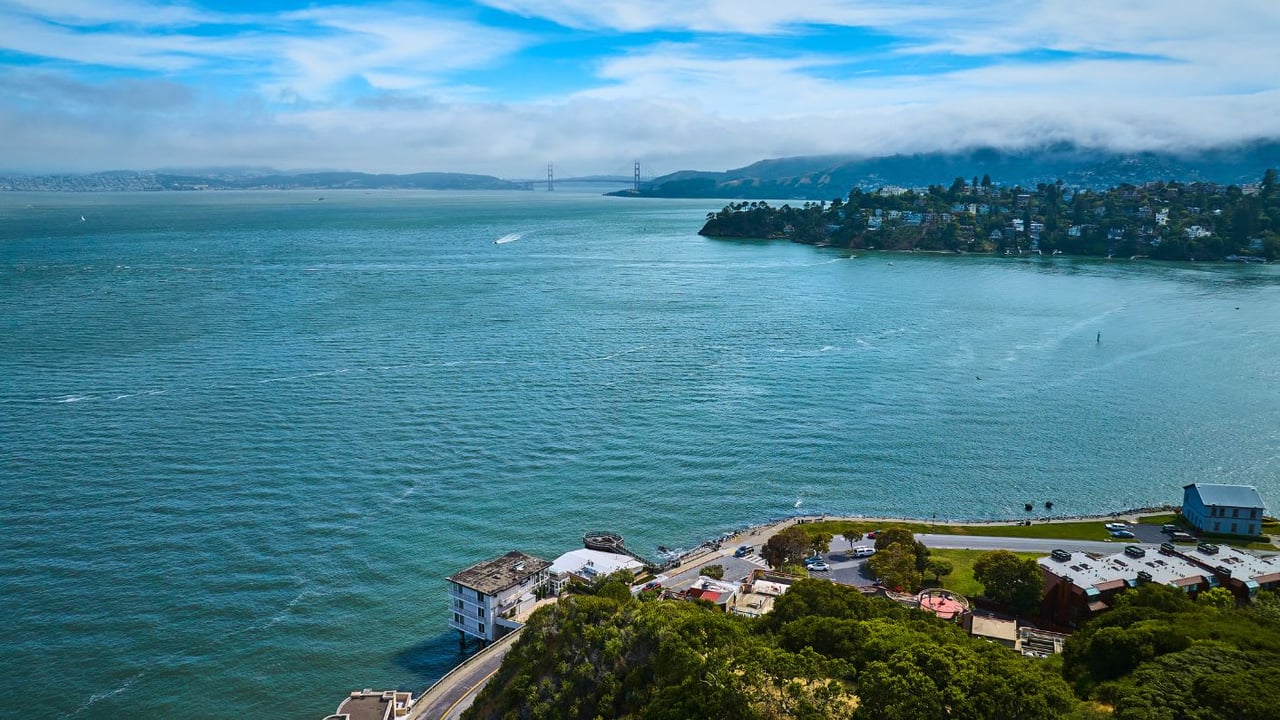
TL;DR summary: Living in Tiburon means pairing a quiet, water-oriented routine with a small downtown, strong community institutions, direct ferry access to San Francisco, and nearby trails and open space. The peninsula feels more residential and self-contained than many Bay Area communities. That calm comes with practical tradeoffs: most errands require a car, Tiburon Boulevard is the main road in and out, and ferry riders need to plan around the timetable.
Tiburon is easy to recognize from across the bay: a long green peninsula, houses stepping up the hills, and a compact downtown gathered around the ferry landing. Living here, however, is less about the postcard view than the rhythm that geography creates. The waterfront can feel lively on a sunny afternoon, while residential streets a few minutes uphill are notably quiet. Daily life is shaped by the bay, the slopes, and one main road connecting the peninsula to the rest of Marin.
That combination gives Tiburon a character that is polished but not urban, close to San Francisco but not an extension of it. It also helps to understand the place in sections: downtown and Main Street, the hillside streets above the water, the neighborhoods stretching northwest along Tiburon Boulevard, and the quieter shoreline around Paradise Drive. Each has a different relationship to walking, views, errands, and the ferry.
What everyday life in Tiburon feels like
The town runs at two speeds. Downtown is the social and visual center, especially when ferries arrive or the weather draws people to the waterfront. Away from Main Street, life is more residential. Morning dog walks, school and activity schedules, bike rides on the old railroad corridor, and quick exchanges between neighbors make up more of the week than the destination-town energy a visitor might notice first.
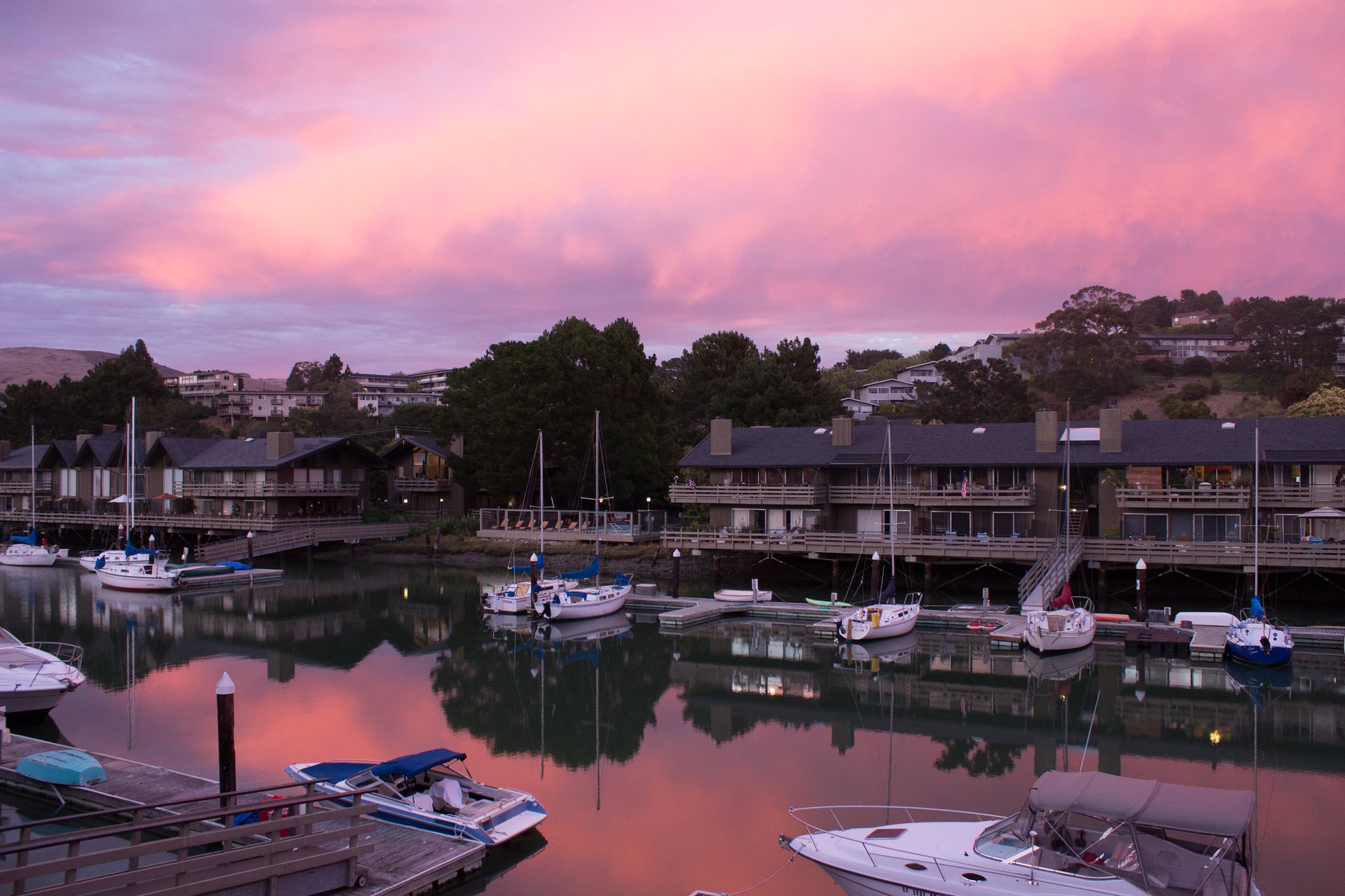
A calm Tiburon waterfront at sunset brings together small boats, residential buildings, wooded hills, and reflective bay waters, illustrating how closely everyday life on the peninsula is tied to the shoreline. Photo by Justin Levy on Flickr, CC BY-NC-SA 2.0
The water is not simply scenery. It affects light, wind, temperature, and how people move. A calm morning can turn breezy by late afternoon, and conditions can differ between Richardson Bay and the eastern side of the peninsula. The broader Marin County setting brings open space close to everyday routines, but Tiburon's narrow geography makes the bay feel unusually present.
Downtown covers a small footprint. It is useful for coffee, a meal, a waterfront walk, and a handful of errands, but it is not a full-service commercial district. Residents commonly leave the peninsula for larger grocery runs, broader retail, medical appointments, and other practical needs. For current restaurant and shop ideas, the separate dining and shopping article keeps those changeable details out of this evergreen lifestyle guide.
A community shared across the peninsula
Tiburon and Belvedere are separate incorporated communities, but daily life often crosses the boundary without ceremony. They share institutions and programs, including the Belvedere Tiburon Library and The Ranch recreation services. School events, volunteer organizations, youth activities, public meetings, seasonal gatherings, and familiar faces downtown create a social network that feels peninsula-wide.
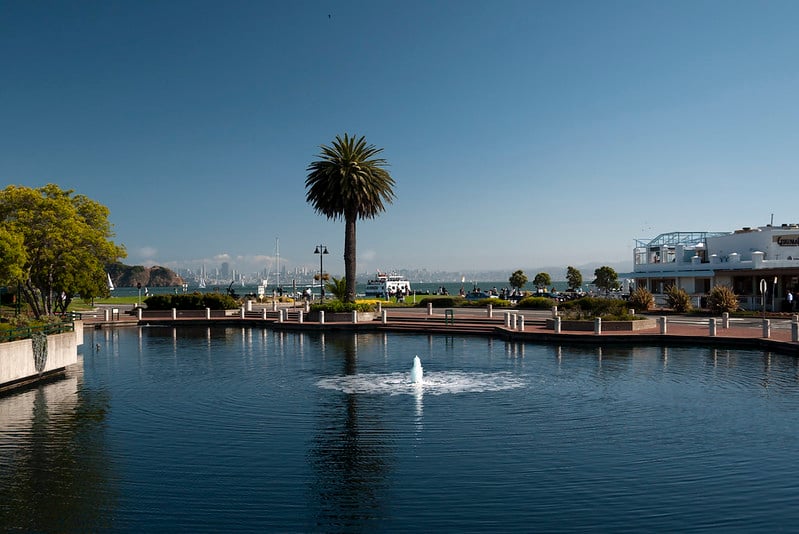
An open waterfront gathering space brings together landscaped paths, seating areas, local activity, and views across the bay, reflecting the shared public spaces where residents spend time and connect within the Tiburon-Belvedere community. Photo by Harvey Yau on Flickr, CC BY-NC-SA 2.0
The Belvedere Tiburon Library is a particularly useful example. It functions as more than a place to borrow books, with classes, talks, clubs, a makerspace, and recurring programs that bring different generations into the same building. That kind of shared civic space matters in a town where residential areas are spread along ridges and shoreline roads rather than arranged around a large central grid.
Community life is visible but not constant. People who want a dense calendar of nightlife or spontaneous city energy may find the evenings subdued. Those who like recognizing neighbors, seeing local organizations collaborate, and having a small center of gravity tend to understand the appeal quickly. The town's scale makes participation noticeable: attending a meeting, volunteering, or supporting a local event can feel connected to how the place actually works.
Art, culture, and history in daily view
Tiburon's cultural life is intimate and place-based. It shows up in Town Hall exhibitions, library gallery programs, concerts and lectures at historic sites, and the work of local preservation groups. THE Gallery at the library presents Bay Area artists and pairs exhibitions with community programming. The Town's Heritage & Arts Commission supports public art and helps preserve local historic character.
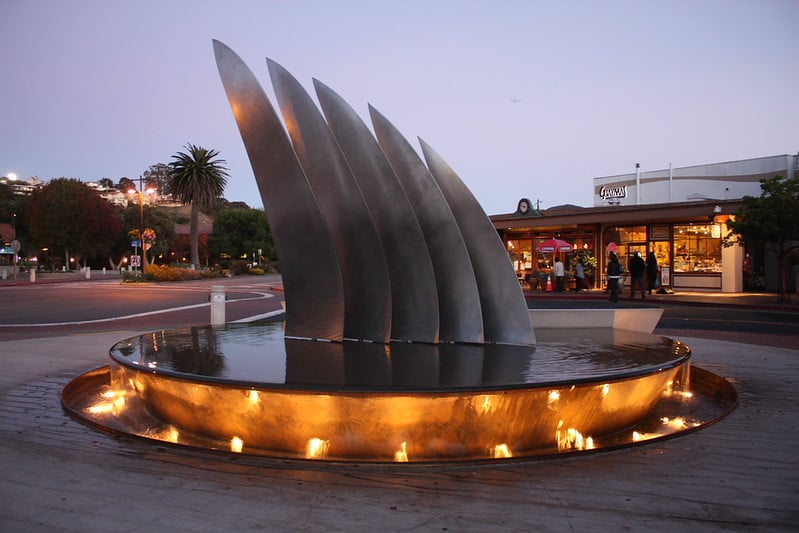
A large public sculpture anchors a waterfront gathering space in Tiburon, surrounded by landscaped walkways, local businesses, and evening activity, illustrating how art is incorporated into the town's everyday public environment. Photo by Ray Bouk on Flickr, CC BY 2.0
The peninsula is the ancestral homeland of the Coast Miwok, whose connection to the region continues in the present. Tiburon's later development was strongly shaped by the railroad and ferry terminal established in the late nineteenth century, followed by maritime and industrial activity. The Railroad & Ferry Depot Museum gives that history a physical setting on the waterfront, while the Belvedere-Tiburon Landmarks Society also cares for Old St. Hilary's, China Cabin, and the Art & Garden Center.
These places keep Tiburon from feeling like a scenic residential enclave without a memory. The old rail alignment remains part of how people walk and bike through town; the depot still sits beside active ferry routes; and historic buildings host current programs. For a broader introduction to this landscape and its past, the overview of Tiburon and the bay provides additional context without repeating the practical details here.
Getting around: ferry convenience and road reality
The direct Tiburon-San Francisco ferry is one of the town's clearest advantages. It turns a commute into a bay crossing and arrives at the Ferry Building. It is best treated as scheduled transportation rather than an always-available link: service patterns change, evening options are limited compared with urban transit, and missing a boat can materially alter the trip.
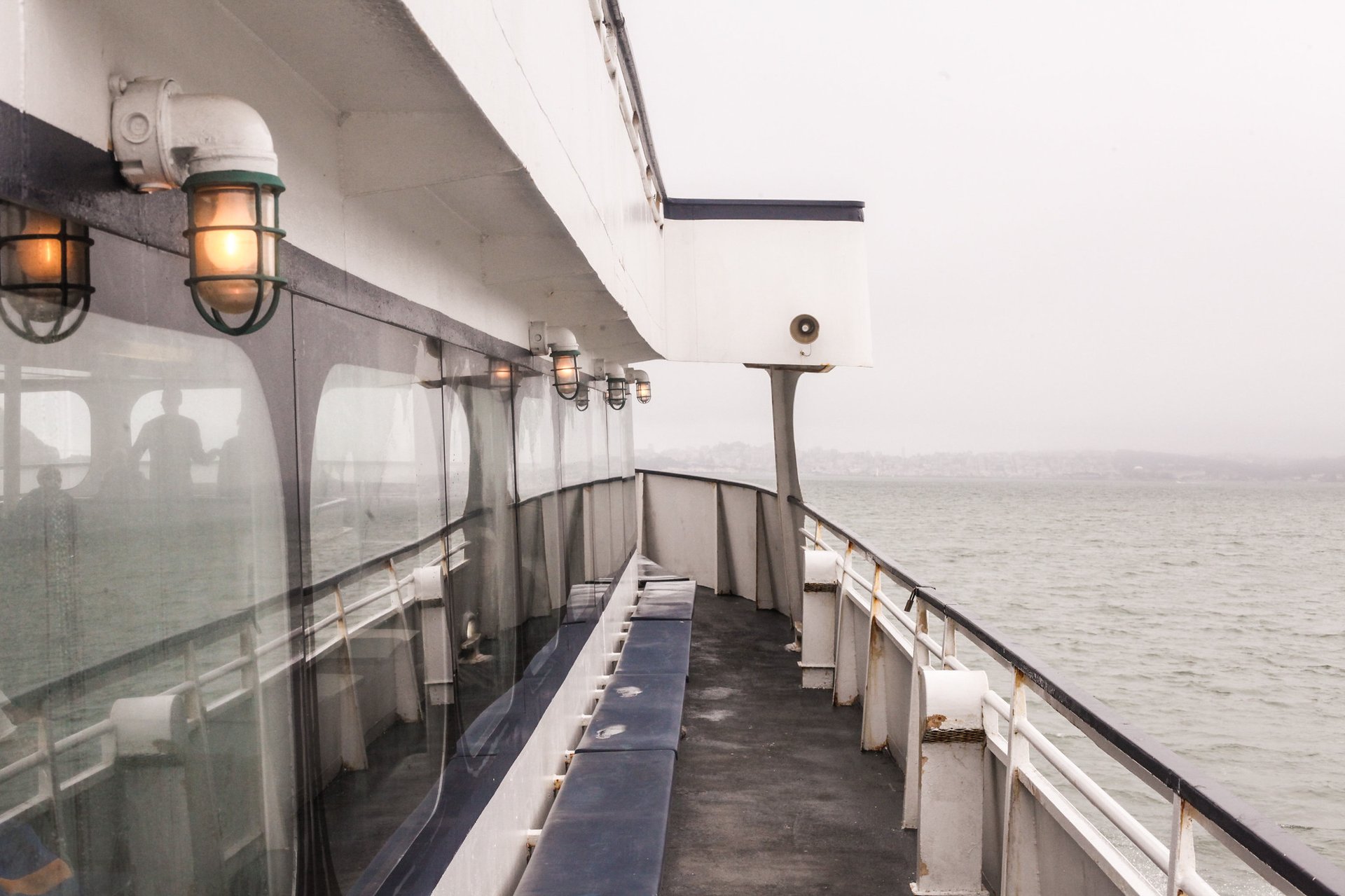
A passenger ferry travels across the bay toward San Francisco, illustrating how Tiburon residents can turn a regional commute into a direct waterfront crossing rather than a conventional road journey. Photo by Bill Couch on Flickr, CC BY-NC-ND 2.0
Driving is the practical default for many households. Tiburon Boulevard is the principal route to Highway 101, so school traffic, construction, collisions, or peak demand can be felt across the peninsula. Bus service exists, but frequency and destinations should be checked against an actual weekly routine. Anyone evaluating life here should test the commute at the times they would use it, including the trip home after the final convenient ferry.
Walking depends heavily on location. Downtown and the waterfront paths are easy to enjoy on foot, while steep grades and winding roads make some hillside addresses less pedestrian-friendly for errands. The paved Old Rail Trail gives walkers and cyclists a more continuous route along Richardson Bay, connecting the downtown direction with Blackie's Pasture and points closer to the highway.
Outdoor space woven into the week
Tiburon makes it easy to fit the outdoors into ordinary days. Blackie's Pasture and the shoreline path work for walks, runs, bike rides, and unhurried time beside Richardson Bay. Ring Mountain rises at the northwest edge of the peninsula, where protected grasslands, unusual geology, and wide Bay Area views create a very different setting from the waterfront. Sensitive habitat makes staying on marked trails especially important.
From downtown, the Angel Island ferry puts a state park across a short stretch of water. This access is part of local life, not just a visitor attraction: it makes an island hike or bike ride possible without first driving across Marin. The dedicated list of things to do covers outing ideas in more detail, while a wider look at Bay Area hiking helps place Tiburon's trails in the regional landscape.
How Tiburon differs from nearby Bay Area communities
Tiburon's defining quality is the way a small waterfront downtown, residential hills, ferry service, and open space sit on one narrow peninsula. Nearby places may share individual pieces of that formula, but the full combination feels different.
- Compared with Sausalito: Tiburon generally feels more residential and less continuously shaped by visitor traffic. Sausalito has a longer commercial waterfront and quicker road access toward San Francisco; Tiburon feels more tucked away at the end of the peninsula.
- Compared with Mill Valley: Mill Valley is wooded and mountain-oriented, with a larger network of commercial areas and trail connections. Tiburon is more visibly maritime, more open to the bay, and has a direct downtown ferry. The contrast is also clear in the account of daily life in Mill Valley.
- Compared with Corte Madera and Larkspur: those communities offer more immediate freeway access and broader shopping options. Tiburon trades some of that convenience for a quieter, more self-contained setting.
- Compared with San Rafael: Tiburon is smaller and less urban, with fewer services and a more consistent waterfront-residential character. San Rafael is Marin's larger civic and commercial center.
- Compared with Belvedere: the two share a peninsula and many institutions, but Belvedere is its own city, physically centered on Belvedere Island and the lagoon. Tiburon contains the larger downtown, ferry landing, and the long residential spine extending toward Highway 101.
For readers comparing several Bay Area communities, Tiburon stands out less for any single amenity than for the coherence of the whole setting. Water, hills, history, ferry access, and a small civic center all influence the same daily routine. A regional comparison of community lifestyles can help clarify the tradeoffs.
Questions to consider before living in Tiburon
A useful visit should resemble a normal week, not a waterfront afternoon. Drive Tiburon Boulevard during a likely commute, walk from a residential street to the places you would use, review current ferry and bus schedules, and note where regular errands would take you. It is also worth visiting in different weather. Wind, fog, sun exposure, and slope can change noticeably around the peninsula.
The central question is whether Tiburon's form matches your preferred routine. The town rewards planning and a willingness to trade some commercial convenience for quiet, water access, and a strong sense of place. For a wider geographic frame, the collection of neighborhood and city guides makes it easier to compare that balance across the region.
Frequently asked questions about living in Tiburon
What is it like to live in Tiburon, California?
Tiburon is quiet, residential, and strongly connected to the bay. Residents have a compact waterfront downtown, ferry service to San Francisco, nearby trails, and active community institutions. Most larger errands require leaving the peninsula, and everyday transportation takes planning.
Can you commute from Tiburon to San Francisco by ferry?
Yes. Golden Gate Ferry operates service between Tiburon and the San Francisco Ferry Building. Schedules vary, so commuters should confirm current departure times and consider a backup plan for late or disrupted trips.
Is Tiburon walkable?
Downtown, the waterfront, and sections of the Old Rail Trail are comfortable for walking. Walkability from residential areas varies because many streets are steep or winding, and the town's everyday services are spread out.
Are Tiburon and Belvedere the same place?
No. Tiburon is a town and Belvedere is a separate city. They are adjacent on the same peninsula and share several institutions, which is why people often refer to the Belvedere-Tiburon community as one local area.
What makes Tiburon different from other Marin communities?
Its narrow peninsula setting brings together direct ferry access, a small historic waterfront, hillside neighborhoods, shoreline paths, and protected open space. The result is more maritime and self-contained than inland Marin communities, with fewer commercial services and a quieter evening rhythm.