Last updated: October 2, 2026
TL;DR summary: The San Francisco Fall Show returns to the Festival Pavilion at Fort Mason Center for Arts & Culture from Thursday, October 15, through Sunday, October 18, 2026, following the Opening Night Gala on Wednesday, October 14. This year's theme, Métallique Chic, puts gilding, silver, copper, bronze, chrome, and other reflective materials at the center of a four-day fair of art, antiques, jewelry, and design from more than 40 international dealers. Hours are 10:30 a.m. to 7:00 p.m. Thursday through Saturday and 11:00 a.m. to 5:00 p.m. Sunday. Buy show-day and lecture tickets through the official site, choose your lecture first, and take Muni or a rideshare if you can, since the Fort Mason lot can fill and event-day parking rates apply.
The essential 2026 details
The San Francisco Fall Show returns to Fort Mason in October with four days of art, antiques, jewelry, decorative objects, and design conversation on the waterfront. Founded in 1982, the nonprofit fair brings together more than 40 dealers from around the world, with offerings that run from Impressionist paintings and estate jewelry to antique rugs, Asian ceramics, and period garden ornaments.
The organizer confirms the following schedule:
- Opening Night Gala: Wednesday, October 14, 2026
- Public show dates: Thursday, October 15, to Sunday, October 18, 2026
- Thursday to Saturday hours: 10:30 a.m. to 7:00 p.m.
- Sunday hours: 11:00 a.m. to 5:00 p.m.
- Location: Festival Pavilion, Fort Mason Center for Arts & Culture, 2 Marina Boulevard, San Francisco
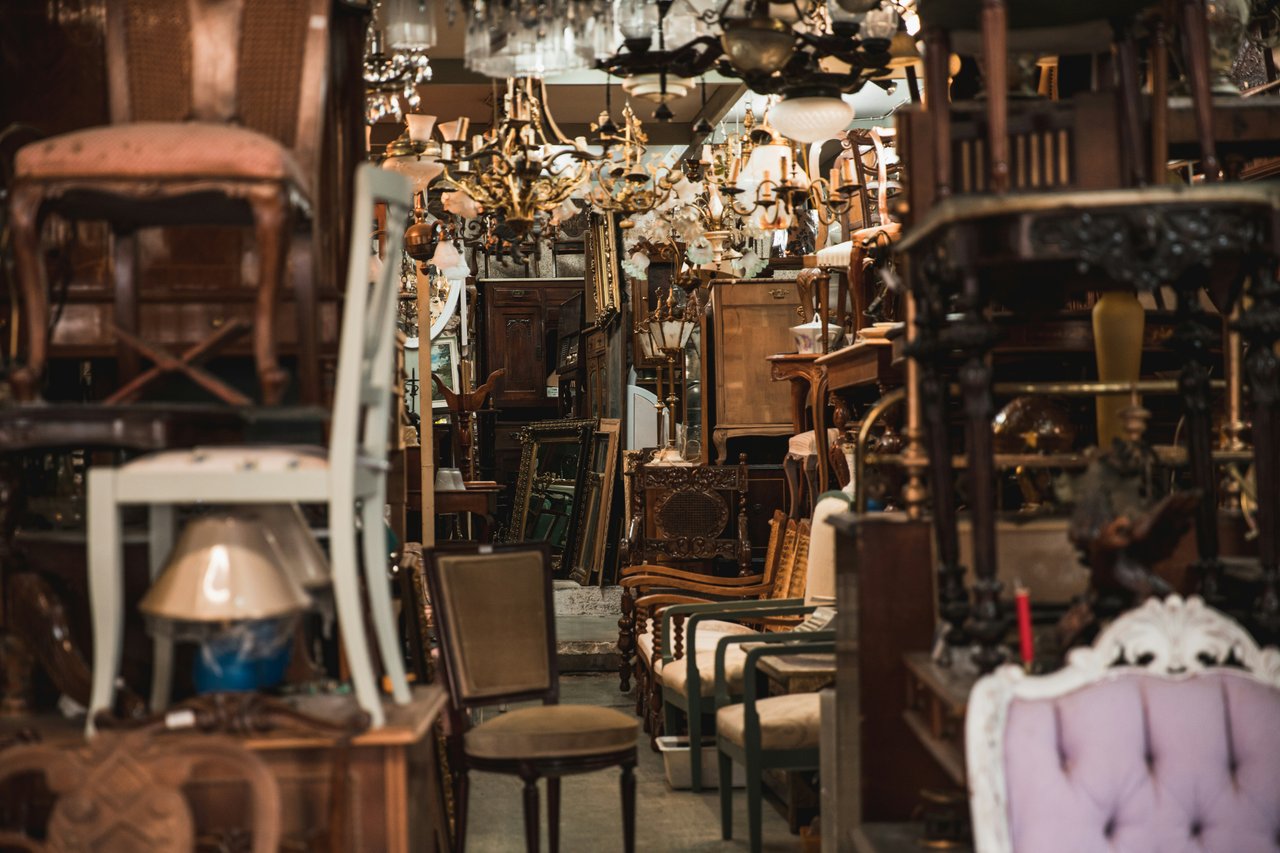
The show is big enough to reward a plan. A first pass through the floor can fill two hours. If you want to compare dealers, attend a lecture, revisit a favorite booth, and study the entry vignettes, allow at least half a day.
Métallique Chic sets the tone for 2026
The 2026 theme is Métallique Chic, a study of metal across the fine and decorative arts. The organizers frame it around gold leaf, silver filigree, copper patina, pewter, and time-worn bronze, in forms that range from Rococo gilding to Art Deco chrome. Each surface has its own relationship with light, age, technique, and use, so the theme rewards attention well beyond simple shine.
That breadth gives newcomers an easy way into the fair. Instead of trying to absorb every category at once, follow one material through the room. Compare the restraint of Georgian silver with the streamlined polish of Art Deco chrome, or set Rococo gilding beside the heavy, hand-worked forms of Brutalist metalwork. Side by side, the techniques behind each surface become much easier to read.
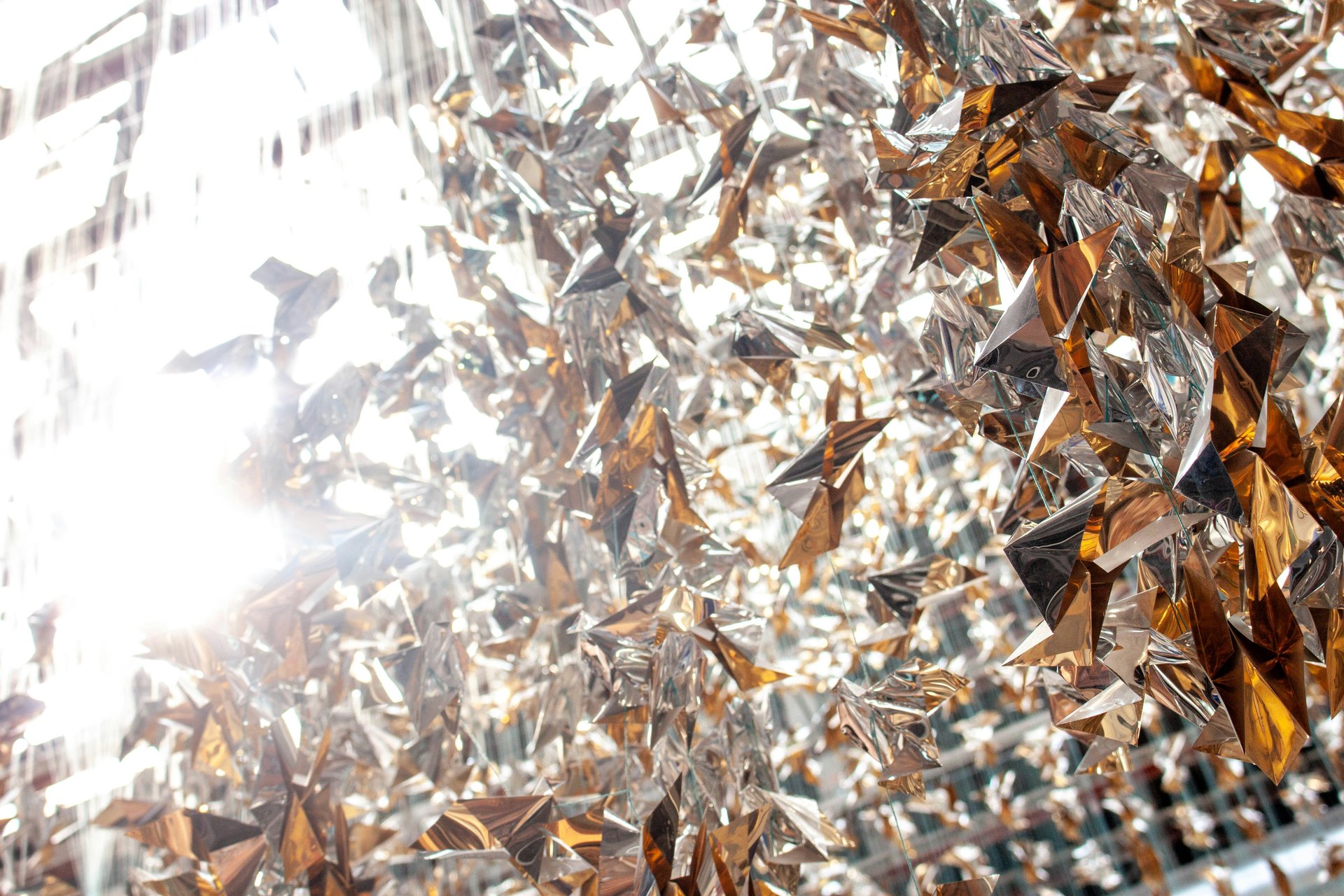
Reflective silver and copper-toned surfaces create a sculptural interplay of light and texture, echoing the metallic materials highlighted by the San Francisco Fall Show’s 2026 theme. Photo by Kamilla Isalieva on Unsplash
The theme suits a city comfortable with unlikely design pairings. San Francisco can move from ornate revival architecture to lean modernism within a few blocks, and the annual Decorator Showcase regularly shows how historic rooms can carry contemporary ideas.
What you will see on the show floor
The official 2026 exhibitor list spans fine art, furniture, jewelry, rugs, textiles, photography, ceramics, silver, antiquities, prints, garden pieces, and decorative objects. Specialties include:
- French decorative arts and antique French silver
- Ancient and contemporary Asian ceramics
- 20th-century estate jewelry
- Midcentury furniture
- 19th- and 20th-century photographs
- 18th- and 19th-century American furniture and folk art
- Arms and armour
- Period garden ornaments
For a direct line into this year's theme, look for the dealer specializing in antique frames, mirrors, and gilded objects.
This is a fair, not a museum exhibition. Objects are offered for sale, and dealers are there to discuss them. You do not need to be an established collector to ask useful questions. Start with four:
- What is the object made from, and how was it produced?
- What is known about its maker, date, and provenance?
- Has it been restored, altered, or repaired?
- What makes it representative, unusual, or especially strong within its category?
The best conversations often begin with close looking rather than price. Look at joinery, backs, bases, hallmarks, surface wear, and repairs. Keep a written list of the booths and objects you want to revisit, and photograph labels only after asking permission, since a long aisle of visual information blurs quickly. Several exhibitors, including Berggruen Gallery and Caldwell Snyder Gallery, also show work in San Francisco. That list can become a starting point for the city's gallery scene once the weekend ends.
The Grand Entry Hall vignettes
The entry vignettes are among the show's defining traditions. For 2026, six Design Council members are creating four installations using pieces from show exhibitors and wallpaper from show sponsor Schumacher. The vignette designers are:
- Meg Braff
- Christine and John Gachot
- Elizabeth Lawrence with Scott J. Sottile
- Christopher Roy
Treat the vignettes as arguments, not decoration. Each one shows how objects from different places and periods can be edited into a single point of view. Notice scale, negative space, color temperature, and the way metal surfaces redirect light. Then look for the same pieces, or close relatives, on the dealer floor, where their construction and history come into sharper focus.
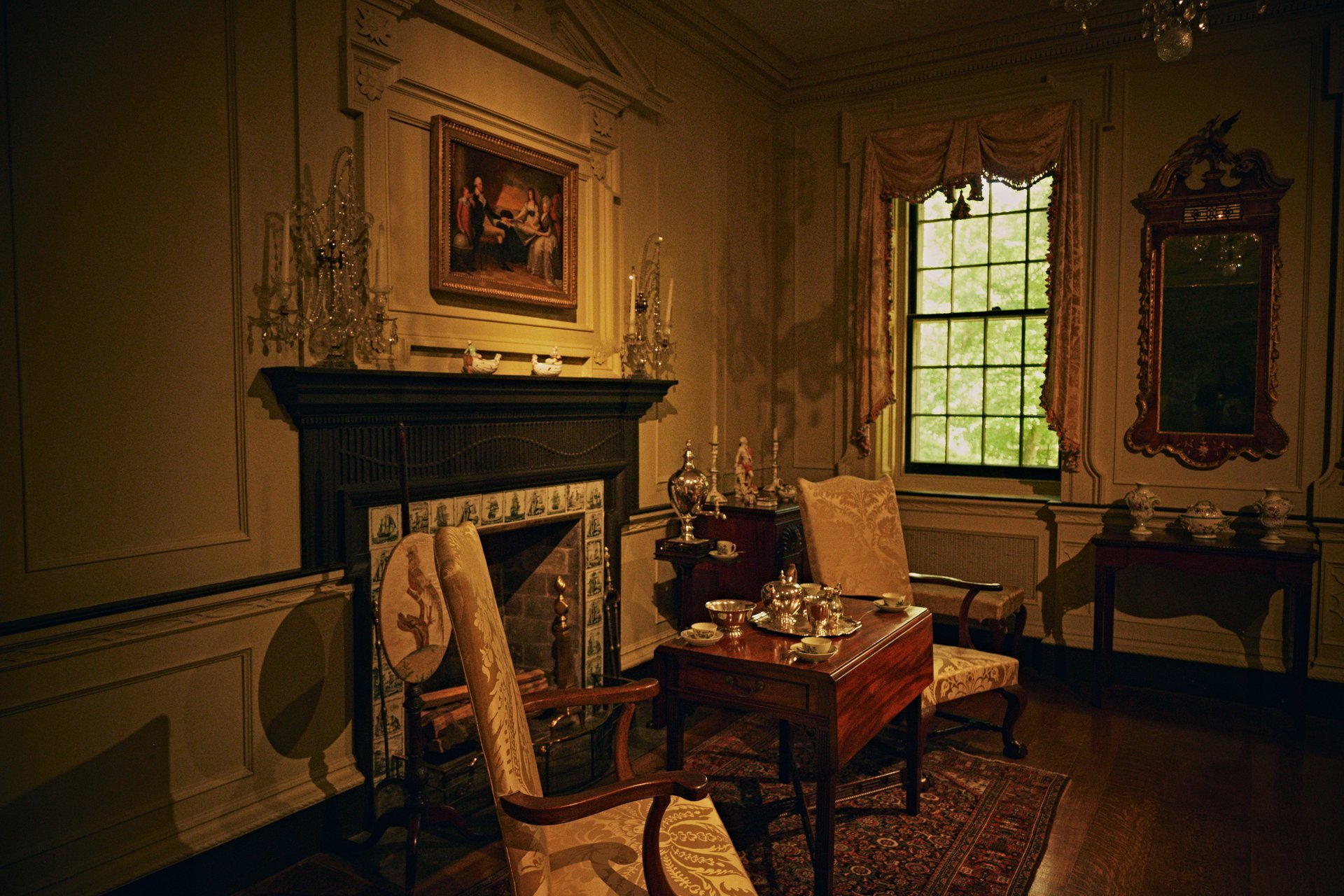
An elaborately styled interior brings together period furniture, framed artwork, decorative objects, textiles, and layered architectural details in a cohesive room setting. Photo by Magic Fan on Unsplash
The show also places local voices in an international setting. Ken Fulk is a 2026 Design Council co-chair and an opening-day speaker. He represents a strand of San Francisco design built on narrative, atmosphere, and a confident mix of periods.
The 2026 lecture series, day by day
The lecture program runs throughout the public show and brings together designers, architects, editors, makers, and collectors. Most talks are followed by book signings in the Authors' Alcove. Availability can change, so review the full lecture schedule and tickets before you go.
Thursday, October 15
- 11:00 a.m.: Zac Posen and Ken Fulk, moderated by Stellene Volandes, on collecting, personal style, and the lasting impact of great design.
- 2:30 p.m.: Charlotte Moss in conversation with Suzanne Tucker on travel, collecting, gardens, and Moss's Virginia home.
- 4:30 p.m.: Cathy Kincaid, Elizabeth Lawrence, and Scott J. Sottile on how art, antiques, and architecture give rooms character, moderated by Benjamin Reynaert.
Thursday offers the broadest introduction to the show's central ideas: how taste develops, how collections become personal, and how objects shape a room over time.
Friday, October 16
- 11:00 a.m.: Meg Braff, Christine Gachot, and Mish Tworkowski on thoughtful entertaining, moderated by Margot Shaw.
- 2:30 p.m.: Joan Craig, Geoffrey De Sousa, Marissa Geoffroy, and David Harber on collaboration among makers, artists, architects, and designers, moderated by Jacqueline Terrebonne.
- 4:30 p.m.: Young Huh, Madeline Stuart, and Nathan Turner on place, personality, and collected interiors, moderated by Eugenia Santiesteban Soto.
Friday is especially strong for visitors interested in craftsmanship and the path from a single object to a complete setting.
Saturday, October 17
- 11:00 a.m.: Anne Fairfax, Ed Hollander, and Emily Summers on the relationship among architecture, landscape, and interiors, moderated by Tony Bravo.
- 2:30 p.m.: Jay Jeffers and Richard Beard in conversation with Suzanne Tucker on collaboration between architect and interior designer.
- 4:00 p.m.: Dan Fink, Rush Jenkins, and Sean Anderson on the role of antiques in contemporary rooms, moderated by Tony Freund.
Saturday bridges collecting and the built environment, with two talks devoted to how architects, landscape architects, and interior designers work together.
Sunday, October 18
- Noon: Anu Jain and Christopher Roy on the next chapter of San Francisco design, moderated by Alisa Carroll.
- 2:00 p.m.: Timothy S. Adams, Douglas Wright, and William Peace on designing architecture and interiors around significant collections, also moderated by Alisa Carroll.
Sunday has a more local and architectural emphasis. The shorter show day makes it sensible to arrive near opening if you want both lectures and time with the exhibitors.
Tickets and the Opening Night Gala
The Opening Night Gala takes place Wednesday, October 14, in the Festival Pavilion. The evening offers a first look at the exhibitors' art and antiques alongside buffets, full bars, and live music. Ticket options are listed on the Opening Night Gala page.
Public show-day and lecture tickets are sold separately from the gala. Prices, inventory, and lecture access can change, so choose your lecture first, confirm its ticket terms, and then build the rest of your visit around that fixed time.
Getting to Fort Mason
Fort Mason Center for Arts & Culture sits on the northern waterfront between Aquatic Park and Marina Green. The main campus entrance is off Marina Boulevard at Buchanan Street. On the day of your visit, check the venue's directions and parking information.
Muni is often the simplest way to arrive. Fort Mason is served by several lines, including the 28, 30, 43, and 49. Routes and temporary stops can change, so check SFMTA service to Fort Mason before leaving.
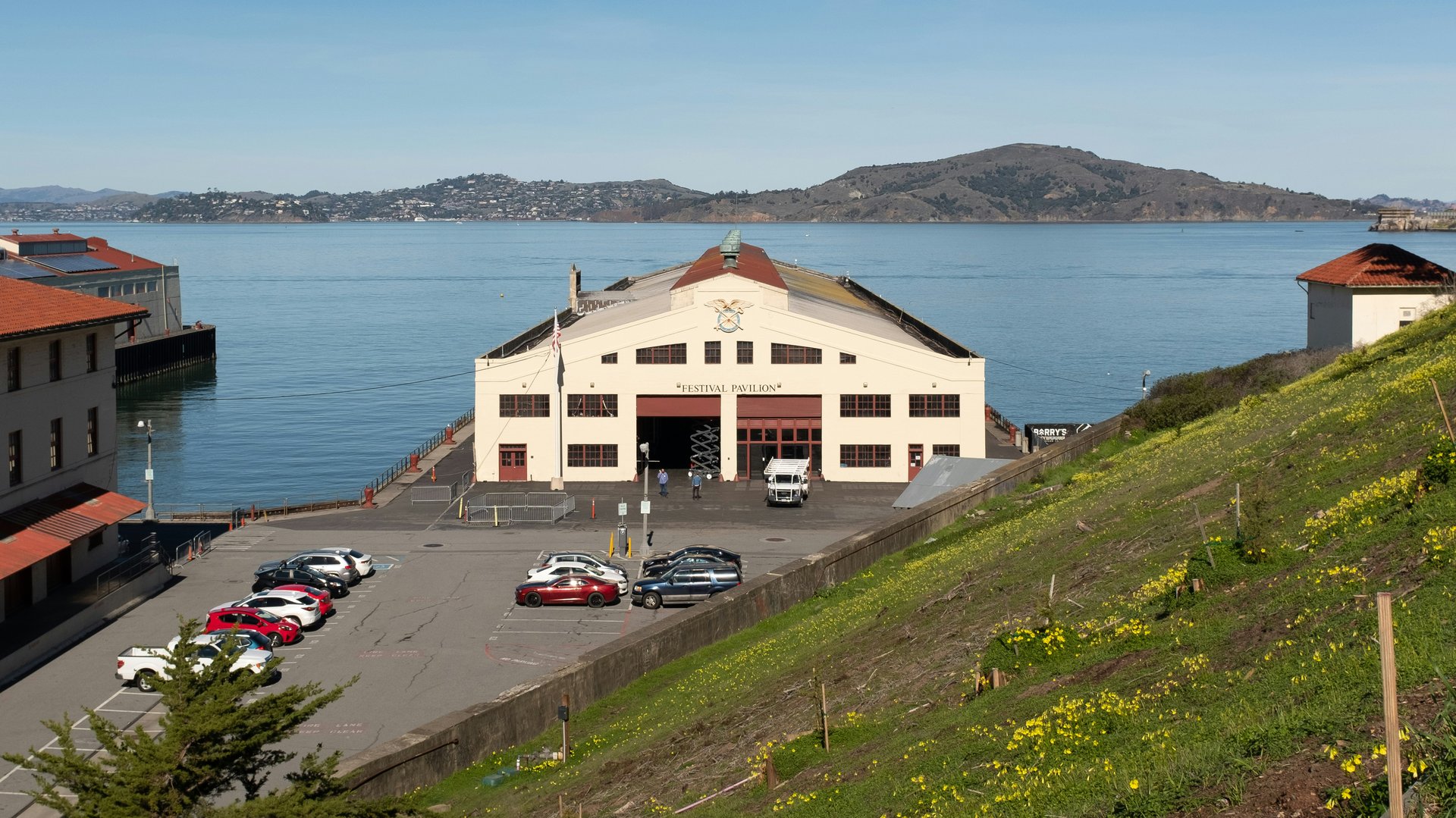
The Festival Pavilion sits directly on San Francisco’s northern waterfront at Fort Mason, with the bay and surrounding hills forming the setting for the Fall Show. Photo by Torehan Sharman on Unsplash
Fort Mason has paid on-campus parking, but the venue notes that the lot fills occasionally. Event-day rates apply on busy dates and reach $30 for stays of four hours or more. If you drive, arrive early. A rideshare drop-off at the main entrance avoids the search for a space. Walking in from the Marina, Cow Hollow, Russian Hill, or Fisherman's Wharf turns the arrival into part of the day.
October weather on the water can shift quickly. Bring a light layer even when the afternoon forecast looks warm, and wear comfortable shoes for concrete show floors and a waterfront walk.
Where to go before or after the show
The setting makes it easy to build a fuller day around the fair without crossing town.
For a waterfront walk, follow Marina Green west toward Crissy Field and the Presidio, where the views open toward the Golden Gate.
For coffee, lunch, or an unhurried browse, Chestnut Street in the Marina District is a short walk away, and Union Street in Cow Hollow is a few blocks farther.
If you are making an art weekend of it, the Legion of Honor is the natural companion. Its European paintings and decorative arts extend many of the traditions you will see on the dealer floor. One museum is plenty, though, since the fair already asks for sustained looking.
A practical strategy for first-time visitors
Start with one uninterrupted circuit of the floor. Do not stop at every booth. Mark the dealers, materials, or objects that pull you in, then return for longer conversations once you understand the fair's range.
Next, spend time with the entry vignettes and attend one lecture outside your main interest. A furniture collector may get more from a landscape discussion than from another furniture talk, and that cross-pollination is part of the show's appeal.
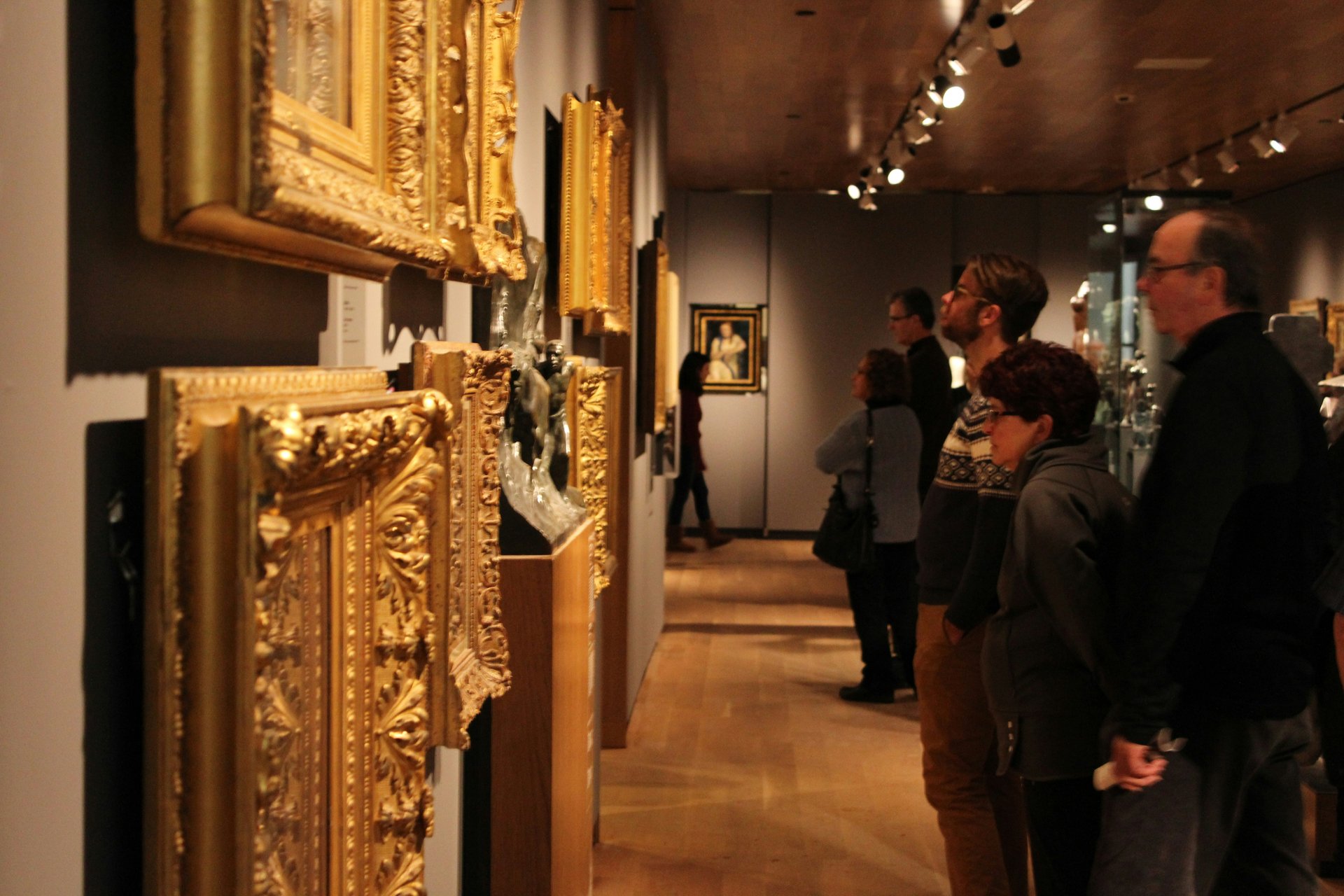
Visitors pause to examine framed artwork and decorative pieces in a gallery setting, reflecting the slower, more attentive approach encouraged for a first visit to the San Francisco Fall Show. Photo by Niloofar Bdl on Unsplash
Before leaving, revisit your three strongest objects and ask what changed between the first look and the second. The San Francisco Fall Show is at its best when it slows the eye down. Surface, proportion, technique, history, and personal response begin to separate from the first rush of beauty.
Frequently asked questions
When is the San Francisco Fall Show 2026?
The public show runs Thursday, October 15, through Sunday, October 18, 2026. The Opening Night Gala is Wednesday, October 14.
What are the 2026 show hours?
The show is open from 10:30 a.m. to 7:00 p.m. Thursday through Saturday, and from 11:00 a.m. to 5:00 p.m. on Sunday.
Where is the San Francisco Fall Show held?
It takes place in the Festival Pavilion at Fort Mason Center for Arts & Culture, 2 Marina Boulevard, San Francisco. The main campus entrance is off Marina Boulevard at Buchanan Street.
What is the 2026 theme?
The theme is Métallique Chic. It highlights metals and metallic surfaces across art, antiques, design, and jewelry, from gilding and silverwork to copper, bronze, pewter, and chrome.
Do I need to be a collector to attend?
No. The show is open to anyone interested in art, antiques, interiors, jewelry, craftsmanship, or design history. Dealers can explain an object's materials, maker, condition, provenance, and significance.
How do lecture tickets work?
Show-day and lecture tickets are sold through the official show website, separately from gala tickets. Check the terms for your chosen lecture before purchasing, and book early for high-interest speakers.
Which Muni lines go to Fort Mason?
Several lines serve Fort Mason, including the 28, 30, 43, and 49. Check SFMTA for current routes and stops before you travel.
Is parking available at Fort Mason?
Yes. Fort Mason has paid on-campus parking, but the lot can fill and event-day rates may apply. Transit, rideshare, walking, or biking may be more predictable.
How long should I spend at the show?
Allow at least two hours for a first visit. Plan a half day if you want to attend a lecture, speak with dealers, study the designer vignettes, and revisit favorite booths.
Published by Kinoko Real Estate, San Francisco.