In the mercurial world of contemporary art fairs, few possess the distinct atmospheric alchemy of the Bay Area in January. San Francisco Art Week serves as a rigorous curatorial platform that dissolves the obsolete boundaries between fine art and collectible design, offering a distinct alternative to the commercial frenzy of Miami or New York.
From the industrial grandeur of Fort Mason to the converted warehouses of the Dogpatch, the week transforms the city into a global cultural destination. Here is your guide to navigating the fairs, the parties, and the institutions defining the modern San Francisco art scene.
FOG Design+Art: The Anchor Tenant
Serving as the undisputed lodestar of the week is FOG Design+Art. Situated within the pier’s cavernous maritime aesthetic at the Fort Mason Center for Arts & Culture, the fair leverages the city's unique geography to stage booths that feel less like retail stalls and more like domestic vignettes of the ultra-sophisticated.
The week invariably pivots around the FOG Preview Gala, a philanthropic juggernaut benefiting the San Francisco Museum of Modern Art (SFMOMA). It is here that the city’s patrician lineage intersects with the hooded intellect of Silicon Valley—a rare sociological soup where blue-chip collecting habits are formed over champagne.
Galleries from London, New York, and Los Angeles descend upon the Bay, bringing works calibrated to appeal to a demographic that values provenance as deeply as innovation. To walk the aisles is to witness a dialogue between mid-century Italian furniture and post-war abstraction, a juxtaposition that defines the sophisticated taste of the modern San Francisco patron.
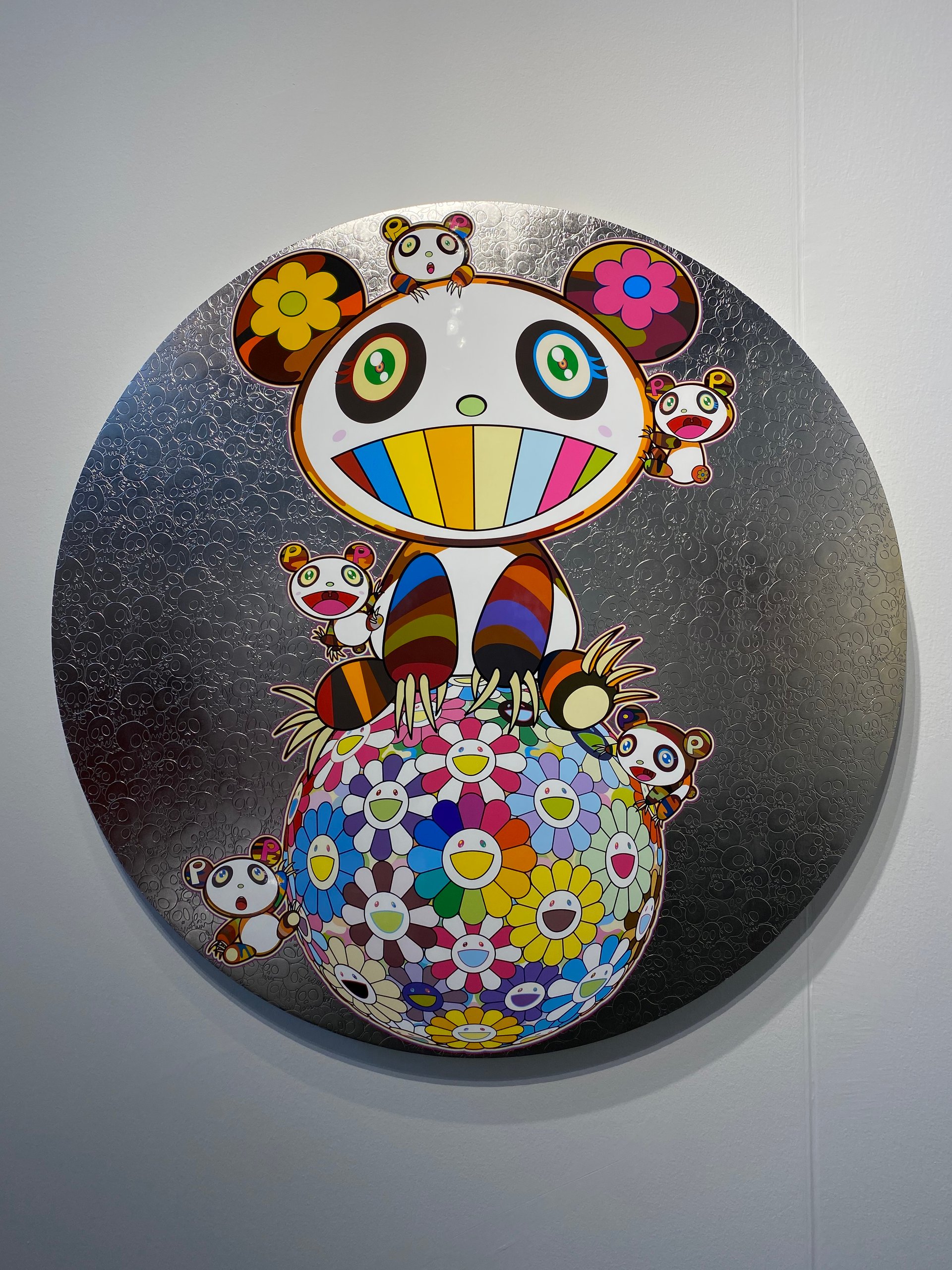
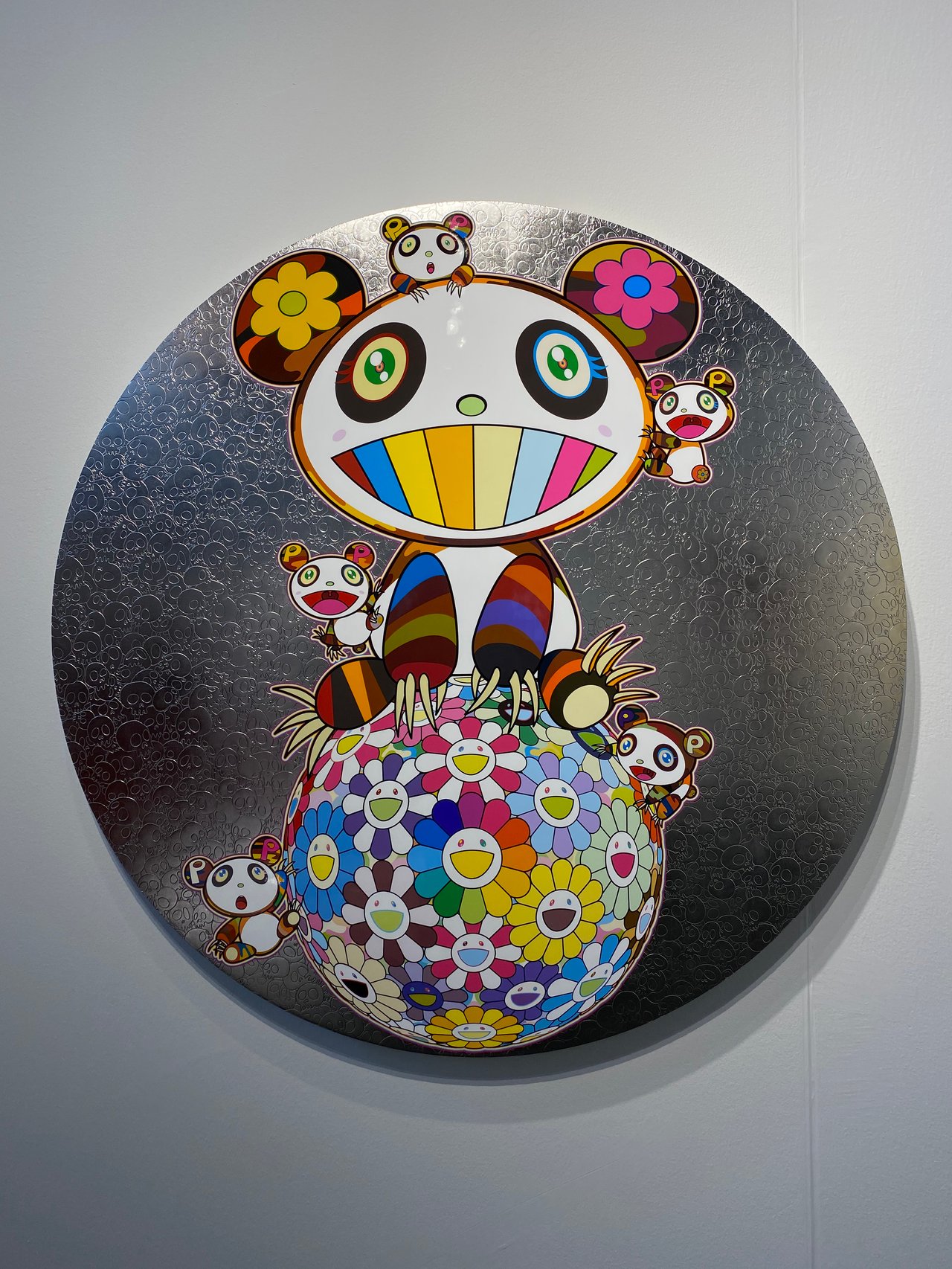
A vibrant Takashi Murakami tondo painting featuring his signature smiling flowers and panda characters, exhibited at the FOG Design+Art fair in San Francisco. Photo by Karl Schultz on Flickr, CC BY-NC-SA 2.0
The Dogpatch Renaissance: Minnesota Street Project
While Fort Mason offers the polished veneer of the international market, the Minnesota Street Project (MSP) in the Dogpatch neighborhood offers the gritty, beating heart of the local ecosystem.
This philanthropic enterprise, spread across multiple converted warehouses, has effectively inoculated the city’s gallery scene against real estate displacement. During San Francisco Art Week, MSP transforms into a frenetic hive of activity. Its resident galleries coordinate opening receptions that spill out into the central atrium—a soaring architectural void encouraging cross-pollination between disparate artistic factions.
The terminology here shifts from "acquisition" to "discourse."
- The Crowd: Younger, avant-garde, and experimentally minded.
- The Experience: Collectors engage directly with gallerists who nurture the region’s emerging talent.
- The Mission: MSP serves as a necessary counterweight to the commercial gloss of the fairs, grounding the week in the tangible reality of studio practice and local production.
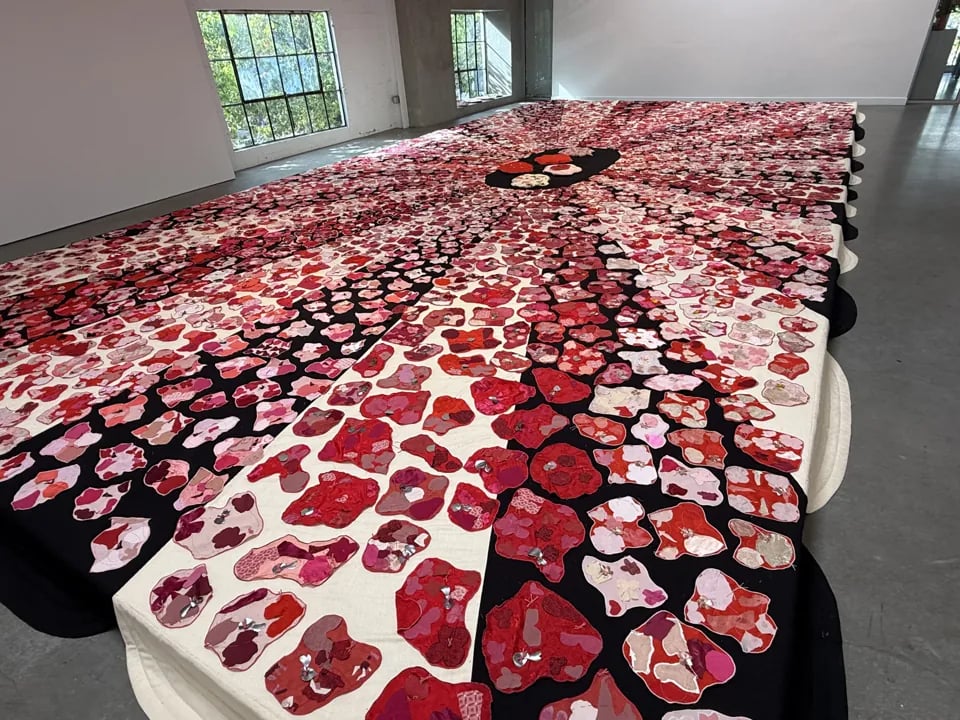
The expansive floor-based textile installation "Soft Spaces for Hard Times" (2025) filling a sunlit gallery space at the Minnesota Street Project in San Francisco. Photo by Rob Corder on Flickr, CC BY-NC 4.0
Institutional Dialogue: SFMOMA and YBCA
The city’s major institutions do not sit idly by while the commercial circus comes to town; they engage in strategic programming synchronized to capture the attention of the itinerant art world elite.
SFMOMA
The architectural behemoth designed by Snøhetta often times its blockbuster exhibitions to coincide with the January festivities. SFMOMA remains the intellectual anchor of the week, with programming that tackles global narratives resonating with the cosmopolitan audience flooding the city.
Yerba Buena Center for the Arts (YBCA)
Adjacent to the museum district, YBCA offers a sharper, often more politicized edge. Its role during Art Week is to provide the critical framework that commercial fairs often lack. Through performance art and symposiums, YBCA ensures the week is not solely defined by the transaction of commodities but by the exchange of radical ideas.
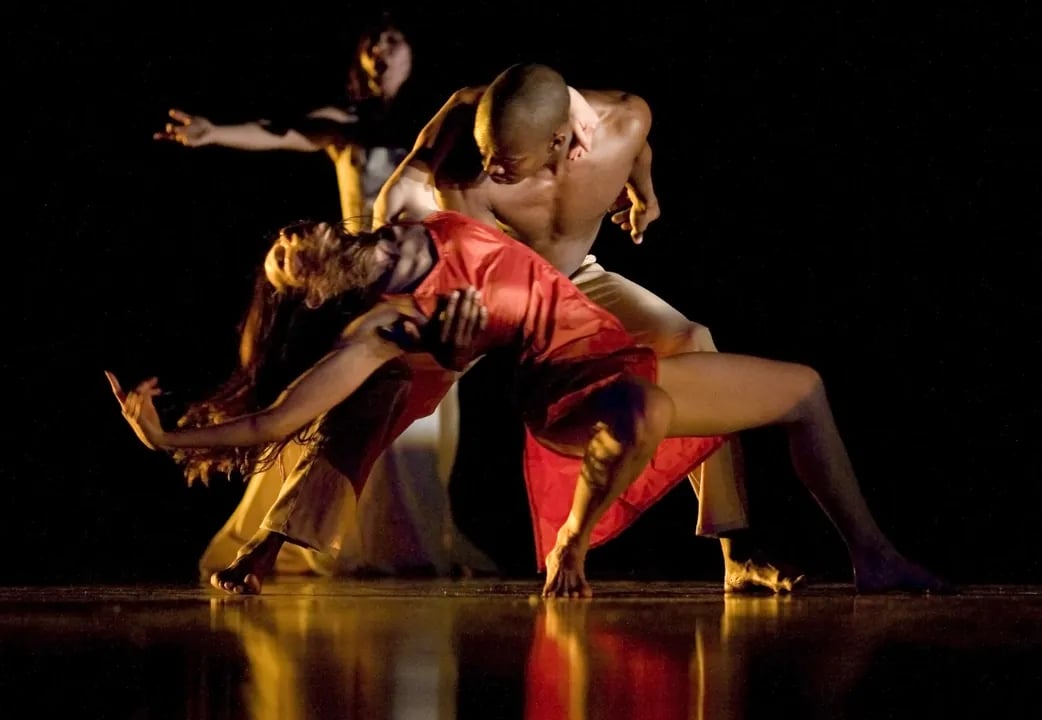
A raw and sensual moment from Yannis Adoniou's KUNST-STOFF 10th Anniversary Season performance at the Yerba Buena Center for the Arts (YBCA) in San Francisco. Photo by john curley on Flickr, CC BY-NC-SA 2.0
The Social Sanctuary: Saint Joseph’s Arts Society
If FOG is the marketplace and MSP is the laboratory, Saint Joseph’s Arts Society is the cathedral of social capital.
Housed in a breathtakingly restored Romanesque Revival church in the SoMa district, this private arts club has become the premier venue for the week's most coveted after-parties. The renovation, spearheaded by designer Ken Fulk, is a masterclass in secular reverence, where original religious iconography coexists with provocative contemporary sculpture.
Access here is the ultimate currency. The events hosted within the nave are where the real machinations of the art world occur—introductions are made, deals are whispered, and social hierarchies are solidified. It is a testament to the fact that the art world remains fundamentally a relationship business, reliant on physical proximity in spaces of overwhelming beauty.
Beyond the White Cube: Public Installations
A distinctive feature of recent iterations of San Francisco Art Week is the decentralization of the viewing experience. Curators have begun to activate the city’s unique topography, utilizing spaces like the Transamerica Pyramid or historic Chinatown alleys for pop-up activations.
These interventions often utilize ephemeral materials or digital technologies, nodding to the region’s identity as a tech hub. Whether it is a light installation playing off the fog or an augmented reality sculpture garden, these projects democratize the art experience, engaging pedestrians who might never purchase a ticket to a VIP preview.
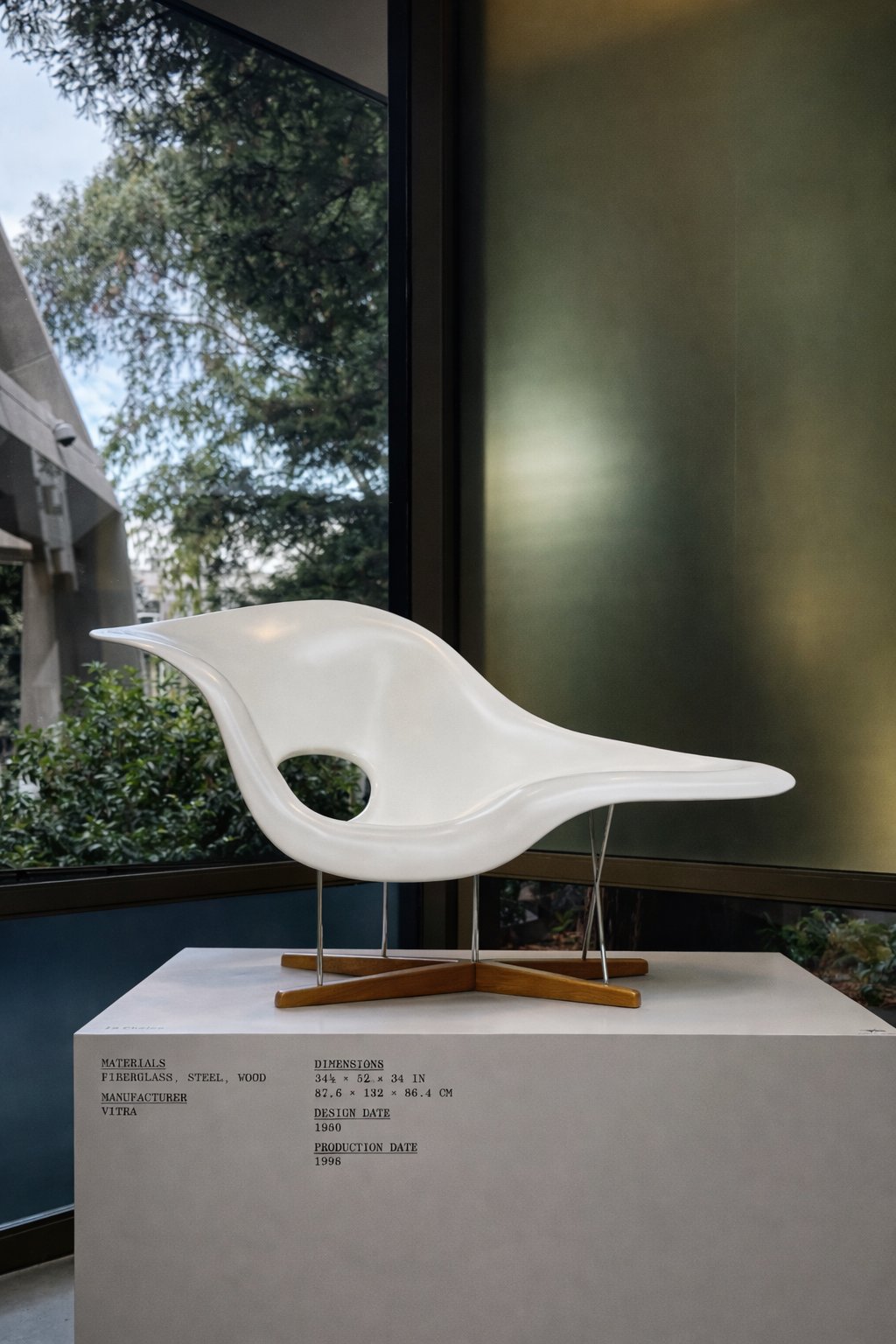
A quiet moment inside the Transamerica Pyramid featuring the organic curves of a white Eames La Chaise by Vitra, framed by soft natural light and greenery. Photo by Dale Cruse - 10M views on Flickr, CC BY 4.0
Conclusion: Collecting in the Tech Capital
Underpinning the entire week is the unique psychology of the San Francisco collector. Unlike the ostentatious display found in other markets, the Bay Area collector base is defined by a quiet, intellectual intensity.
There is a tension here between the "old money" of Pacific Heights and the "new money" of Silicon Valley. Art Week serves as the crucible where these two worlds collide. The tech influence breeds a desire for art that interrogates systems and the future, yet there remains a profound respect for craftsmanship. As the crates are packed, the lasting impression is of a city that—despite its complex relationship with wealth—remains an indispensable node in the global cultural network.