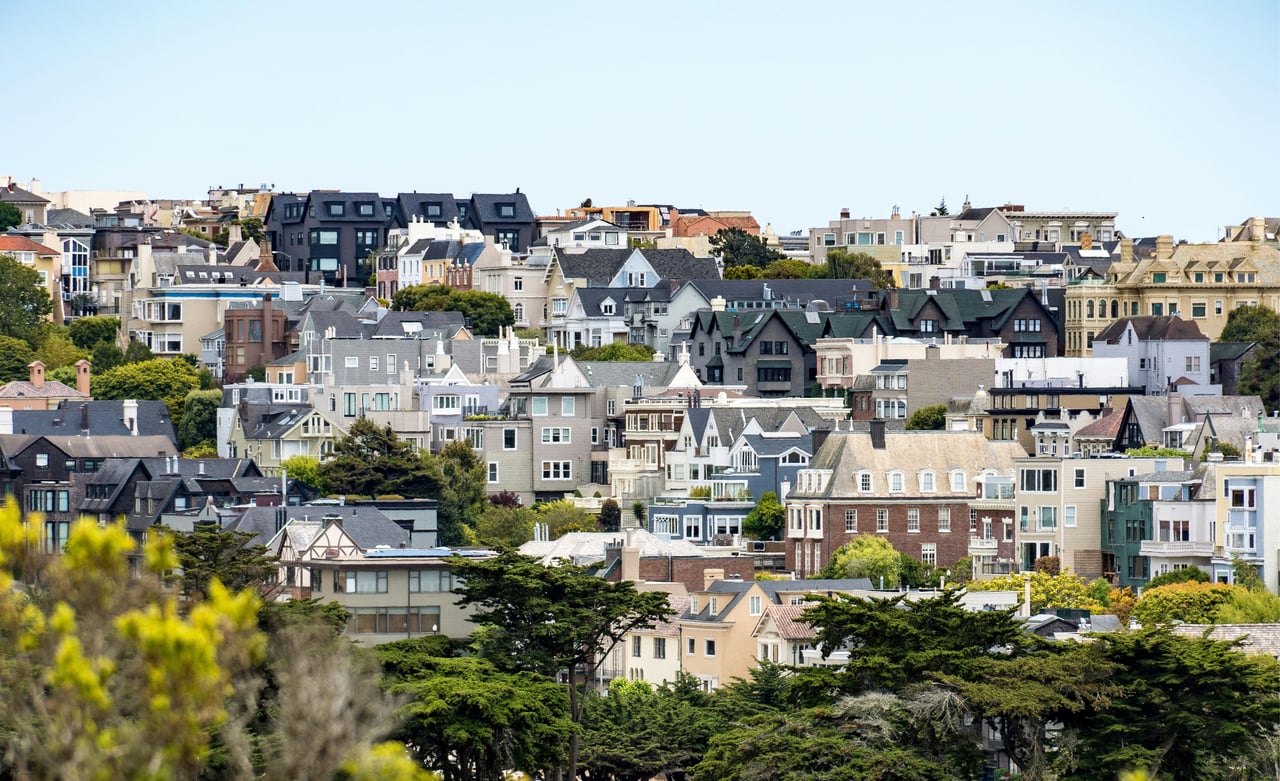
TL;DR summary: Noe Valley feels like a small, self-contained neighborhood without being disconnected from San Francisco. Its daily rhythm centers on 24th Street, quiet residential blocks, community gathering places, and reliable access to nearby neighborhoods. The tradeoffs are real: hills affect walkability, nightlife is limited, and transit convenience varies considerably by address.
Noe Valley has one of San Francisco's clearest neighborhood routines. People pick up coffee on 24th Street, run errands within a few blocks, meet at the Town Square, and then disappear into residential streets that become remarkably calm once the commercial corridor falls behind.
That calm can make Noe Valley seem almost suburban at first, but the description is incomplete. The neighborhood is compact, architecturally dense, connected by Muni, and bordered by the Mission, Castro, Glen Park, Bernal Heights, and Twin Peaks. It remains distinctly urban; it simply runs at a quieter volume. A broader San Francisco neighborhood perspective helps place that balance in context.
Noe Valley's Character Changes From Block to Block
The neighborhood's most familiar image is a row of Victorian or Edwardian facades climbing a hill, often with bay windows, narrow lots, garages added at street level, and newer renovations tucked behind historic fronts. Noe Valley was largely spared from the fire that followed the 1906 earthquake, which helps explain the concentration of older buildings. The citywide story behind these homes is explored further through San Francisco's Victorian architecture.
Central Noe Valley, around 24th Street and the gentler blocks near Church and Sanchez, provides the easiest access to shops, transit, and everyday services. West of Castro Street, the terrain rises toward Diamond Heights and Twin Peaks. The views can become more expansive, but the walk home becomes steeper. South of Cesar Chavez, Upper Noe has its own rhythm around Church Street, the recreation center, and the transition toward Glen Park and Bernal Heights.
These differences matter more than a neighborhood-wide walkability score. A relatively flat route to 24th Street can make errands feel effortless, while a home only a few blocks farther west may involve a serious climb. Anyone evaluating the neighborhood should walk the actual route between the address, transit stop, grocery store, and commercial corridor.
A Sheltered San Francisco Microclimate
Noe Valley sits east of Twin Peaks, which provides some protection from the cold ocean wind and fog that regularly reach western San Francisco. The neighborhood is often sunnier and warmer than areas closer to the Pacific, though conditions still shift with elevation, wind direction, and time of day.
The western slopes can catch more wind and fog than the lower eastern blocks, and a clear afternoon can cool quickly after sunset. The practical lesson is familiar to San Franciscans: outdoor space may be genuinely usable here, but a jacket still belongs by the door. The city's wider pattern of microclimates is worth understanding before comparing neighborhoods.
24th Street Is the Neighborhood's Everyday Center
Noe Valley's main commercial corridor runs along 24th Street, particularly between Church and Douglass. Its value is less about destination shopping than about daily usefulness. Groceries, cafes, bakeries, restaurants, personal services, small shops, and practical errands fit into a compact stretch that residents return to throughout the week.
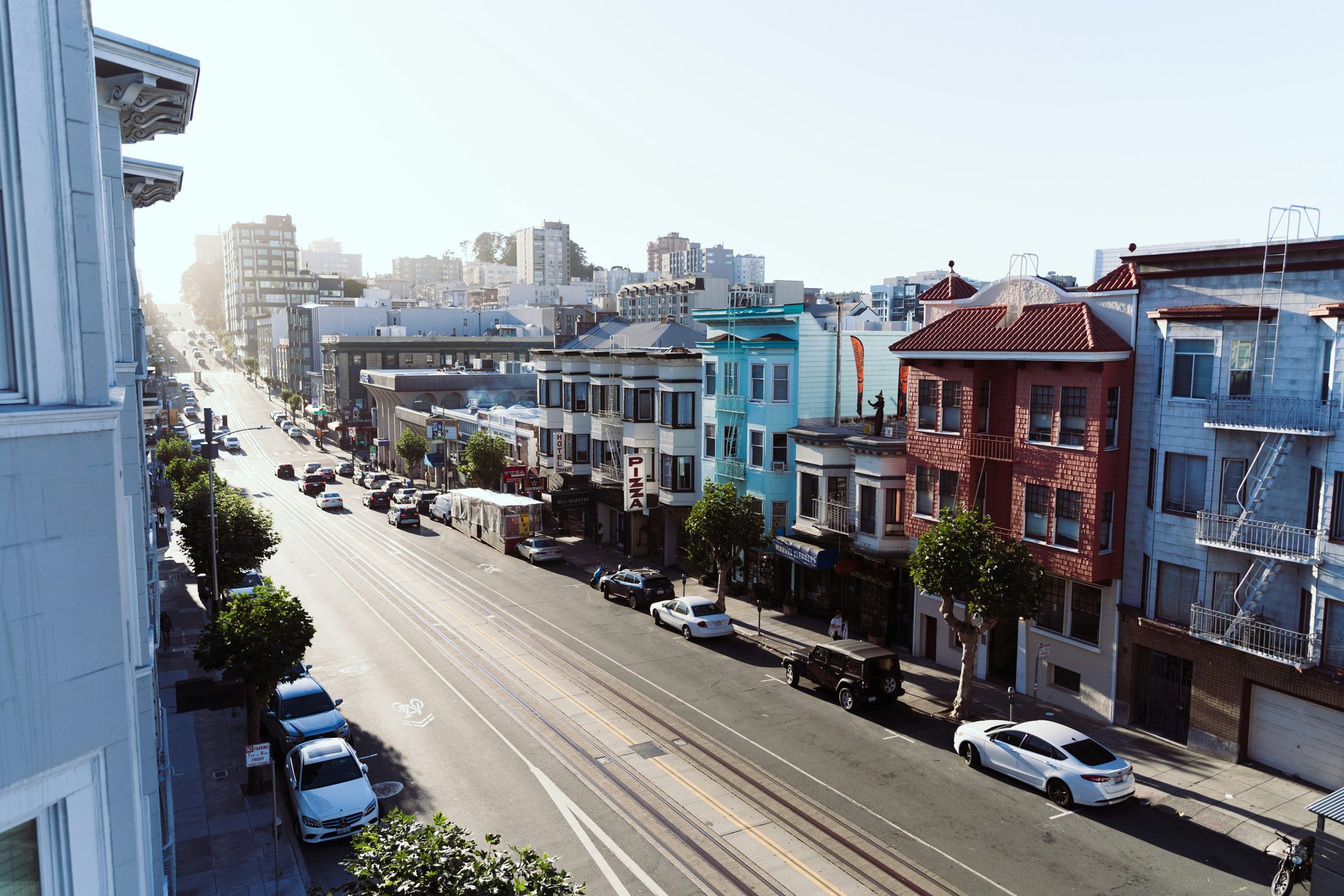
An active San Francisco neighborhood street combines storefronts, restaurants, residential facades, parked cars, and Muni tracks, illustrating the mix of everyday errands and local businesses that gives 24th Street its central role in Noe Valley. Photo by Mark Pecar on Unsplash
Church Street provides a secondary cluster of businesses, especially toward 29th and 30th streets. Residents in Upper Noe may use that corridor more often than central 24th Street. This two-center pattern means the nearest useful block depends on where in the neighborhood someone actually lives.
The current Noe Valley overview provides additional neighborhood context, while this article focuses on how the area functions from day to day.
Community Life Has a Visible Home
The Noe Valley Town Square gives the neighborhood something many residential districts lack: a central public gathering place directly on the main street. It hosts community programming, casual seating, and the volunteer-operated Noe Valley Farmers Market.

Fresh produce arranged at a neighborhood farmers market highlights the everyday shopping, local interaction, and community gathering that can make a market an important part of neighborhood life. Photo by Jincheng Ma on Unsplash
The market matters as much socially as it does for groceries. On Saturday mornings, it acts as a predictable meeting point where errands and conversation overlap. That recurring, low-key contact is a more accurate expression of Noe Valley's community culture than the generic idea that everybody knows everybody.
The historic Noe Valley Branch Library on Jersey Street provides another neighborhood anchor. Recreation programs, merchant events, local organizations, and public spaces create multiple ways to participate, but residents can also live quietly without feeling obligated to join a constant social scene.
Dining Fits the Neighborhood's Pace
Dining in Noe Valley tends to serve the people who live nearby. The useful mix includes morning coffee, casual lunches, weeknight takeout, bakeries, and restaurants suited to an unhurried evening. It is possible to eat well without leaving the neighborhood, but the scene is not built around late-night activity.
That distinction is important. Noe Valley offers convenience and familiarity rather than the restaurant density or constant turnover of the Mission. Many places close earlier than nightlife-oriented venues elsewhere in the city, and storefronts change over time. The separate overview of local dining and shopping covers individual destinations without turning this lifestyle guide into another restaurant list.
Parks and Outdoor Space Are Part of the Weekly Routine
Noe Valley's outdoor spaces are distributed rather than concentrated in one large park. Noe Courts sits directly beside the 24th Street corridor and works well for a quick neighborhood break. Douglass Playground combines recreation areas, an upper dog-play section, and elevated city views. Farther south, the Upper Noe Recreation Center supports sports, classes, playground time, and community activities.
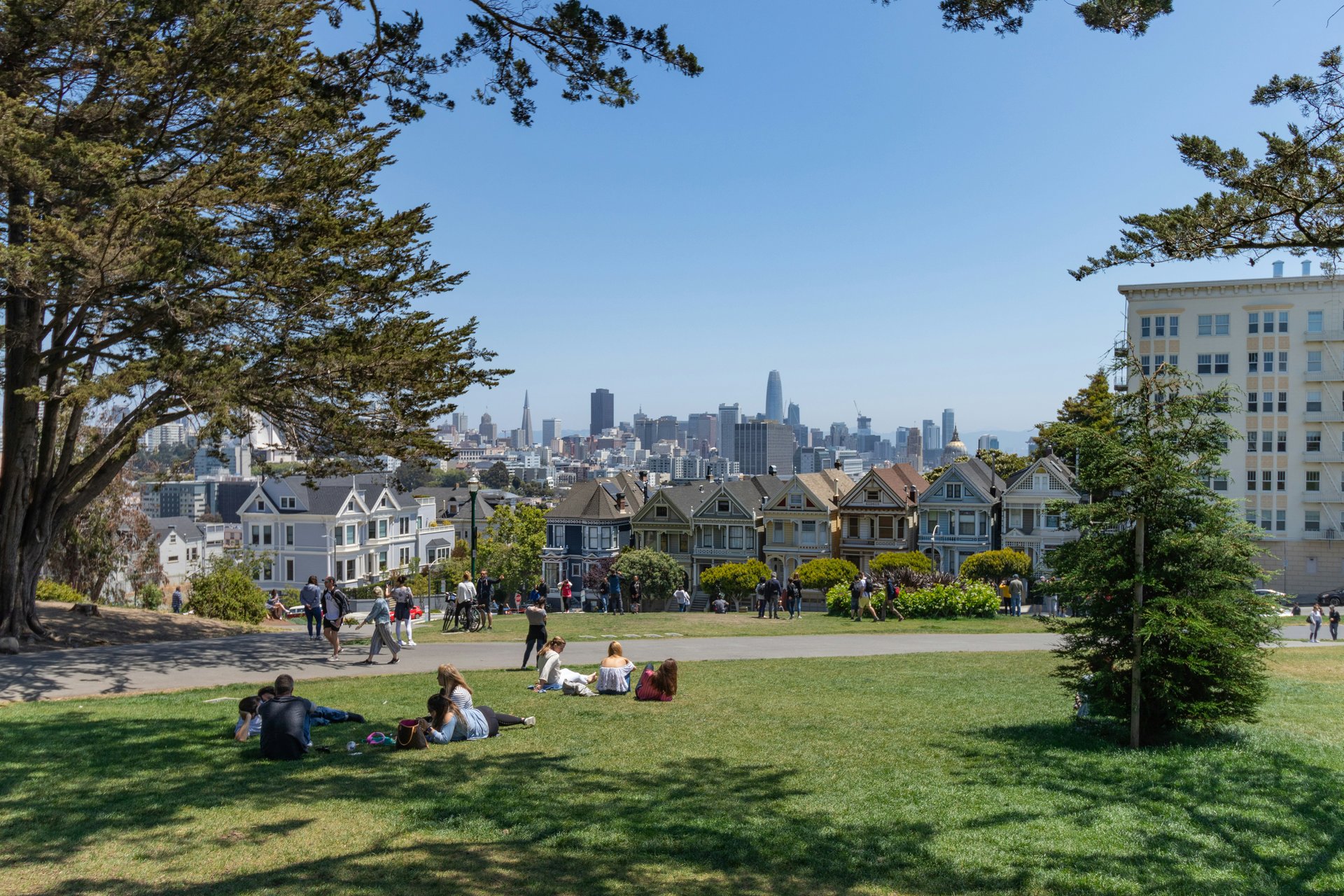
People relax on a grassy hillside beneath mature trees while enjoying open views across San Francisco, illustrating the role that parks, recreation spaces, and elevated viewpoints play in everyday neighborhood life. Photo by Jordi Vich Navarro on Unsplash
Billy Goat Hill and the slopes toward Twin Peaks add a more rugged edge, while Mission Dolores Park is close enough to become part of the broader weekend routine for many residents. The neighborhood's dedicated things-to-do page provides more destination-oriented ideas.
The hills are both an amenity and a constraint. They create views, varied streetscapes, and satisfying walks, but they also affect stroller routes, cycling, accessibility, and how often someone chooses to walk for an errand. An electric bicycle can change the equation considerably, although route comfort still varies.
Transportation Works Best When the Address Matches the Route
The J Church runs through the eastern side of Noe Valley and connects the neighborhood with the Mission, Market Street, and downtown. The 24 Divisadero travels north and south through Noe Valley, while the 48 Quintara/24th provides an east-west connection along 24th Street. Additional routes serve the neighborhood's edges.
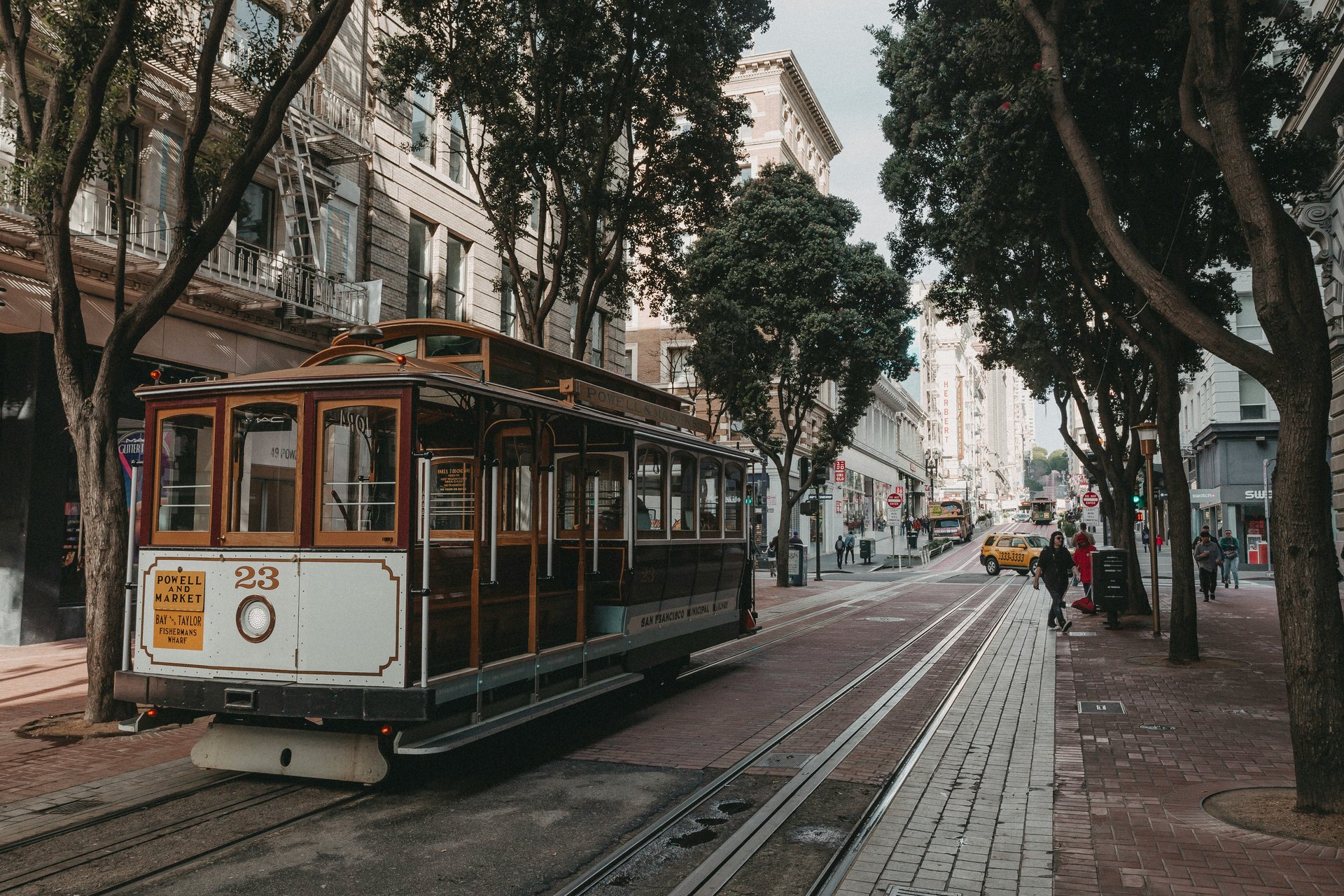
A San Francisco cable car travels along a tree-lined downtown street surrounded by historic buildings, parked cars, pedestrians, and the city's distinctive rail tracks. Photo by Timo Strohmann on Unsplash
A home near Church Street can support a convenient rail-based routine. Farther west, transit may require a steep walk or a bus connection. Service disruptions, stop spacing, and hills can make two addresses within Noe Valley perform very differently for the same commute. Check the live J Church information and the 24 Divisadero context against the hours you actually travel.
Drivers can reach major north-south routes through nearby arterials, but neighborhood streets are narrow, hills limit visibility, and parking varies by block. The most realistic comparison includes both the morning departure and the evening return. A citywide public transportation overview explains how the larger network fits together.
Local Amenities Make Daily Life Convenient
Noe Valley handles many routine needs within the neighborhood. Residents can reach groceries, pharmacies, fitness options, pet services, cafes, restaurants, playgrounds, a library, and small retailers without crossing the city. For less frequent errands or broader shopping, the Mission, Castro, Diamond Heights, and Glen Park expand the practical radius.
Convenience is strongest near 24th Street and Church Street. Hillside blocks offer quieter surroundings and views but require more planning. This is the recurring Noe Valley tradeoff: the neighborhood may feel compact on a map, yet topography determines whether a destination feels close in practice.
How Noe Valley Differs From Nearby Neighborhoods
Compared with the Mission, Noe Valley is quieter, less nightlife-oriented, and more residential. The Mission offers greater restaurant density, cultural activity, and faster access to BART; Noe Valley offers a calmer return at the end of the day.
Compared with the Castro, Noe Valley has less evening activity and a more explicitly residential center. The neighborhoods connect naturally along Castro and Church streets, but their public rhythms are distinct.
Bernal Heights shares the combination of hills, neighborhood businesses, and a strong local identity. Bernal feels more topographically irregular and centers on Cortland Avenue, while Noe Valley's commercial life follows a clearer 24th Street spine.
Glen Park is quieter and more compact around its village center, with the major advantage of a BART station. Noe Valley offers a larger commercial corridor and more neighborhood activity but no direct BART service.
West Portal and Cole Valley also provide village-like commercial streets surrounded by residential blocks. Noe Valley distinguishes itself through the scale of its residential basin, its east-of-Twin-Peaks setting, and the way 24th Street functions as both an errand corridor and community meeting place.
Is Noe Valley a Good Fit for Your Routine?
Noe Valley suits people who value a quieter home base, useful neighborhood businesses, recognizable community spaces, and access to the rest of the city without living at the center of its nightlife. It may be less appealing to someone who wants immediate BART access, flat streets, late-night energy, or a dense concentration of cultural venues.
The best way to understand the neighborhood is to test an ordinary day. Walk from a prospective address to 24th Street, ride the relevant Muni route, return after dark, and climb the hill carrying groceries. Then compare that experience with other areas in the San Francisco district guide. Noe Valley's appeal is not that it works for everyone; it is that its particular rhythm is unusually clear once you experience it firsthand.
Frequently Asked Questions About Living in Noe Valley
What is it like to live in Noe Valley?
Noe Valley offers a relatively quiet residential setting with a useful main street, neighborhood gathering places, older architecture, parks, and Muni connections. Daily convenience is strongest near 24th and Church streets, while hillside addresses provide more separation but require steeper walks.
Is Noe Valley walkable?
Central Noe Valley is highly walkable for errands, dining, parks, and transit. Walkability changes quickly toward the western and southern hills, so an address-specific route matters more than a neighborhood-wide score.
What public transportation serves Noe Valley?
The J Church provides rail service through the eastern side of the neighborhood. The 24 Divisadero and 48 Quintara/24th are important bus routes, with other Muni lines serving nearby streets and neighborhood edges.
Is Noe Valley sunnier than other parts of San Francisco?
Noe Valley is often sunnier and warmer than western neighborhoods because Twin Peaks offers some protection from ocean fog and wind. Conditions still vary by elevation, block, and time of day.
What makes Noe Valley different from the Mission or Bernal Heights?
Noe Valley is quieter and less nightlife-oriented than the Mission. It shares Bernal Heights' hills and strong neighborhood identity, but Noe Valley has a more linear commercial center along 24th Street and direct J Church service.