TL;DR summary: Davies Symphony Hall is one of San Francisco’s defining performing arts venues: a Civic Center landmark known for its sweeping glass lobby, grand auditorium, orchestral sound, city views, and easy access by BART, Muni, and nearby cultural stops. It is best experienced as an evening out, with time to arrive early, explore the lobby levels, take in the architecture, and settle into the hall before the performance begins.
Davies Symphony Hall sits at 201 Van Ness Avenue, right in the ceremonial heart of Civic Center. Opened in 1980 as the home of the San Francisco Symphony, it belongs to the larger San Francisco War Memorial and Performing Arts Center and shares the neighborhood’s grand civic rhythm: City Hall across the way, the War Memorial Opera House nearby, and a steady flow of concerts, galas, lectures, films with live orchestra, and seasonal performances moving through the district.
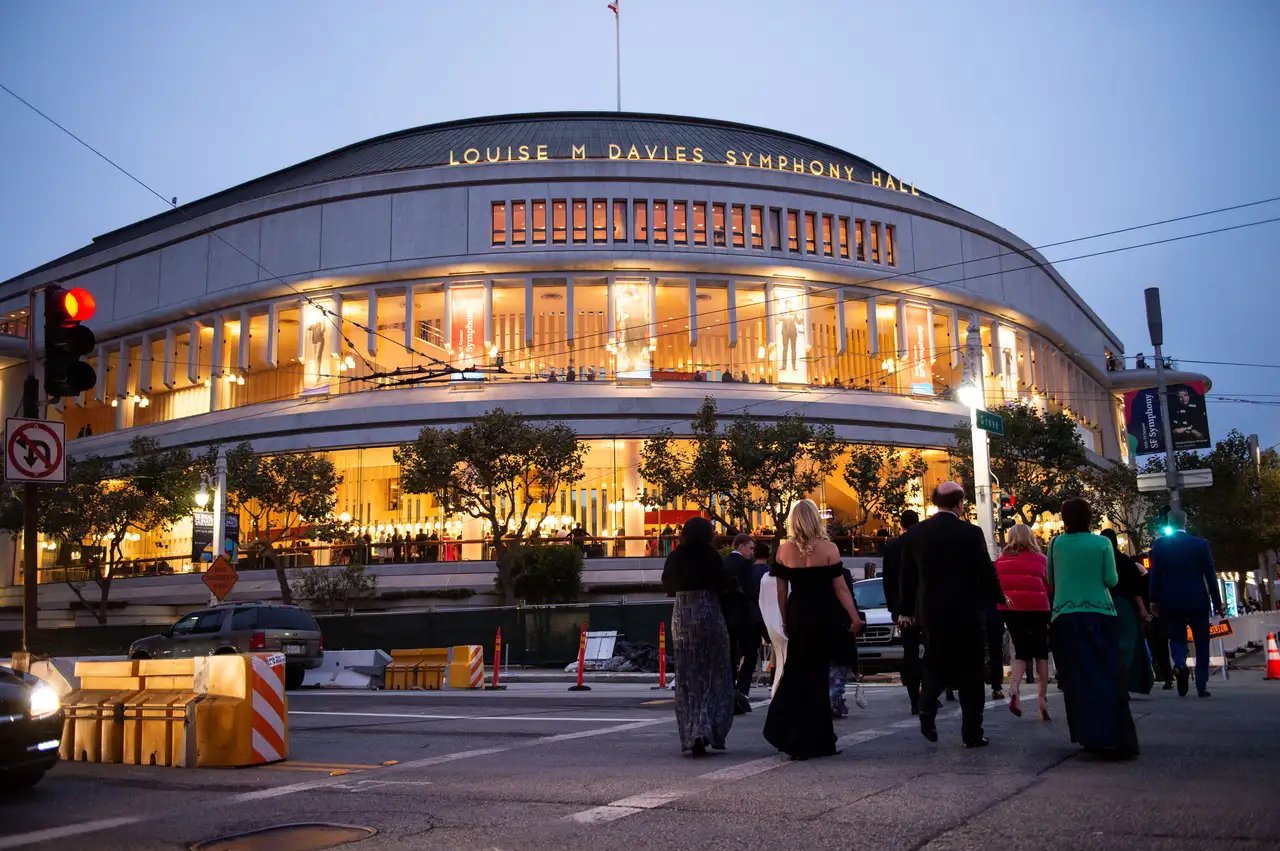
Davies Symphony Hall’s modern design complements the classical architecture of Civic Center. Photo source: sfsymphony.org
For many visitors, the first impression is architectural. The building has a glassy, curved presence along Van Ness, but the experience becomes more memorable once you step inside. The lobby opens vertically, with broad public spaces, stairways, terraces, and views toward Civic Center that make the pre-concert hour feel like part of the performance. It is the kind of venue where arriving early pays off.
A Civic Center Landmark Built Around Sound
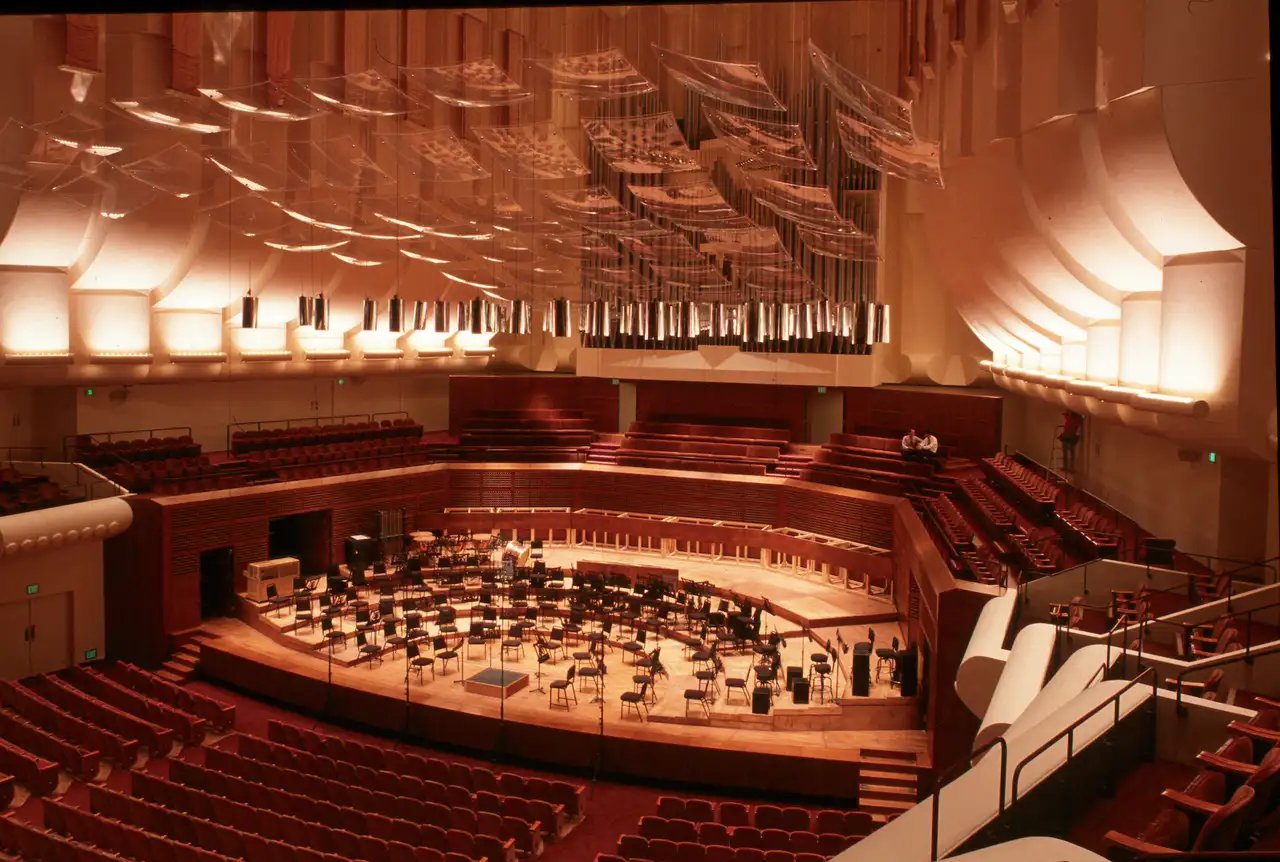
Louise M. Davies Symphony Hall was designed specifically for symphonic music, giving the San Francisco Symphony a dedicated home after decades of sharing the neighboring War Memorial Opera House. The hall’s official venue profile notes that the auditorium was created with architects and acousticians to let sound rise, circulate, and diffuse throughout the room, helping create a more intimate experience than the building’s scale might suggest.
The hall’s acoustic design uses architectural elements above and around the stage to shape the listening experience. Photo source: sfsymphony.org
That emphasis on sound is still the core reason to go. Whether the program is Mahler, a film score performed live, a holiday concert, a contemporary artist collaborating with the orchestra, or a family-friendly seasonal classic, Davies is built for listening. The hall can feel formal, but not forbidding; grand, but still navigable.
The auditorium seats 2,739, including terrace seating behind the stage, according to the San Francisco War Memorial and Performing Arts Center. From the orchestra level to the balconies, the room is steeply arranged enough that sightlines generally feel intentional. The strongest impression, especially for first-time visitors, is how the room focuses attention. Once the house lights settle, the building seems to narrow itself around the music.
The Lobby Is Part of the Experience
Davies is not a venue to rush into at the last minute. The glass-enclosed lobby has views of San Francisco City Hall and the War Memorial Opera House, and its upper levels offer a chance to wander before the concert begins. For a first visit, plan to arrive with enough time to move through the floors, find your section, check a coat if needed, and take in the atmosphere.
The hall’s public spaces are especially pleasant during the holiday season, when the building often feels more ceremonial. Seasonal movie-and-orchestra programs, festive classical concerts, and end-of-year performances tend to bring a wider audience into the hall, including people who may not think of themselves as regular symphonygoers. That makes Davies a useful gateway into live music performances in San Francisco more broadly.
What to See at Davies Symphony Hall
The San Francisco Symphony is the anchor, but Davies is not limited to traditional symphonic concerts. Programming can include classical masterworks, contemporary music, choral works, film screenings with live orchestra, holiday performances, guest artists, lectures, and special events. It is a venue where a first-time symphony experience can be just as satisfying as a polished night out for someone who knows the repertoire well.
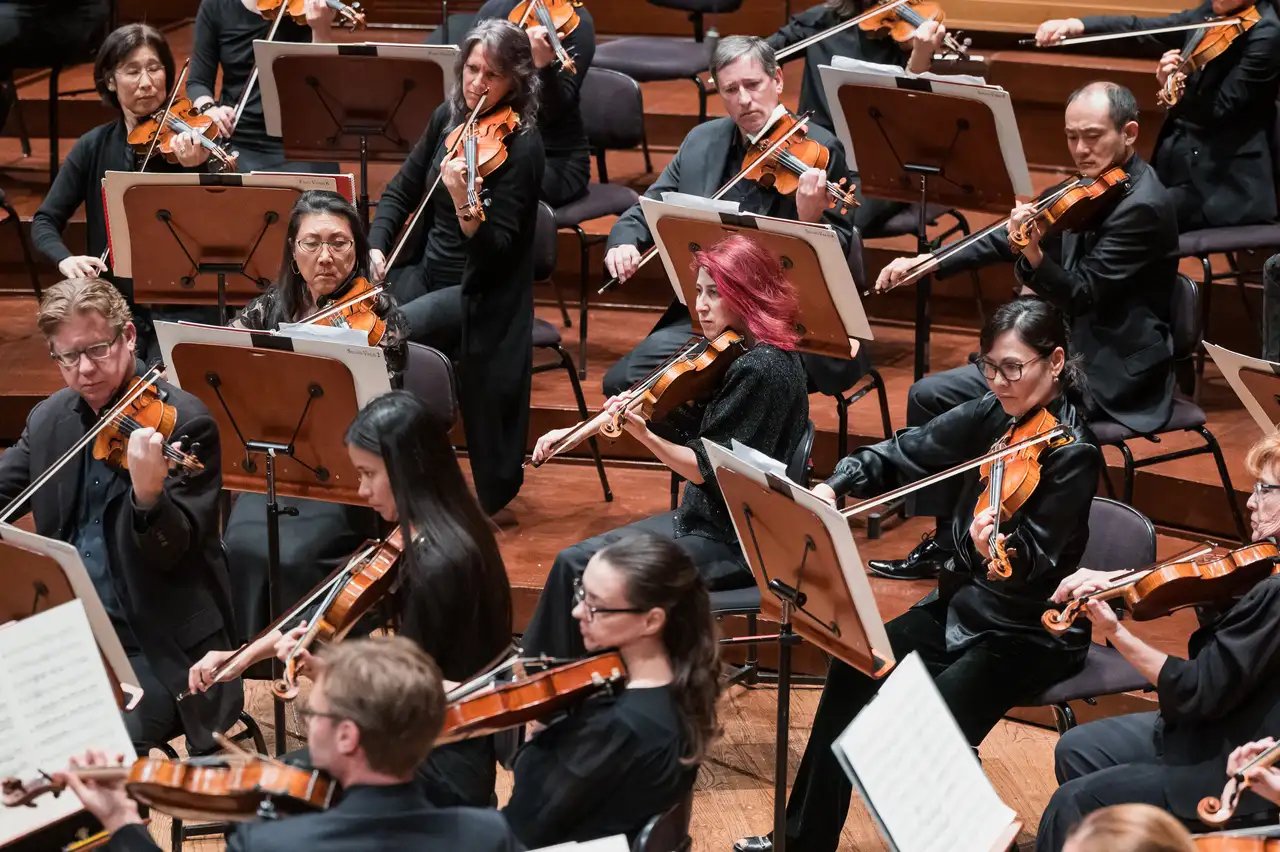
The San Francisco Symphony performs a wide range of classical, contemporary, seasonal, and special-event programs at Davies Symphony Hall.
That range matters in a city with a deep performing arts ecosystem. A weekend could pair Davies with Smuin Contemporary Ballet, a theater night at American Conservatory Theater, or a jazz-focused evening connected to SFJAZZ. Each venue has its own rhythm, but Davies remains one of the city’s clearest expressions of large-scale acoustic performance.
For visitors who enjoy San Francisco’s theater calendar, Davies also fits naturally into a broader performing arts circuit that includes the Toni Rembe Theater, the Curran Theatre, the Orpheum Theatre, and the Castro Theatre. Together, they show how much of San Francisco’s cultural identity lives indoors after dark.
Best Seats and How to Think About the Room
Choosing seats at Davies depends on the kind of night you want. Orchestra seats place you closer to the physical presence of the musicians. Balcony seats can offer a fuller view of the hall and a more architectural sense of the performance. Box seating may appeal to guests who prefer a bit more personal space and a wider angle on the stage.
For orchestral concerts, many listeners like being far enough back to hear the ensemble blend. For film-with-orchestra programs, a central view can matter more because you are balancing the screen and the musicians. For guest artists or amplified performances, comfort and sightline may matter as much as acoustic preference.
The most useful advice is simple: check the official seating chart before buying, consider whether you want intimacy or overview, and avoid assuming that closer is automatically better. Davies was designed as a full-room listening experience.
Getting There Without Making the Night Complicated
Davies Symphony Hall is one of the easier major venues to reach without a car. The hall sits near Civic Center transit connections, with BART and Muni access close by. For many visitors, public transit is the simplest choice, especially on busy performance nights when Civic Center traffic and parking can make driving less graceful than the evening deserves.
If you are building a full San Francisco day around the concert, Davies pairs well with nearby museums, civic landmarks, restaurants, and transit-friendly corridors. The area connects naturally to public transportation, downtown, Hayes Valley, Mid-Market, and the broader performing arts district.
Drivers should check current parking options before the performance, especially for weekend evenings, holidays, and major events. Rideshare drop-offs are common, but Van Ness and Grove can become congested near curtain time. Arriving early is still the least stressful strategy.
What to Do Nearby Before or After
A Davies evening can be simple: dinner, concert, home. But the location also makes it easy to build a more textured San Francisco outing.
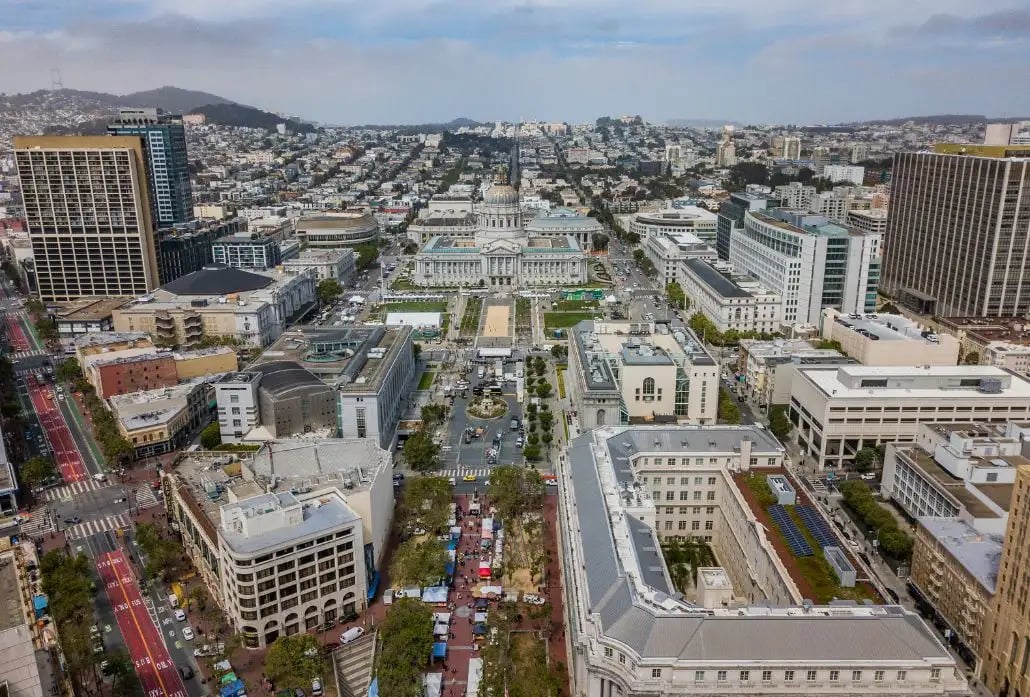
Civic Center gathers some of San Francisco’s most important civic and performing arts landmarks within a few blocks.
Before a performance, Civic Center invites a short architectural walk. San Francisco City Hall is one of the city’s great public buildings, and the area around the performing arts center gives the evening a sense of occasion. Visitors interested in the city’s civic architecture may also enjoy reading about San Francisco City Hall before going.
Nearby cultural stops include the Asian Art Museum and the Museum of the African Diaspora, both of which help frame the broader artistic landscape around the city. A day that begins in a museum and ends with a concert can feel especially San Francisco: layered, walkable, and quietly ambitious.
For a more festive itinerary, Davies also pairs well with nearby seasonal traditions in Union Square, especially during the holidays. If the evening starts earlier in the day, the Ferry Building can be a relaxed food-focused stop before heading west toward Civic Center.
What First-Time Visitors Should Know
Davies is approachable, even if the word “symphony” sounds formal. Dress varies by performance. Some people arrive in eveningwear, others in polished casual clothes, and many fall somewhere in between. The best choice is to dress in a way that makes the night feel special without making yourself uncomfortable.
Plan to arrive early enough to find your seat, especially if you are on an upper level or attending with guests who may need elevator access. The hall is large, and part of its pleasure comes from having time to move through it calmly.
Food and beverage rules can vary by event and area, so check current official guidance before attending. The San Francisco Symphony’s visitor pages are the best place to confirm details on concessions, accessibility, arrival times, and event-specific policies.
Why Davies Still Feels Distinct
San Francisco has many beautiful venues, but Davies has a particular identity. It is not as ornate as the War Memorial Opera House, not as intimate as smaller theaters, and not as casual as a club or outdoor concert. Its character comes from scale, clarity, and ritual: the glass lobby, the steep auditorium, the city views, the hush before the first note.
It also has range. One night may be a major symphonic work; another may be a holiday film with live orchestra; another may bring a contemporary musician into conversation with the full ensemble. That flexibility is part of why Davies continues to draw both devoted subscribers and first-time visitors.
For anyone interested in San Francisco’s cultural life, Davies Symphony Hall is more than a place to hear music. It is a way to experience the city’s civic grandeur, its appetite for performance, and its habit of turning a night out into something a little more memorable.
FAQ
Where is Davies Symphony Hall?
Davies Symphony Hall is located at 201 Van Ness Avenue at Grove Street in San Francisco’s Civic Center area.
What is Davies Symphony Hall known for?
Davies Symphony Hall is best known as the home of the San Francisco Symphony and as one of the city’s major venues for orchestral music, film-with-live-orchestra programs, guest artists, lectures, and special performances.
Is Davies Symphony Hall good for a first symphony experience?
Yes. The venue is grand but approachable, and many programs are accessible for first-time visitors, especially film concerts, holiday performances, family programs, and well-known classical works.
What are the best seats at Davies Symphony Hall?
The best seats depend on the performance. Orchestra seats offer proximity, balcony seats provide a broader view, and box seating can offer more space. For orchestral concerts, many listeners prefer seats far enough back for the ensemble sound to blend.
Can you take public transportation to Davies Symphony Hall?
Yes. Davies Symphony Hall is near Civic Center transit connections, including BART and Muni. Public transportation is often the easiest option on busy performance nights.
Should you arrive early?
Yes. Arriving early gives you time to explore the lobby, find your seats, check current amenities, enjoy the views, and avoid the stress of Civic Center traffic or last-minute lines.
Is Davies Symphony Hall only for classical music?
No. While it is the home of the San Francisco Symphony, Davies also hosts a range of programming, including film concerts, holiday performances, guest artists, contemporary music, lectures, and special events.
What should you wear to Davies Symphony Hall?
There is no single dress code for most performances. Guests commonly wear anything from polished casual clothing to evening attire, depending on the event and occasion.