
TL;DR summary: A San Francisco 3R Report, formally called a Report of Residential Building Record, summarizes a residential property’s authorized occupancy or use and selected information available in City records. For most residential sales, the owner or authorized agent must obtain the report and provide it to the buyer before the transaction is completed. As of September 3, 2026, DBI charges $286 per report, plus a 2.5% surcharge for online credit-card payments, and estimates five to seven business days for processing. A 3R is not a physical inspection or certificate of legal compliance, and it does not include plumbing or electrical permit history.
A San Francisco 3R Report, formally called a Report of Residential Building Record, summarizes a residential building’s authorized occupancy or use and selected information found in City records.
In most residential sales, the owner or authorized agent must obtain the report and provide it to the buyer before the transaction is completed. Buyers use it to compare the City’s record with the property’s physical layout, disclosures, marketing description, and available permit history.
The report can raise important questions, but it does not determine every issue involving a property. It is a records summary, not a physical inspection or guarantee that every room, unit, or improvement complies with current law.
Quick question | Current answer |
|---|---|
Official name | Report of Residential Building Record |
Who obtains it? | The owner or authorized agent |
When is it provided? | Before an applicable sale or exchange is completed |
Current fee | $286 for each report |
Online card surcharge | 2.5%, for a current total of $293.15 |
Typical processing time | Five to seven business days |
Is the property inspected? | No |
Are plumbing and electrical permits included? | No |
What does “3R Report” mean?
“3R” is the commonly used name for the Report of Residential Building Record issued by the San Francisco Department of Building Inspection.
Under Section 351 of the San Francisco Housing Code, an owner or authorized agent generally must obtain the report before selling or exchanging a residential building.
For this requirement, a residential building is a building or portion of a building containing one or more dwelling units. Hotels with 30 or more guest rooms and motels are excluded from the definition.
The report helps establish how City records describe the property. Understanding that record is an important part of making informed San Francisco real estate decisions, particularly when the visible layout and recorded use do not appear to match.

A property owner reviews and signs real estate documents, reflecting the recordkeeping and document review involved in understanding how a residential property is described in City records. Photo by Camilo Rueda Lopez on Unsplash
When is a San Francisco 3R Report required?
A 3R is generally required before the sale or exchange of a residential building in San Francisco.
A limited exception applies to the first sale or exchange of a newly constructed residential building when the transaction occurs within one year of the building’s Certificate of Final Completion.
For an applicable transaction:
- The owner or authorized agent must obtain the report.
- The owner or agent must deliver it to the buyer before the sale or exchange is completed.
- The buyer must file a receipt for the report with DBI using the City’s prescribed form.
- A licensed real estate professional must provide a copy to a prospective buyer upon request when the property is listed for sale.
Sellers should obtain the report early enough to investigate questions before the disclosure package and marketing description are finalized.
What information does a 3R Report contain?
The report contains information that DBI can determine from City records. Depending on the property, it may include:
- Present authorized occupancy or use
- Whether the building is classified as a residential condominium
- Whether it contains residential hotel guest rooms
- The property’s zoning district
- Building Code occupancy classification
- Any recorded expiration date for a nonconforming use
- Building construction date
- Original occupancy or use
- Construction, conversion, and alteration permits
- Whether an active Franchise Tax Board referral is on file
- Whether the property is under abatement proceedings for code violations
- The number of residential structures on the property
- Available energy-inspection and compliance information
- Mandatory soft-story retrofit status
- Whether the property falls within the boundaries shown on the City’s 100-year storm flood-risk map
The permit-history portion covers building permits. DBI states that plumbing and electrical permit history is not included.
For a mixed-use building, the 3R includes building permits associated with the residential portion, not the commercial portion.
Why does the authorized use matter?
The authorized use describes how City records recognize the property. It might identify a single-family dwelling, a two-unit building, a residential condominium, or another approved configuration.
That description may not match what someone sees during a showing.

Prospective buyers and property professionals review a residential floor plan together, illustrating the importance of comparing a home's physical layout with its documented and authorized use. Photo by Vitaly Gariev on Unsplash
For example, a lower level might contain a bedroom, bathroom, and kitchenette even though the 3R identifies the property as a single-family dwelling without an additional authorized unit. The difference does not, by itself, prove that the lower level is illegal. It does mean the permits, approved plans, inspections, and current use deserve closer review.
Similar questions can arise when more than one residential structure occupies a lot. Understanding whether the property contains attached or detached structures can provide useful physical context, although DBI’s records and reporting requirements remain controlling.
A mismatch among the authorized use, physical layout, disclosures, and marketing description may affect:
- How the property is represented
- Buyer due diligence
- Financing or insurance
- Valuation
- Proposed renovations
- A buyer’s intended use
- The need for professional or agency review
A discrepancy is a reason to investigate. It should not be treated as automatic proof of either compliance or noncompliance.
What does a 3R Report not establish?
A 3R is useful because it identifies the City’s recorded description of the property. Its limitations are just as important.
A 3R is not:
- A physical inspection
- A certificate of legal compliance
- A complete plumbing or electrical permit history
- A guarantee that every room, unit, or improvement is authorized
- A complete complaint or enforcement-history search
- A substitute for zoning, title, disclosure, permit, or inspection review
- A promise that City records contain no errors or omissions
DBI explains that the report is compiled from City records without a physical examination. An occupancy or use that is not identified as authorized may require review with DBI, the Planning Department, or an appropriate professional.
Buyers should therefore compare the report with the property, disclosures, inspections, preliminary title information, available permits, and their intended use. That review is one part of the broader due-diligence process for San Francisco buyers.
Is a complaint or Notice of Violation included in the 3R?
The 3R addresses whether the property is currently under abatement proceedings for code violations. That is narrower than a complete search of complaints and Notices of Violation.
These records describe different stages or issues:
- A complaint is a report submitted to DBI for investigation. It does not, by itself, establish that a violation exists.
- A Notice of Violation records conditions identified through the enforcement process.
- An abatement proceeding is a separate enforcement status addressed by a specific field on the 3R.
Buyers and sellers should review property-specific complaint and violation records separately when the property’s history, disclosures, or physical condition raises a question.
Permit status also matters. A filed application, an issued permit, and completed work are different milestones. An issued permit does not necessarily mean the work passed its final inspection.
What does the soft-story information mean?
The 3R states whether the building is included in San Francisco’s Mandatory Earthquake Retrofit of Wood-Frame Building Program and, when applicable, whether the required upgrade work has been completed according to City records.
This field should be interpreted using the property-specific report and supporting DBI records. A permit description, permit status, and program-compliance field may describe different parts of the process.
The 3R should not be replaced by a general assumption about a building’s age, construction, or appearance. If retrofit status is material to the transaction, confirm the record with DBI and the appropriate building professional.
How do you get a San Francisco 3R Report?
1. Confirm the block and lot
The application requests the property’s block and lot numbers, building address, associated addresses, ownership information, applicant information, and property type.
Check the information carefully. DBI notes that processing can take longer when a new or recently changed lot number has not been updated in its records.
2. Determine how many reports are needed
DBI requires a separate application, payment, and report for:
- Each residential building on a lot
- Each condominium unit
- Each cooperative unit
A property with separate front and rear residential buildings generally requires two reports. Condominium and cooperative units require individual requests.
3. Submit the application
The report can be requested through DBI’s online 3R service.
The online application requires an email address, property information, legal-owner information, applicant details, and a delivery selection. Confirm the current requirements on the DBI service when submitting the request because municipal procedures may change.
4. Pay the fee
As of September 3, 2026, DBI lists the fee as $286 for each report. Online credit-card payments carry a 2.5% surcharge, producing a current total of $293.15 per report.
A separate fee applies to each required report. DBI states that a request cannot be canceled or refunded after it receives the application and payment.
5. Allow time for processing
DBI currently estimates five to seven business days after receiving a complete request and proper payment.
Processing may take longer when property information requires additional verification. Requests are handled in the order received, rush service is unavailable, and DBI limits submissions to six applications per person or company per day.

Architectural plans are reviewed at a workstation, representing the building documents and property records that may need to be examined when evaluating a residential property. Photo by vũ tuấn on Unsplash
What should sellers do with the report?
Sellers should compare the report’s authorized use, structures, permit entries, abatement information, and retrofit status with the property as it exists.
If something appears inconsistent, collect the relevant permits, approved plans, certificates, inspection records, and prior disclosures. Depending on the issue, additional review may involve a real estate advisor, disclosure specialist, architect, contractor, land-use professional, attorney, DBI, or the Planning Department.
Ordering the report during early sale preparation provides time to investigate before the listing description and disclosure package are finalized.
The recorded use may also affect how the property is evaluated. A thoughtful home-value review should distinguish between the visible layout and the use supported by available records.
Presentation work through a sale-preparation program can improve how a property shows, but cosmetic work does not resolve questions involving authorized use, incomplete permits, or code enforcement. Those issues require separate investigation.
Questions about permits should also be resolved before deciding which home improvements belong in the listing plan.
What should buyers review?
Buyers should compare the 3R with the property, marketing description, disclosures, inspections, preliminary title materials, and available permit records.
Pay particular attention to:
- The authorized number of dwelling units
- Kitchens, bathrooms, bedrooms, or living areas that may not appear in the records
- Additions or conversions without a clear permit trail
- Permits that were filed or issued but not completed
- Active complaints, violations, or abatement proceedings
- Soft-story retrofit information
- Multiple residential structures on the same lot
- Differences among the 3R, disclosures, inspections, and title documents
A discrepancy should lead to questions rather than an immediate conclusion. Further investigation may be needed to determine whether work was permitted, whether required inspections were completed, and whether the buyer’s intended use is allowed.
When should a seller order the 3R?
A seller should generally order the report early in the listing process, before finalizing the marketing description and disclosure package.
Early review gives the seller and their advisors time to:
- Compare the authorized use with the physical layout
- Locate permits and approved plans
- Investigate unresolved complaints or violations
- Prepare accurate disclosures
- Revise the marketing description when appropriate
- Set informed expectations for buyers
- Consult qualified professionals when a discrepancy is material
Waiting until the final days of escrow can create avoidable pressure if the report raises a question that requires records research or professional review.
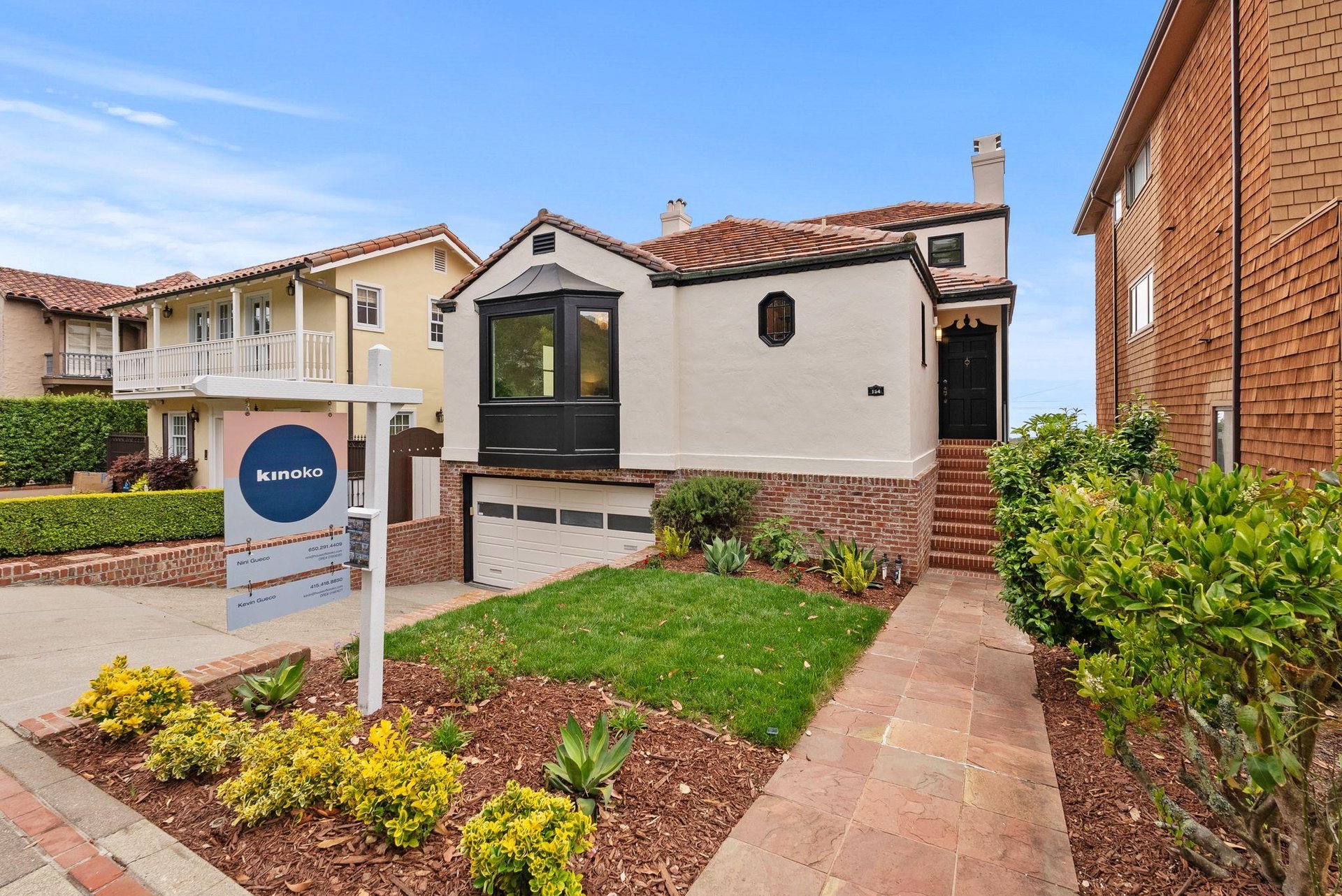
A San Francisco home prepared for sale illustrates the importance of reviewing property records, disclosures, and the home's physical condition early in the listing process.
The 3R is a starting point for property due diligence
A San Francisco 3R Report answers a focused question: How do City records describe this residential property?
It does not resolve every question involving physical condition, code compliance, permit completion, enforcement history, or future use. Its value comes from comparing the official record with the property, disclosures, inspections, permit statuses, and transaction plans.
If you are preparing to sell or evaluating a property with an unclear use or improvement history, Kinoko can help organize the questions and coordinate the appropriate next steps. Start a conversation before a record discrepancy becomes a last-minute complication.
Frequently Asked Questions
Is a 3R Report required to sell a home in San Francisco?
Generally, yes. The owner or authorized agent must obtain and provide a 3R before an applicable sale or exchange of a residential building. A limited exception applies to the first sale or exchange of a newly constructed residential building when it occurs within one year of the Certificate of Final Completion.
Who orders the 3R Report?
The property owner or the owner’s authorized agent is responsible for obtaining it. The owner or agent must provide it to the buyer before the transaction is completed.
Does the buyer have to acknowledge receiving the report?
Section 351 states that the buyer must file a receipt for the report with DBI using a form furnished by the Department.
How much does a San Francisco 3R Report cost?
As of September 3, 2026, DBI lists the fee as $286 per report. Online credit-card payments carry a 2.5% surcharge, bringing the current total to $293.15. Confirm the fee before applying because City charges can change.
How long does it take to receive a 3R?
DBI currently estimates five to seven business days after receiving a complete application and proper payment. Property-record questions may cause delays, and rush service is not available.
Does a 3R prove that a property is legal?
No. A 3R is compiled from City records without a physical inspection. It does not certify compliance or guarantee that every existing room, unit, or improvement is authorized.
Does the report include plumbing and electrical permits?
No. DBI states that the 3R’s permit history does not include plumbing or electrical permits. Those records must be reviewed separately when relevant.
Is a DBI complaint the same as a violation?
No. A complaint is submitted for investigation and does not establish that a violation exists. A Notice of Violation reflects conditions identified through the enforcement process. Abatement proceedings represent a separate status addressed by the 3R.
Can a permit be issued without the work being complete?
Yes. Permit issuance and completion are different stages. Buyers and sellers should examine the permit’s scope, inspection history, and final status.
Does each condominium need its own 3R?
Yes. DBI requires a separate application, payment, and report for each condominium or cooperative unit. Separate residential buildings on the same lot also require separate reports.
Disclaimer: This article is provided for general informational purposes only and does not constitute legal, land-use, construction, tax, financial, or other professional advice. Laws, fees, procedures, property records, and agency requirements may change, and the application of those requirements depends on the facts of a particular property and transaction. Confirm current information with the San Francisco Department of Building Inspection and consult qualified professionals regarding any specific property, discrepancy, permit, compliance issue, or transaction decision.